The Sleeping Beauties of Science

26 oct.
Joan MV Pons

It appears not to have been Charles Perrault (1628-1703) who originally created this figure, later copied by the Grimm Brothers too, but that is no doubt quite a banal question for what we want to talk about here today.

Nevertheless, everybody knows the story: the princess, the spell which put her to sleep, the years and years which passed by and finally, the prince who woke her up with a kiss.

Sleeping Beauties is also said of those scientific articles which seem to go by unacknowledged until someone comes to their late rescue and gives them the recognition they deserve.

The article by Mendel of how the characteristics of the pea plant are passed down to its offspring can serve as an example. Even though the article was published in a scientific journal, in Germany I think it was, no one took any notice of it until years later when three researchers all at the same time gave him great credit for his work.

Recently, the press (El Periódico, El Mundo, eldiario.es, La Vanguardia) wrote about another case, that of the researcher from Alicante, Francis Mojica, who discovered repeated genetic sequences in the DNA of some microbes from a lagoon in Santa Pola 25 years ago.

The researcher called them CRISPR the acronym for “clustered regularly interspaced short palindromic repeats”.

From that point on, other researchers have been able to derive the CRISPR/cas9 genetic editing technique which, they say, will transform biology and biomedicine.

This concept later got its own MeSH in the Pubmed/MEDLINE in 2014.

A late recognition after a period of, let’s call it somnolence, is not that strange in the world of science and a way of demonstrating this is by looking at the number of citations an article receives.

Needless to say this is made very apparent in a graph.

Example of a search in Pubmed/MEDLINE for “CRISPR” in open language that ranges from 1 item in 2002 to 2590 items in 2017, as of today’s date:

2002                                                                        2017

Number of citations received in Web of Science of the article in 1993:

Analysis of citations received in Web of Science in the period ranging 2009-2017 of articles by the author published in the period 2009-2017 having “CRISPR” in the title:

During their sleep, the Sleeping Beauties receive on average few citations, but once awoken, they receive a large number of citations in the following 4 years: an exciting awakening.

We find Sleeping Beauties in all fields of science, although in a systematic study of these, it is in the fields of physics, chemistry and mathematics that they predominate.

One of the facts that explain the awakening is that another discipline discovers it and then serves as an inspiration in its field, a little further away from or distanced from the original field where it appeared.

Post written by Joan MV Pons.
Consulting the library from any place

19 oct.
Marta Millaret

Times change and sometimes we are not fully informed on the latest developments and facilities we have at our disposal. Nowadays, the staff at AQuAS can access the contents of the  Library of Health Sciences of Catalonia in a virtual manner which is very good news.

The library is a support tool for all researchers and technicians. Having access to available resources from any place is a step forward, leaving behind the model of being tied to an intranet to be able to access all the resources of the library.

Knowing that these tools exist and that they can be accessed from any place nowadays can be very useful at a particular time when researchers from AQuAS might need to use them.

We would like to present some interesting developments of the library:

Virtual Library of the Public Health System of Catalonia. It facilitates the access to the bibliographic services and resources of the Library of Health Sciences of Catalonia. Professionals that work in the general public health sector have access to the bibliographic resources that the Health Department subsidises for the entity they work for.

The professionals at AQuAS have the opportunity to register (with a user name provided by the institution) and can thus access all the bibliographic contents that are available from any physical location and device.

These available resources include e-magazines, e-books, bibliographic data bases, thematic bibliographies, the catalogue of the bibliographic funds in print of the Library, Scientia (digital information deposit of the Department of Health), collections of clinical practice guidebooks, of health legislation and health news, reference works, the press and electronic summaries.

You only need to register. By doing so, professionals at AQuAS can access a systematic review of the Cochrane Library, for example, or an article from the magazine Gaceta Sanitaria, an article from The Lancet or an article from the magazine Health Research Policy and Systems, all from any place.

Scientia. It is the institutional repository of the Department of Health. It was created with a view of storing and making the scientific production of the entities of the general public health sector of Catalonia openly accessible with the aim thereby of fostering accessibility, visibility, impact and recognition.

Presently, you can find publications from the Health Department, CatSalut and AQuAS, three of the entities which have already signed an agreement of participation.

The added value that this repository offers is the search and retrieval of results in three languages (Catalan, Spanish and English), a permanent URL of each publication, a standardised bibliographic citation and the impact index in social networks (Almetrics). The ORCID identification of each author is also included.

There are many ways you can stay informed of the latest developments which are published: by syndicating contents (RSS) available in the different sections of Scientia and from Twitter; by means of the hashtag #publicaDSalut or following the account of the library @bibliotecasalut.

One of the main aims of this tool is the safekeeping of the scientific production generated in the area of health and its effective dissemination.

An example of a search of studies and technical reports of the AQuAS in Scientia, by author:

Inquiro. It is what is known as a “discovery tool”, an intelligent tool which searches and explores within the contents of all the bibliographic, digital and printed resources available in the library stemming from a simple question using natural language.

The results that are obtained can be filtered by type of document, access (complete text or bibliographic citation), chronological period, subject and resource.

The most potent feature is that the results are obtained organised in order of relevance or by date. There is also the option of using an advanced search, and refining the search by fields, using Boolean operators (AND OR NOT).

Having a single gateway of access to all the bibliographic resources of the library, being able to explore the content of all these resources at the same time and filtering the contents organised in order of relevance is the major new development.

Example of a search for “indicators” with the results organised in order of relevance:

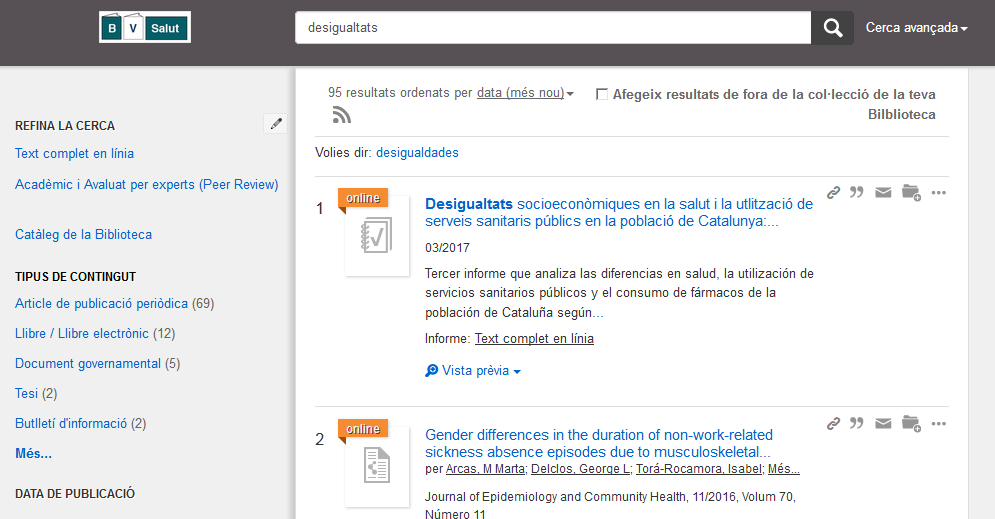
Example of a search for “inequalities” with the results ordered by date:

Ask us. This is the user services department and reference of the Library for Health Science of Catalonia. This tool is very practical to make a search and the answer is practically immediate. It is well worth knowing that this service exists!

That is all, for today. We are completely sure that all these tools are very useful and that they are the results of a concerted effort by the library to give answers to users, technicians and researchers that carry out research in our field.

Post written by Marta Millaret (@MartaMillaret) with the collaboration of Toni Parada and Pilar Roqué, head of the Library of Health Sciences of Catalonia (Biblioteca de Ciències de la Salut de Catalunya).

Low value clinical practices from the citizenry’s perspective

13 oct.

During the fifth edition of the international Preventing Overdiagnosis Congress, strategies for implementing solutions to avoid overdiagnosis and overuse were addressed based on the available scientific evidence.

In this year’s edition, which was held in Barcelona last year, apart from the involvement of professionals and organisations, patients had the opportunity to actively participate.

Experiences in different healthcare areas were shown in the use of best practices to communicate and to empower patients to achieve a better understanding of shared decisions.

Different world initiatives addressed the best practices to empower citizens in subjects related to low value practices, overdiagnosis and overtreatment. Experiences were shared and a debate was initiated on fundamental subjects such as the communication and participation of patients.

In recent years, the Essencial Project has studied the perspective of health professionals on low value practices, their causes and possible solutions so as to avoid them.

Essencial Project team: Cari Almazán, Johanna Caro, Liliana Arroyo and Hortènsia Aguado

For example, in a previous post, we explained the results of a survey we carried out with professionals in the field of primary care. The results of this survey highlighted the need to involve and empower the population more. Patients are also important decision makers in relation to their needs and in the demand for certain health services. Hence, the project must be accompanied by a communications strategy aimed not only at patients but also at citizens in general.

That is why we, from the Essencial Project, have been interested in finding out the opinion of patients in addition to the perspective of professionals. In the international Preventing Overdiagnosis 2017 Congress we participated explaining how an exploratory first approach was made to identify the beliefs, attitudes and perceptions of patients regarding the most important elements in consultations, low value practices and the essential components of an effective dialogue between professionals and patients. The end purpose of this was to understand the position of people before initiating possible interventions in the citizenry and to determine the most effective communicative tools and channels.

In Catalonia, AQuAS carried out the first exploratory qualitative study at the end of 2016 using a focus group of parents and children assigned to a primary care team. Low value practices in paediatrics are frequently associated with an over-diagnosis regarding antibiotics, bronchodilatadors, antipyretics or imaging tests, among others. These scenarios have been transferred to the debate with patients themselves. In total, seven women, mothers and grandmother of 14 children participated.

The first point of discussion was the most important elements in a consultation with health professionals and it was found that the treatment (29%) and information received (28%) are the most important elements received by professionals (representing approximately 60% of those mentioned). The relationship with the professional comes next (15%, often related to the degree of trust), followed by the feeling that their wishes or needs are met (12%), information requested (9%) and the diagnosis (5%).

The participants did not know the concept of low value practice but did recognise situations of an excessive prescription of medication or the request of unnecessary tests, especially in emergency services and private consultations.

Regarding communication, the participants said they appreciated that professionals communicate in a simple and direct manner, explaining the reasons for decisions. Similarly, that they felt it was important to receive printed information from professionals which they could peruse later at home. They also said they would like more informative sessions or community groups where these types of subjects could be explained to them and so gain more knowledge about these types of practices.

In our context, this is the first exploratory study done to identify low value practices and the communicative strategies of the citizenry, being the start of a series of studies on the population. Nonetheless, one of the limitations with which we find ourselves was that the participation was lower than expected. Although the term ‘low value practices’ is not known, participants identify situations in which they have experienced them.

Similarly, it is important to underline how patients value the treatment and information received as well as the professional-patient relationship. In the same way, patients recognise the need for a professional’s communication skills and the need for tools to support an effective communicative exchange.

Post written by Johanna Caro Mendivelso (@jmcaro103).

The speed and relevance of assessing health products

5 oct.
Emmanuel Giménez

The European market of health products has been widely affected by the sudden emergence of a new legislative framework with the new regulations (2017/745 and 2017/746). The subtle difference between directive and regulation is paramount, they say, but we’ll leave that for another occasion. This new framework in the field of health products is characterised among other things by:

  1. A stricter control of high risk health products (for example, certain implantable products)
  2. The strengthening of rules of clinical evidence by including a coordinated procedure at a European level for the authorisation of multicentre clinical research.
  3. The reinforcement of requirements and the coordination between European countries regarding controls and after sales aspects.

In this context of important changes, the assessment community is also clearly active. Thus, on 19 June this year, there was a panel on health products at the international meeting of Health Technology Assessment HTAi, where a new and innovative Italian programme for health products was presented.

The programme, explaining the work carried out over several years in terms of definition and its pilot phase, includes three work packages: appraisal, methodology and monitoring. In another panel closely related to the previous one, in the field of methodology, the presentation of the categories to decide on what to invest in and what to disinvest win clearly stood out.

When talking about monitoring and collecting information, an example that stood out was the debate on the need for early assessments given that the life cycle of a health product tends to be short.

The significant increase in new products available and all the work objects previously mentioned are some of the things that position the importance of specific assessment in health products.

The importance of the assessment of health products is, therefore, undeniable. In the joint production work package of EUnetHTA JA3, in which AQuAS is participating, as many or more assessments of “other technologies” (health products, health interventions,…) have been planned as of the known assessments of drugs. In a sense, the numbers of one or other necessity are matched. The importance of the assessment of “other technologies” was in fact reflected in the HTAi annual meeting in a presentation by Wim Goettsch, director of EUnetHA.

The identification and prioritisation of products to be assessed (the Horizon Scanning system), as well as the balance between innovation and divestment, are also extensively discussed subjects and under continuous debate. Thus, in the REDETS network (in which the AQuAS is also actively participating) and with the leadership of Avalia-T, a public access tool was identified that helps in approaching this subject: the PriTec.

Assessment, therefore, can help directly in the use, management and sustainability of different health systems. In conclusion, new opportunities are provided for improving decision making in the area of health products and some of them will come through demonstrating efficiency by means of the adequate use and definition of health technology assessments (HTA).

Post written by Emmanuel Giménez.

Innovate or innovate

29 set.

What do the following have in common? An integrated circuit of home based hospitalisation, a telephonic nursing management project, a plan to minimise risks and the safe use of drugs, the use of ICTs in patients treated with oral anticoagulants, an assistance route of collaboration between primary and specialised care, the redesign of a programme of assistance in sexual and reproductive health, a functional unit of chronic and subacute patients, the optimisation of assistance to a patient who has undergone surgery and an oncological-geriatric unit of intermediary care?

They are all innovative projects or experiences which are compiled in the  Observatory of Innovation in Healthcare Management, a reference framework to detect innovative initiatives and tendencies in the Catalan Health System. You can read about it in this post by Dolors Benítez.

“Promoting collaborations between organisations by creating synergies, interest groups and setting up challenges.”

If talking about challenges, we have quite a few and innovation is in fact intended to provide solutions to make improvements.

Innovating, therefore, can be seen as a constant and necessary attitude that we can identify in all professional fields and areas of life.

In the AQuAS blog, we have shared some projects with a strong innovative component.

Is it possible to combine active and healthy ageing with innovation?

Pediatrics in the Pyrinees, an innovative experience in the Alt Urgell (Catalonia)

“Virtual Nurse”, a promotional and educational portal for health at the service of people

Elderly person with stroke: integrated care from the acute phase to the return home

Post written by Marta Millaret (@MartaMillaret)

Time to digitally disconnect?

14 set.

It is very common to see groups of people looking at their mobile devices in any place at any time: on holiday, at work, at home, in the underground, on the bus, in a congress, ….. wherever. It is also common to take advantage of our holidays to say that we will make the most of these days to disconnect from our routines. Does this include disconnecting our mobile phones, tablets, laptops, the TV or email?
At AQuAS, as an agency involved in health assessment, we do not know this. What we do know is that there is more and more talk of connected health, a term which includes mHealth, eHealth and all related concepts, which have been a part of everyday life for some time now.

At a level of the Catalan system of health, we have in this post by Òscar Solans an example of the development of technological tools which involve new ways of interaction between patients and the health system. In this way, La Meva Salut and eConsult are useful tools when placing the patient, the person that is, at the centre of all the interactions there are with the health professionals coming from different fields.

At a European level, Jean Patrick Mathieu and Rossana Alessandrello wrote about how complex the subjects of interoperability and the implementation of mobile technological solutions are, in this other post. This was the framework for the European project DECIPHER whose goal was to facilitate the access to health information from different countries and health systems.

Let’s change the perspective. At an individual level, who does not have an app downloaded on their mobile phone? Which of these apps have to do with something related to health, such as weight control, for example, or as support when doing physical exercise, to keep track of menstrual cycles, fertility calendars or aspects of mental and emotional health? And no need to limit ourselves to talking about mobile devices: who has not heard of calculators for aspects of health such as calculators of life expectancy?

Downloading an app is very easy and can even be free. In this post by Elisa Puigdomènech, she highlighted the fact that in mid-2016 The Economist explained there were some 165,000 apps related to health. This figure must no doubt have increased.

What does the success of an app depend on? What guarantees of quality and safety do they offer?

Regarding the first question, the user experience was the subject on which Elisa Puigdomènech put the emphasis, based on the experience obtained in the PEGASO project. Along the same lines, Santi Gómez spoke about the fact that the development of a health application must, in all phases of its development, include the participation of those who will ultimately be the end users.

And in terms of the second question, any health intervention should be safe, be based on evidence, on the best quality knowledge available and should be assessable. This is the premise with which we at the AQuAS work and this is the role that an assessment agency can play when thinking about connected health. Thus, this post by Toni Dedéu places the emphasis on the fact that technologists, assessors, professionals and citizens have the opportunity to work together and combine their expertise but not forgetting the speed of innovation.

In conclusion, the assessment of connected health is a current topic. This article was recently published, and is a good example of a proposal for a conceptual framework. We end this post with an editorial about innovation and evidence which invites one to reflect on assessment and innovation.

Post written by Marta Millaret (@MartaMillaret)


Crisis, inequalities and policies: proposed intinerary

7 set.

Unfortunately, inequalities in health are still an issue today including in our country. The crisis of recent years has once again put the spotlight on this subject.

 This is why we propose an itinerary taking us through the different texts which we have published on the subject in this blog and, in particular, we invite you to read the original texts which are mentioned here in more depth, a large proportion of which have been elaborated at the AQuAS.

In September of last year, Luis Rajmil reflected on social inequalities in child health and the economic crisis in this post placing the concepts of equality, equity and reality  on the agenda for discussion.

 “At present, there is enough accumulated information that shows that life’s course and the conditions of prenatal life as well as life during the first few years are very influential factors in the health and social participation of an adult to come.”

At a later date, the Observatory of the effects of the crisis on the health of the population published its third report but prior to that, a post was published with a collection of individual thoughts and reflections on this subject by Xavier Trabado, Angelina González and Andreu Segura focussing on, respectively, the effects of the crisis on the mental health of people, the coordination of different mechanisms in primary and specialised care, the urgency for community health actions and the need to engage in intersectoral actions.

 “It is urgent to put community health processes into action; processes in which the community is the protagonist, which constitute the shift from treating an illness to a bio-psycho-social approach which gives an impulse to intersectoral work in a network with local agents, with who there is the shared aim of improving the community’s well-being. Based on the needs detected and prioritised in a participatory way and with the local assets identified, these processes activate interventions based on evidence which are assessed”

In this other post, Cristina Colls presented an interesting case of the application of scientific evidence to political action which occurred with the revision of the socio-economic dimension of the formula for allocating resources to primary care.

 “Social inequality leads to an unbalanced distribution of the population in a territory, concentrating the most serious social problems in certain municipalities or neighbourhoods having higher needs for social and health services than other territories. In this context, more needs to be done where needs are greater if the aim is to guarantee equality in the allocation of resources”

Finally, the most recent post was written by Anna García-Altés and Guillem López-Casanovas. It is a text that provides food for thought based on the latest report published from the Observatory of the Health System of Catalonia on the effects of the crisis on the health of the population.

 “Understanding the mechanisms  by which social inequalities have an impact on the health of the population, so as to know how best to counter or neutralise them, in any place and at any time, is an issue that must still be addressed by our social policies”

We hope that you this very short itinerary through these texts, initiatives and analyses that aim to be useful in tackling inequalities has been of interest.

Post written by Marta Millaret (@MartaMillaret)

Committed to research assessment 100%

31 ag.

Since 2001, the AQuAS (Agency for Health Quality and Assessment of Catalonia) has been in charge of evaluating the proposals of research projects that are eligible to receive funding from the Fundació La Marató de TV3. It means prioritising the research with the most quality using a quantitative and qualitative methodology in a process that lasts months and that ends in a face-to-face meeting of international experts.

Group photograph of the final meeting with international experts in assessing the FMTV3 call on Diabetes. Barcelona, September 2016. From left to right and top to bottom: Gerald Tomking (Diabetes Institution of Ireland), Joan MV Pons (AQuAS), Johann Wojta (Medical University of Vienna), Stephan Zipfel (University of Tuebingen), Karlheinz Friedrich (University Hospital Jena), Maite Solans (AQuAS), Harold de Valk (University Medical Centre Utrecht), Hans-Georg Joost (German Institute of Human Nutrition), Juergen Eckel (German Diabetes Center), Ernest Vinyoles (external observer), Anna Monsó (external observer), Gabriel Capellà (external observer), Jaume Reventós (external observer), Bea Ortega (AQuAS), Esther Vizcaino (AQuAS), Núria Radó (AQuAS)


The assessment of research which is centred at the AQuAS considers three different stages in the cycle of research. The assessment of research proposals (avaluació ex-ante), assessment during research (ongoing assessment) and assessment once the research has been completed (avaluació ex-post). The AQuAS has a long track record and lengthy experience in all these stages of research.

The fact that one and the same institution does assessment of research and assessment of the health system is altogether exceptional and is one of the strong points of the AQuAS. The two types of assessment benefit each other mutually as a result of the knowledge that is generated.

Another area of research in which the AQuAS has been a pioneer is in assessing the impact of research. This year, the International School for Research Impact Assessment (ISRIA) will be held in Denmark (more information here).

Since last year, the PERIS call is also assessed, which is an important new event and a strong boost for Catalan biomedical research. With regards to this call, it is worth highlighting the will and determination in placing people at the centre of research, and that we, in fact, right now find ourselves in a very good period because the analysis of data offers many opportunities in research.

Apart from all this there is a long-term task, which will take years, which has to do with the question of research and gender.

The article A global call for action to include gender in research impact assessment very quickly had a strong impact in social networks. It has been a year since we published a post recommending that it be read.

Almetrics evolution of this article: 220 (26/8/2016), 258 (31/8/2017).

The article heads the publications of this magazine in terms of impact.

Noteworthy facts:

Regarding the question of research and gender, we took the topic up again on this blog with another post as a call for reflection and to be aware of the reality that surrounds us, both within and beyond the area of research.

At AQuAS we ask ourselves how such a small team in number but huge in involvement manages to deal with the complex mechanism of comprehensive assessment of several research calls, research impact and also carry out research on the involvement of citizens in research, research in the media and the already mentioned question of research and gender.

In short, a lot of work done and a lot of work on the go at present with 100% involvement of the research team at the AQuAS and of many other collaborators and experts.

Post written by Marta Millaret (@MartaMillaret)

“Virtual Nurse”, a promotional and educational portal for health at the service of people

15 juny
Marc Fortes

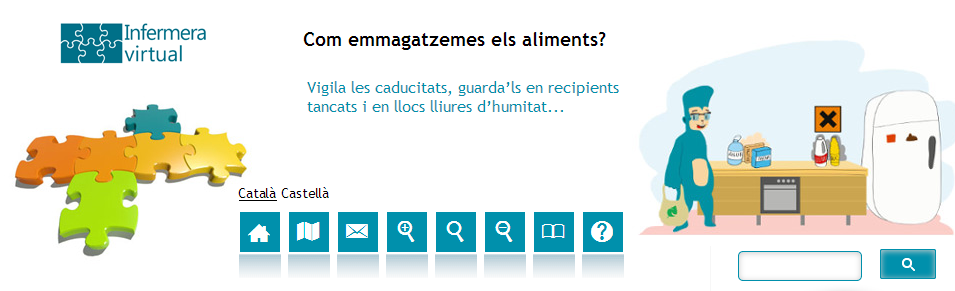
Stemming from the necessity to be able to access accurate health information, qualified and within reach of everyone, the Official Nurse’s College of Barcelona (COIB), launched the portal, Infermera virtual (virtual Nurse) in 2005 (in Twitter, @infermeria), for the promotion and education of health.

The almost 3000 pages of content that it contains aims to empower people in taking decisions about their own health while at the same time create a healthier society and achieve a more sustainable healthcare.

Citizens can find all this content adapted in formats such as video, infographs and health tutorials which make both the access and understanding of the information easier.

Additionally, Infermera virtual is a global professional project with the view of it becoming a working tool for nurses and other health professionals in the social area or that of education. The contents, which enable nursing knowledge on each of the health contexts to be shared in an enjoyable and rapid way, become links that allow professionals to prescribe or recommend this information directly to the people they attend, via email or sharing it via social networks.

To generate the content, there are structural, educational and scientific revision processes which are updated annually. The most important piece in the whole puzzle is undoubtedly the more than 70 authors and collaborators who generate all this content.

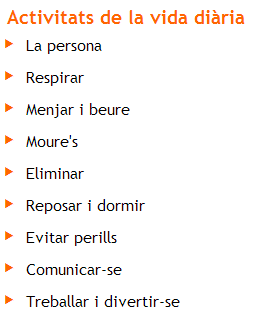
The Infermera virtual project is based on the 8 daily life activities, what we call “requirements that people must satisfy, in a specific time frame, for their own benefit with the aim of maintaining life, a healthy lifestyle, a continuous personal development and the greatest degree of wellbeing and quality of life possible”, and they are: to breathe, move, eliminate, avoid dangers, sleep, communicate with others, work and enjoy oneself, and eat and drink.

On the other hand, the units of content are organised in two large blocks which we call “life situations” and “health problems” which enable the other  files to be organised as “What you need to know”.

Among the health problems, one can find files ranging from an explanation of cancer to that about having a temperature, for example.

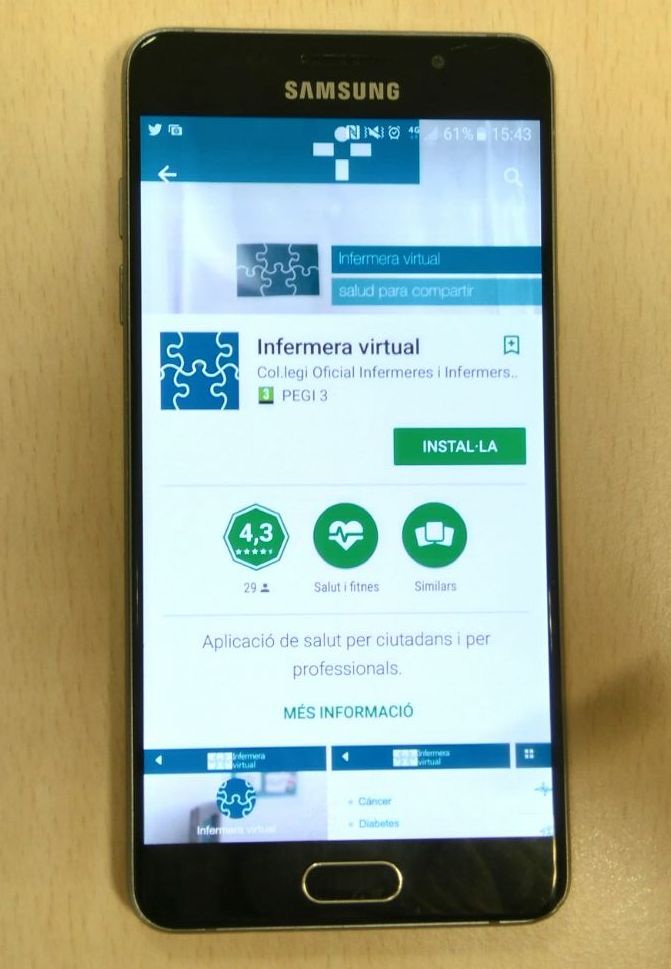
The portal is continuously growing and being improved and is also adapted to the circumstances of the changing context. This is why all the certified and personal content has been offered for more than a year via a free mobile application available both for Android and iOs.

A citizen can find all this content adapted in video formats, infographs and health tutorials which facilitate both the access to and the understanding of information. QR Codes can also be scanned using the application and notifications received related to health. On the other hand, health professionals can prescribe this content via a mobile phone or tablet.

One of the highlights of the application’s menu is the access to the more than  110 tutorials via ‘Look after your health’, aimed at clarifying doubts and obtaining more information about health problems, healthy life styles, life situations and aspects related to the different stages of life. Entering in ‘Files’, nurses and all health professionals can access the complete files created by nurses and other expert authors. Professionals also have direct access to consult on the structure and function of the human body.

If you are a user of the Metropolitan Transport of Barcelona, you may have seen the health advice in video format which is offered in collaboration with virtual Infermera in some of the metro stations and some Barcelona city buses.

The health advice comes by way of a friendly family of extra-terrestrials that have come to our planet unintentionally, the Bonsu Family, and this allows such diverse subjects as bullying at school to sun protection to be dealt with in less than 16 seconds.

Post written by Marc Fortes (@marcfortes).

The DECIPHER Project: from the interoperability to the procurement of innovation

8 juny
Jean Patrick Mathieu

In 2013 when Agència de Qualitat i Avaluació Sanitàries (AQuAS) relaunched the project DECIPHER (@DECIPHERpcpEU), we were pioneering in the field of Procurement of Innovation and little did we know on the journey ahead. The project proved to be a big challenge for the AQuAS, the Catalan Department of Health and the all consortium involved.

The European Commission Officers and the projects evaluators would also be faced with a new type of project and with the projects consortium and stakeholders, we all learned a lot in this exciting adventure.

The journey would end in March 2017 with the Barcelona final event, but the aftermath of the projects will definitely be felt in the years to come.

Rossana Alessandrello at the DECIPHER – FINAL EVENT (Barcelona 2017)

DECIPHER was a project funded by the European Commission under the 7th  Framework Programme (FP7) under a call for project in 2011 whose topic was “Patient Guidance Services (PGS), safety and healthcare record information reuse”.

The objective of the project was to enable secure cross-border mobile access to existing patient healthcare portals which are individually supported by public bodies.

DECIPHER would deploy Pre-commercial Procurement (PCP) to create step-change innovations in mobile patient ICTs. Using electronic patient records as the key enabling technology, this joint PCP would create technology-led service transformation in cross-border mobile healthcare, delivering qualitative and significant benefits to patients and healthcare organisations.

The Consortium consisted of ESTAR Centro (Tuscany), TicSalut (Catalonia) and CMFT (Manchester).  Suppliers will be challenged to build on outputs from epSOS, CALLIOPE, and LOD2, and advances in mobile technology. Moreover, experts from Greece, France, Finland, UK, Sweden and Ireland will provide support.

DECIPHER will generate a portfolio of interoperable applications, deployed on a pan-European platform. This resource will improve existing healthcare services by supporting mobility of patients and healthcare providers.

As a use-case scenario, the solutions were to focus on patients with a chronic health condition and Diabetes type II was selected.

From anywhere in the European Union, a patient will be able to use a secure mobile device safely to gain 24/7 access to their prescription data, emergency data, examination results and other health information.

By the end of the project, 6 prototypes solutions were funded of which 3 finalists received full funding to develop a full final version. Although the respective national Personal Health Records (PHRs) systems of the three procuring authorities are not able to implement those solutions in their current state, the achievements are important for DECIPHER:

  1. Invaluable experiences were gathered by all stakeholders involved in the project
  2. SMEs from all over Europe came under the radar of potential clients, the public procuring authorities in the consortium and those who were interested on the project
  3. AQuAS acquired an expertise in procurement of innovation that is now well-renowned in Europe and beyond.
  4. The lessons learned will be applied in the new PCP project coordinated by AQuAs, Antisuperbugs.

DECIPHER project was initially designed to address the interoperability issue in the healthcare sector. But, this project has been fundamental in the development of a model of procurement of innovation useful for the set-up of this kind of project. With this objective in Catalonia, we consider DECIPHER as a case use where AQuAS lead the path with a set of toolkit, methodology and expertise.

Post written by Jean Patrick Mathieu.