Ioannidis and the industry: a persistent distortion

7 abr.

John PA IoannidisJoanMVPons is a scientist and professor originally from Greece, currently working at Stanford (Meta-research Innovation Center – METRICS) who is, undoubtedly, among the most prolific authors of medical scientific literature.

Some of his papers, alone or in collaboration, have had a great impact. Who does not remember the one entitled “Why most published research findings are false?”. Nowhere in his large output will you find trivialities, and he recently came to Barcelona to speak about defective research and even about the waste of resources this implies. But we will leave the latter topic for another occasion.

The paper by this author I want to comment on is the one written in collaboration entitled “Undue industry influences that distort healthcare research, strategy, expenditure and practice: a review” published in 2013 in European Journal of Clinical Investigation.

One might think that all has been already said about the (bad) influence of drug and health care products industries. There is even a literary body or genre in biomedical scientific publications exclusively devoted to this topic. And books abound, too. All that could be said has been said. Well, actually it hasn’t. Undue influence, such as biases, is far more subtle than we think. It is often hard to tell how, similarly to interest conflicts in biomedical research or in prescription practices, the one who does it refuses any influence, since science could not admit it, as its own deontology doesn’t. Fools!

What is interesting about this paper is its review nature, not only for the number of papers gathered, but because it provides a more integrated (re)view of the different elements upon which industry acts, or is allowed to act. It should be noted that the interests and profit of the drug and health care products industry are quite legitimate, but it clearly shows some specifics that put it aside from other manufacturing industries, and not just because its important investment in R+D+i. It is believed to be one of the most profitable industries, possibly due to its large margins, but also because human diseases and ailments are here to stay, even though their end –which both the poor and the rich want to delay– is ultimately inescapable.

Ever since I learned it, I am very fond of a quotation by George W Merck (1894-1957) who for 25 years chaired the drug company that bears his family’s name (1925-1950). As this visionary man said: “We try to remember that medicine is for the patient. We try never to forget that medicine is for the people. It is not for the profits. The profits follow, and if we have remembered that, they have never failed to appear. The better we have remembered it, the larger they have been.“ I wonder what he would think of it now.

Coming back to Ioannidis and his paper, there he follows the outline of how this (bad) influence acts, and the main elements –which changed with time– upon which it exerts its distorting effect, although not as an exclusive factor. Governments, as with other industries also regulated by them, play an essential role.

Evidence based medicine - Clinical practice guidelines - Medical practice

Post written by Joan MV Pons.

Ioannidis y la industria: una persistente distorsión

7 abr.

JoanMVPonsJohn PA Ioannidis es un científico y profesor griego, actualmente en Stanford (Meta-research innovation center – METRICS) que, sin duda, es uno de los autores más prolíficos en la literatura científica médica.

Algunos de sus artículos, en solitario o en colaboración, han tenido un gran impacto. Quién no recuerda aquel que llevaba por título: “Why most published research findings are false?”. En ninguno de su gran producción dice banalidades y hace poco estuvo por Barcelona hablando también de la investigación defectuosa o, incluso, del derroche de recursos que ésta supone. Sin embargo, este es un tema, que dejamos para otra ocasión.

El artículo que quería recuperar hoy de este autor es un escrito en colaboración que lleva por título “Undue industry influences that distort healthcare research, strategy, expenditure and practice: a review” y que fue publicado en el 2013 en el European Journal of Clinical Investigation.

Se podría pensar que sobre esto, la (mala) influencia de la industria de los fármacos y productos sanitarios ya se ha dicho todo. Que hay todo un corpus o género literario en las publicaciones científicas biomédicas dedicado exclusivamente a este tema. Que de libros tampoco faltan. Que está todo dicho. Pero no, no es así, pues esta influencia indebida, como los sesgos, es mucho más sutil de lo que nos pensamos. A menudo cuesta apreciar, igual que pasa con los conflictos de intereses, en la investigación biomédica o en las prácticas de prescripción que quien lo hace niega cualquier tipo de influjo, pues la ciencia no podría admitirlo, como tampoco su propia deontología. Ingenuos!

Lo que puede tener de interesante el artículo es su carácter de revisión, no solo por la recopilación de otros artículos que hace, sino también por aportar una (re)visión más integrada de los diferentes elementos sobre los cuales la industria actúa o se le deja actuar. No hace falta decir, que los intereses y ganancias de la industria farmacéutica y de productos sanitarios son bien legítimos, pero está claro que tiene algunas particularidades que lo alejan de otras industrias manufactureras y no solo por la importante inversión en R+D+i que hacen. Se ha considerado una de las industrias más rentables existentes, posiblemente por sus amplios márgenes, pero también porque las enfermedades y sufrimientos humanos no tienen pinta que se tengan que agotar, a pesar de que el final – que todo el mundo quiere retardar, independientemente si uno es rico o  pobre- sea ineludible.

Siempre me gusta recordar, desde que la conocí, la cita de George W Merck (1894-1957) que presidió la compañía farmacéutica que lleva el nombre de su familia durante 25 años (1925-1950). Decía este visionario: “We try to remember that medicine is for the patient. We try never to forget that medicine is for the people. It is not for the profits. The profits follow, and if we have remembered that, they have never failed to appear. The better we have remembered it, the larger they have been.“ No sé qué pensaría si levantase la cabeza…

Volviendo a Ioannidis y a su artículo, aquí sigue el esquema de cómo esta (mala) influencia actúa y de los principales elementos –variables con el tiempo- sobre los cuales ejerce un efecto distorsionador, sin que esto signifique que sea responsabilidad exclusivamente suya. Los poderes públicos, como en otras industrias que también regula, tienen un papel fundamental.

 MBE - Guías de práctica clínica - Práctica médica

Entrada elaborada por Joan MV Pons.

Ioannidis i la indústria: una persistent distorsió

7 abr.

Joan MV Pons John PA Ioannidis és un científic i professor d’origen grec, actualment a Stanford (Meta-research innovation center – METRICS) que, sens dubte, és un dels autors més prolífics en la literatura científica mèdica.

Alguns dels seus articles, en solitari o en col·laboració, han tingut un gran impacte. Qui no recorda aquell que portava per títol: “Why most published research findings are false?”. En cap de la seva gran producció diu banalitats i fa poc va estar per Barcelona parlant també de la recerca defectuosa o, fins i tot, del malbaratament de recursos que això suposa. Aquest és un tema, però, que deixem per a una altra ocasió.

L’article que volia recuperar avui d’aquest autor és un escrit en col·laboració que porta per títol “Undue industry influences that distort healthcare research, strategy, expenditure and practice: a review” i que va ser publicat el 2013 a l’European Journal of Clinical Investigation.

Hom pot pensar que sobre això, la (mala) influència de la indústria dels fàrmacs i productes sanitaris ja s’ha dit tot. Que hi ha tot un corpus o gènere literari en les publicacions científiques biomèdiques dedicat exclusivament a aquest tema. Que de llibres tampoc en falten. Que tot està dit i beneït. Però no, no és així, doncs aquesta influència indeguda, com els biaixos, és molt més subtil del que ens pensem. Sovint costa d’apreciar, a semblança dels conflictes d’interessos en la recerca biomèdica o en les pràctiques de prescripció que qui ho fa nega qualsevol mena d’influx, doncs la ciència no podria admetre-ho, com tampoc la seva pròpia deontologia. Ingenus!

El que pot tenir d’interessant aquest article és el seu caràcter de revisió, no sols pel recull d’altres articles que fa, sinó també per aportar una (re)visió més integrada dels diferents elements sobre els quals la indústria actua o se la deixa actuar. Vagi per endavant, no cal dir-ho, que els interessos i guanys de la indústria farmacèutica i de productes sanitaris són ben legítims, però està clar que té algunes particularitats que l’allunyen d’altres indústries manufactureres i no sols per la important inversió en R+D+i que fan. S’ha considerat una de les indústries més rendibles existents, possiblement pels seus amplis marges, però també perquè les malalties i patiments humans no tenen pinta que s’hagin d’esgotar, malgrat que el final -que tothom vol retardar, tant se val si s’és ric o pobre- sigui ineludible.

Sempre m’agrada recordar, des de que la vaig conèixer, la cita de George W Merck (1894-1957) que va presidir la comanyia farmacèutica que porta el nom de la seva família durant 25 anys (1925-1950). Deia aquest visionari: “We try to remember that medicine is for the patient. We try never to forget that medicine is for the people. It is not for the profits. The profits follow, and if we have remembered that, they have never failed to appear. The better we have remembered it, the larger they have been.“ No sé què pensaria si aixequés el cap…

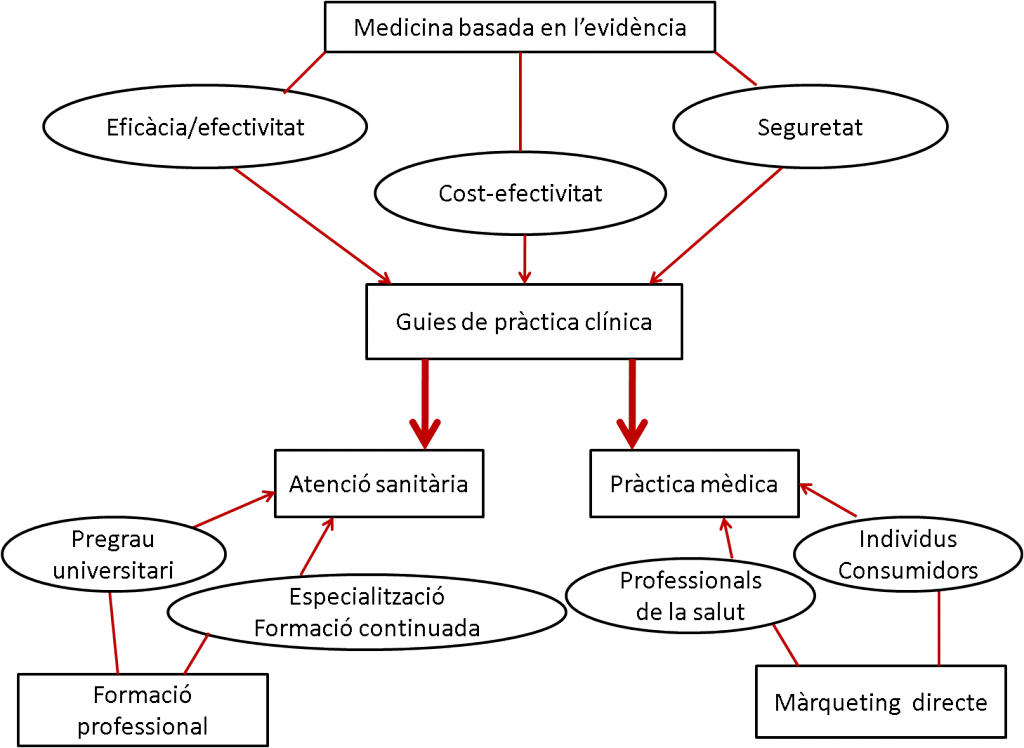
Tornant a Ioannidis i al seu article, aquí segueix l’esquema de com aquesta (mala) influència actua i dels principals elements -variables amb el temps- sobre els quals exerceix un efecte distorsionador, sense que això signifiqui que sigui responsabilitat exlusivament seva. Els poders públics, com en d’altres indústries que també regula, hi té un paper fonamental.

MBE - Guies de pràctica clínica - Pràctica mèdica

Entrada elaborada per Joan MV Pons.