The main challenge in mHealth is understanding each other

3 març
Toni Dedéu - DECIPHER final event 2017
Toni Dedéu

In recent years, the debate about what we should do with health apps has centred around accreditation, certification or assessment. At the same time, multiple lists of health apps recommended by a range of known and recognised initiatives have been drawn up.

An example of this would be the iSYScore2017 ranking of the Fundació iSYS which was presented in the context of the CAMFiC a few weeks ago.

rànquing apps salut

In this context, and with the Mobile World Congress 2017 in Barcelona in full swing, we can ask ourselves what role a Health Technology Assessment (HTA) agency has when considering mHealth.

There is a reality which we cannot evade. Any health intervention needs to be based on evidence, on knowledge of the highest quality at hand, and must be evaluated.

This cannot be done by turning our backs on the real world or innovation. A health app is a tool to carry out a health intervention and so health apps need to be seen as just another intervention, but of course, with some characteristics of their own which will mean there is an extra demand placed on one and all.

Technologists, HTA experts, professionals and citizens have the opportunity to understand each other if we want to be facilitators of recommending safe apps in health. We are not talking about initiatives that can be developed from one sector only and it is not only about apps.

Now more than ever, we need to be flexible and work from a multidisciplinary position. We already talk about co-creation and co-design; quite simply, of co-produced mHealth initiatives based on the expertise of multiple agents including, obviously, citizens.

AQuAS is participating in the assessment of several mHealth projects financed by the European Commission. The PEGASO project stands out, centred on promoting healthy lifestyles among adolescents, and DECIPHER, as an integral solution to facilitate the geographical mobility of patients with chronic diseases such as diabetes type 2 and m-resist, centred on schizophrenia and patients resistant to treatment.

We are faced with the challenge of integrating totally different fields such as the language of technologists and developers; the speed of innovation and the culture of assessment. In addition, this needs to be done without losing sight of the key role of scientific societies and the different points of view of health professionals and end users.

We know there is a lot of work to be done. Technologists and experts in health technology assessment, respectively, have the opportunity to learn a lot from each other. It is about sharing knowledge and expertise to facilitate, ultimately, health tools for citizens and professionals, which have been assessed, are based on evidence, are safe and reliable and have a strong collaborative component.

MWC17
Digital Health and Wellness Summit – MWC17


Post written by Toni Dedéu (@Toni_Dedéu) and Elisa Puigdomènech.

El principal repte de l’mHealth és entendre’ns

2 març
Toni Dedéu - DECIPHER final event 2017
Toni Dedéu

En els últims temps, el debat sobre què fem amb les apps de salut ha girat principalment al voltant d’acreditar, certificar o avaluar i mentrestant s’han elaborat múltiples llistats d’apps de salut recomanades per diverses iniciatives conegudes i reconegudes.

Un exemple d’això seria el rànquing de l’iSYScore2017 de la Fundació iSYS presentat en el context de la CAMFiC ara fa poques setmanes.

rànquing apps salut

Considerant aquest escenari i en ple Mobile World Congress, ens podem preguntar quin rol pot tenir una agència d’avaluació quan pensem en mHealth.

Hi ha una realitat de la què no podem defugir. Qualsevol intervenció en salut ha d’estar basada en l’evidència, en el coneixement de la millor qualitat disponible, i ha de poder ser avaluada.

Això no pot fer-se d’esquenes al món real ni a la innovació. Una app de salut és una eina per fer una intervenció i, per tant, cal tractar les apps de salut com una intervenció més, això sí, amb algunes característiques pròpies que implicaran una exigència extra per a uns i altres.

Tecnòlegs, avaluadors, professionals i ciutadans tenim l’oportunitat d’entendre’ns si volem ser facilitadors d’una recomanació segura d’apps de salut. No es tracta d’iniciatives que es puguin desenvolupar des d’un únic sector i no es tracta només d’apps.

Ara més que mai és l’hora de ser flexibles i de treballar des de la multidisciplinaritat. Estem parlant ja de cocreació i de codisseny; ras i curt, d’iniciatives mHealth coproduïdes a partir de l’expertesa de múltiples agents i incloent-hi, òbviament, la ciutadania.

L’AQuAS està participant en l’avaluació de diversos projectes d’mHealth finançats per la Comissió Europea. Destaca el projecte PEGASO centrat en la promoció d’estils de vida saludable entre adolescents, DECIPHER com a solució integral per facilitar la mobilitat geogràfica dels pacients amb malalties cròniques com per exemple diabetis tipus 2 i m-resist centrat en esquizofrènia i pacients resistents al tractament.

Tenim davant nostre el repte d’integrar àmbits absolutament diferents com són el llenguatge de tecnòlegs i desenvolupadors; la velocitat de la innovació i la cultura avaluativa. Cal fer-ho, a més a més, sense perdre de vista el paper clau de les societats científiques i dels diferents posicionaments dels professionals de la salut i dels usuaris finals.

Sabem que hi ha moltíssima feina a fer. Els tecnòlegs i els experts en avaluació de tecnologies mèdiques, respectivament, tenim l’oportunitat d’aprendre molt els uns dels altres. Es tracta de compartir coneixement i experteses per facilitar, finalment, a la ciutadania i als professionals eines de salut avaluades, basades en l’evidència, segures, fiables i amb un fort component col·laboratiu.

MWC17
Digital Health and Wellness Summit – MWC17

Entrada elaborada per Toni Dedéu (@Toni_Dedéu) i Elisa Puigdomènech.

mHealth & user experience: the user decides

23 febr.
Marta Millaret - Elisa Puigdomènech - MWC2017
Marta Millaret and Elisa Puigdomènech

The Economist recently published an article in which they reported that the number of mobile health applications, or apps, was in the region of 165.000, a very high figure that poses many questions.

A large part of these apps are related to well-being and promoting healthy lifestyles, but what makes us choose one over another?

The first thing that comes to mind is that mobile health apps, being a health technology, could and should be assessed based on their impact on health and this is where we are faced with our first problem.

While there is a gold standard when assessing this impact in the area of medication and static interventions in randomized clinical trials, how is this impact assessed in a highly dynamic world? In a world that can include a range of components that users can use depending on their needs? Where pressure is added due to the fact that advances in technology are being made in leaps and bounds and we cannot wait for years before getting results? It is not that simple.

If we venture into the area of mHealth, the first thing we find is great diversity. The design, requirements and assessment of an app developed to help manage diabetes in older people is very different to an app aimed at providing a dose for some medication where improving its adherence is sought, or an app to promote not drinking alcohol among young people before sitting in the driver’s seat, or an app to manage depression and anxiety.

What are we trying to say with all this? Easy and complex at the same time: the intervention that one wants to do via a health app and the target users will determine their use and their adherence.

And we are only just beginning. Apart from aspects related to health and the suitability of content or other more technological factors such as interoperability and security -by no means simple-, other factors come onto the scene such as acceptability, usability and satisfaction, factors related to User Experience (UX).

User Experience in mHealth is essential given that the main aim of it all is to make the tools which are being developed viable, accepted and used by the population who they are meant for, and also that the aim for which they were designed be respected.

After all, the end user who has the last word in deciding whether a health app is used or not, and this is why their participation in all phases of developing these mHealth tools is crucial.

Pursuing these aims of feasibility, acceptability and usability can make us reflect on, for example, the difficulty some old-age people may have when learning to use a smartphone for the first time. However, these obstacles related to the generational factor also exist among young people with new languages.

We suggest let yourself surprised by this video that shows how some adolescents react and interact when using Windows 95 for the first time.

The Mobile World Congress 2017 will be taking place in Barcelona next week. Monday will be one of the days circled into the diary of many professionals interested in subjects on mobiles and health with the Digital Health & Welness Summit 2017 programme.

DWHW 2017

But not everything will be happening at the Mobile. Another important mHealth event will take place on March 1st at the Palau Robert in Barcelona with the DECIPHER project final event.

logo decipherTo be continued

Post written by Elisa Puigdomènech and Marta Millaret (@martamillaret).


mHealth & user experience: l’usuari decideix

23 febr.
Marta Millaret - Elisa Puigdomènech - MWC2017
Marta Millaret i Elisa Puigdomènech

Recentment, The Economist publicava en una notícia que el nombre d’aplicacions -o apps– relacionades amb la salut se situa al voltant de les 165.000, una xifra prou elevada i que ens genera moltes preguntes.

Bona part d’aquestes apps estan relacionades amb el benestar i amb la promoció d’hàbits saludables, però què fa que triem utilitzar-ne unes o unes altres?

El primer que ens ve al cap és que les apps de salut, pel fet de tractar-se d’una tecnologia sanitària, podrien i haurien d’estar avaluades des del punt de vista del seu impacte en la salut i aquí topem amb un primer problema.

Si bé l’avaluació d’aquest impacte en l’àmbit dels fàrmacs i de les intervencions estàtiques té el seu gold standard en l’assaig clínic aleatoritzat, com s’avalua aquest impacte en un món altament dinàmic? Un món que pot incloure diversos components que els usuaris poden utilitzar en funció de les seves necessitats? On se suma la pressió d’una tecnologia que avança molt ràpidament amb el fet que no podem esperar anys a tenir resultats? No és senzill.

Si entrem en l’àmbit de l’mHealth, el primer que ens trobarem és una gran heterogeneïtat. És ben diferent el disseny, els requeriments i l’avaluació d’una app desenvolupada per facilitar el maneig de la diabetis en persones grans, d’una app orientada a facilitar la dosi d’algun medicament per millorar la seva adherència, d’una app per promoure no beure alcohol abans de conduir entre la gent jove i d’una app per al maneig de la depressió i l’angoixa.

Què volem dir amb tot això? Fàcil i complex a la vegada: la intervenció que es vol fer a través d’una app de salut i els usuaris a qui va dirigida determinarà el seu ús i la seva adherència.

I només som al principi. A més dels aspectes relacionats amb la salut i l’adequació dels continguts i d’altres dimensions més tecnològiques com la interoperabilitat i la seguretat -aspectes no gens simples-, comencen a entrar en escena altres dimensions com l’acceptabilitat, la usabilitat i la satisfacció, dimensions relacionades amb l’experiència d’usuari (o user experience – UX, en anglès).

L’experiència d’usuari en mHealth és bàsica pel fet que el principal objectiu amb què es treballa és aconseguir que les eines que es desenvolupin resultin viables, acceptades i usades per a la població a qui van dirigides i que es respecti l’objectiu per al qual van ser dissenyades.

Qui tindrà l’última paraula a l’hora d’usar, o no, una aplicació de salut serà l’usuari final i per això és clau la seva participació en totes les fases de desenvolupament d’aquestes eines mHealth.

Perseguir aquests objectius de viabilitat, acceptabilitat i usabilitat ens pot fer pensar, per exemple, en la dificultat que poden tenir algunes persones grans a l’hora d’aprendre a usar un smartphone per primera vegada però aquesta barrera relacionada amb el factor generacional també existeix amb els nous llenguatges entre gent jove.

Us proposem que us deixeu sorprendre amb aquest vídeo que mostra com reaccionen i interaccionen per primera vegada alguns adolescents amb Windows 95.

La setmana que ve tindrà lloc a Barcelona el Mobile World Congress 2017. Dilluns serà un dels dies marcats a l’agenda per a molts professionals interessats en temes de mòbils i salut amb el programa de l’event Digital Health & Wellness Summit 2017.

DWHW 2017

Però no tot passarà al Mobile, una altra cita important mHealth tindrà lloc l’1 de març al Palau Robert de Barcelona amb una jornada sobre el projecte DECIPHER.

logo decipher

Continuarem.

Entrada elaborada per Elisa Puigdomènech i Marta Millaret (@martamillaret).

Integrated care: what is the main underlying idea?

9 juny

This past 23rd, 24th and 25th May, 2016, Barcelona hosted ICIC16 – The 16th International Conference on Integrated Care where 1,000 attendees from over 50 countries around the globe enjoyed an active and busy agenda.

The experience involved 92 speakers and over 23 hours, which was also possible to follow via streaming. All in all, a challenge which the organizers were successful in delivering. You can read or re-read the Twitter comments from here: #ICIC16.

ICIC - AQUAS
Gabi Barbaglia, Vicky Serra-Sutton, Laia Domingo, Mireia Espallargues, Marina Ordóñez, Montse Moharra

The International Conference on Integrated Care (ICIC) has become a must for professionals who provide care for people and managers working in the fields of health and social services, among others.

Different languages to express the same message: integrated care represents the path we need to follow in order to meet the challenges of our aging populations.

How can we do it? Integrated care proposes the integration of services as a response to the fragmentation of care practice, especially in the biomedical system. The coordination of professionals and institutions aims to improve the experience of patients’ who receive care, as well as their families and to improve their quality of life related to health. This becomes especially key when identifying patients with complex needs.

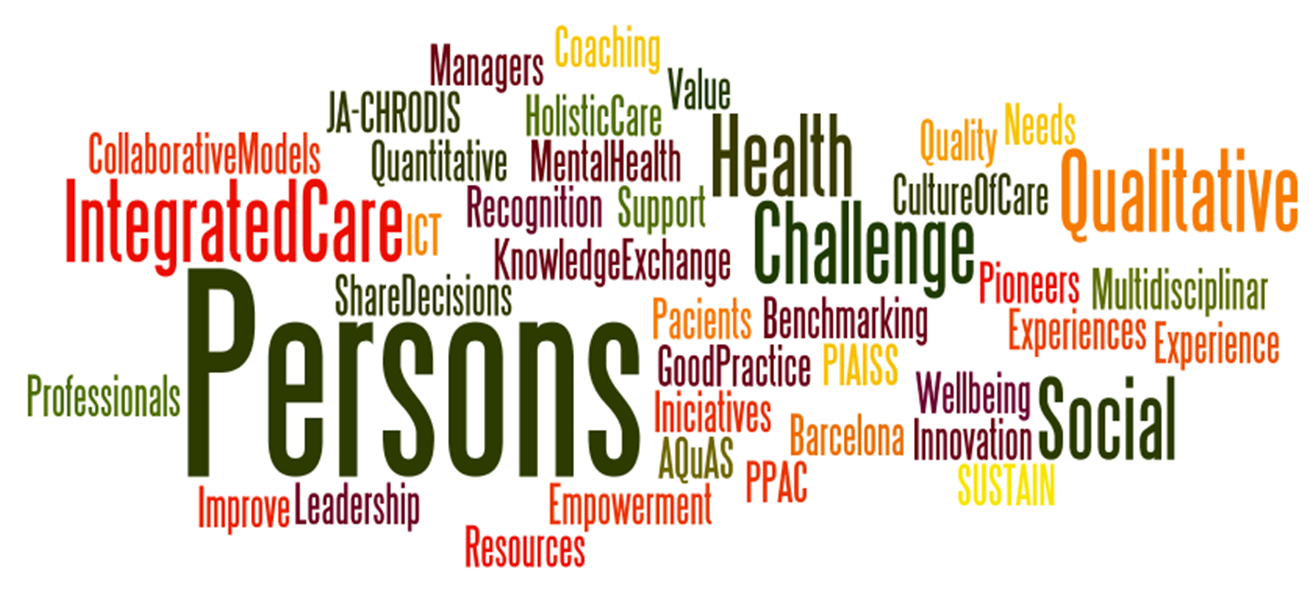
The main topics covered during the ICIC conference referred to people-centred care within the perspective of those treated and in the coordination, integration and, collaboration of services, professionals and systems (health, social, education, justice, corporate, etc.). In this regard, there were a variety of experiences presented from around the world of collaborative approaches that promote a multidisciplinary and integrated style.

ICIC-cloud-persons

The conference speakers emphasized the value of primary care and community health as being core to providing care to the community as well as the leadership of professionals from the areas of nursing, social work, the field of mental health and other disciplines and profiles.

Following this main topic, several presentations focused on different organizational models of collaborative care which report findings that endorse the adoption of strategies from the bottom up, in other words, strategies that would enable the initiatives proposed by health professionals to reach planners and administrators who, in turn, can provide the support and recognition.

It is important to highlight that there is an ever-increasing recognition of the importance of social determinants of health and looking to the community for the role it might play in shaping these determinants.

One highlight of the conference was the talk Changing culture and measuring what matters given by Alonzo L. Plough in which the speaker summarized the report: Building a National Culture of Health: background, action, framework, measures and next steps.

Don Reding from National Voices, gave an inspirational presentation with Putting what matters most to patients and communities at the heart of health and social care design.

Another outstanding presentation was that given by Professor Deirdre Heenan from the University of Ulster: Integrated care in Northern Ireland: meeting the challenge of mental health.

***You can read more about the ICIC 2016 conference by clicking on the following link:

http://lhalliances.org.uk/international-conference-on-integrated-care/

http://blog.hospitalclinic.org/2016/05/catalunya-acull-la-16-conferencia-internacional-sobre-atencio-integrada/

http://gestioclinicavarela.blogspot.com.es/2016/05/a-proposit-de-la-16th-international.html

That’s not all. Next year’s conference will be held in Dublin (land of innovators!) with the following themes:

ICIC #ICIC17 Dublin

Let’s come back to Barcelona for a while. For some time now, the Agency for Health Quality and Assessment of Catalonia (AQuAS as per the Catalan synonym) has been working on an assessment of integrated care, by way of example with the Evaluation of collaborative social and health care models.

It is also noteworthy the recent publication of the specialised report in the Social Work Magazine (Revista de Treball Social), titled: Integrated social and health care: points to reflect upon, which we believe to be a good cross-section of opinions and a good starting point.

Another iniciative in AQuAS is the SUSTAIN project -funded by Horizon2020, an opportunity for professionals to work jointly with their peers in other countries in an effort to define a roadmap and establish synergies in the field of Integrated care in Europe, a project of great interest for Catalonia.

Finally, it is vital not to lose sight of another key issue which is equality in the access to and outcomes from services, and this implies regular analysis of variations  in care which have not been justified.

A further helpful instrument for incorporating the opinions of those who receive care and the professionals involved is that of shared decisions. This involves a line of work which incorporates available evidence in a specific area or department of care, the preferences of patients when faced with the different health intervention options, and the essential information for improving the knowledge of all those involved (professionals, patients and their families and environment).

Post written by Vicky Serra-Sutton, Gabi Barbaglia (@gabibarblagia), Laia Domingo, Marta Millaret (@MartaMillaret) and Mireia Espallargues.