Alrededor de la cronicidad

2 set.

Si pensamos en los retos de la medicina actual es fácil que pensemos en la forma como los sistemas de salud y la sociedad en general deben adaptarse a un nuevo tipo de enfermo de edad avanzada, con varias enfermedades, alguna enfermedad mental o algun trastorno degenerativo, más o menos apoyo familiar y muchos medicamentos prescritos. Si este tema nos interesa, recomendamos mucho este recorrido vital y conceptual escrito por el economista Lluís Bohígas para entender dónde estamos y hacia dónde vamos y, sobretodo, el lugar que ocupa y que ocupará la atención a la cronicidad dentro del sistema de salud.

Un reto importante en esta línea (y que entre muchos otros elementos tambien puede integrar aspectos de cronicidad) es la atención integrada, espacio donde se trata de facilitar la relación de un individuo con los diferentes sistemas de atención considerando no sólo el punto de vista de la salud sinó tambien el punto de vista social. Aprovechando los temas desarrollados en la conferencia internacional sobre atención integrada en su XVI edición que tuvo lugar en Barcelona el pasado mes de mayo, se pone encima de la mesa la idea que la atención integrada puede representar el camino para afrontar los retos del envejecimiento de nuestras poblaciones.

Normalmente identificamos cronicidad y envejecimiento pero las patologías crónicas tambien pueden afectar a la infancia. El Hospital Sant Joan de Déu de Barcelona puso en funcionamiento en el 2012 un programa innovador de cronicidad infantil conocido como el proyecto PRINCEP (Plataforma de Respuesta Integral a los Niños con Enfermedades Crónicas y Elevada Dependencia, por sus siglas en catalán Plataforma de Resposta Integral als Nens amb Malalties Cròniques i Elevada Dependència). Este programa ha estado premiado recientemente por el Observatorio de Innovación en Gestión de la Sanidad en Catalunya.

Los ámbitos de atención a la cronicidad y de atención integrada conviene evaluarlos para comprovar que están bien dirigidos, es decir, que sus programas son efectivos, eficaces y adecuados. El uso de indicadores es una herramienta de evaluación. Un indicador es un instrumento de medida que se utiliza para evaluar o medir aspectos concretos de calidad. En el ámbito de la evaluación de la calidad asistencial es habitual hablar de indicadores de salud y éste es el tema del post metodológico sobre la construcción y el desarrollo de indicadores para la evaluación de la calidad de los servicios sanitarios.

Metodología Construcción Indicadores

Un valor añadido en la definición de indicadores es contar con una fuerte participación de expertos. La identificación de indicadores favoreciendo la participación a través de una metodología de consenso online es lo que facilita la aplicación tecnológica Health Consensus, usada justamente en el contexto de cronicidad.

El uso de indicadores de salud con el acento puesto en la atención a enfermedades crónicas y en la atención integrada es una de las líneas de trabajo de la Agència de Agència de Qualitat i Avaluació Sanitàries de Catalunya (AQuAS) que próximamente trataremos con más profundidad desde el blog AQUAS.

Al voltant de la cronicitat

2 set.

Si pensem en quins són els reptes de la medicina actual és fàcil que pensem en com els sistemes de salut i la societat en general han d’adaptar-se a un nou tipus de malalt d’edat avançada, amb diverses malalties, alguna malaltia mental o algun trastorn degeneratiu, més o menys suport familiar i molts medicaments prescrits. Si aquest tema ens interessa, recomanem molt aquest recorregut vital i conceptual escrit per l’economista Lluís Bohígas per entendre on som i cap a on anem i, sobretot, el lloc que ocupa i que ocuparà l’atenció a la cronicitat dins del sistema de salut.

Un repte important en aquesta línia (i que entre molts altres elements també pot integrar aspectes de cronicitat) és l’atenció integrada on es tracta de facilitar la relació d’un individu amb els diferentes sistemes d’atenció tenint en compte no només el punt de vista de la salut sinó també el social. Aprofitant els temes desenvolupats en la conferència internacional sobre atenció integrada en la seva XVI edició que va tenir lloc a Barcelona el passat mes de maig, es posa damunt de la taula la idea que l’atenció integrada pot representar el camí per afrontar els reptes de l’envelliment de les nostres poblacions.

Normalment identifiquem cronicitat i envelliment però les patologies cròniques també poden afectar la infància. L’Hospital Sant Joan de Déu van posar en marxa el 2012 un programa innovador de cronicitat infantil anomenat projecte PRINCEP (Plataforma de Resposta Integral als Nens amb Malalties Cròniques i Elevada Dependència). Aquest programa ha estat premiat recentment per l’Observatori d’Innovació en Gestió de la Sanitat a Catalunya.

Els àmbits d’atenció a la cronicitat i d’atenció integrada convé avaluar-los per comprovar que estan ben adreçats, és a dir que els seus programes són efectius, eficaços i adequats. L’ús d’indicadors és una eina d’avaluació. Un indicador és un instrument de mesura que s’utilitza per avaluar o mesurar aspectes concrets de qualitat. En l’àmbit de l’avaluació de la qualitat assistencial sovint es parla d’indicadors de salut i aquest és el tema d’aquest post metodològic sobre la construcció i el desenvolupament d’indicadors per a l’avaluació de la qualitat de serveis sanitaris.

Metodologia Construcció Indicadors

Un valor afegit en la definició d’indicadors és comptar amb una forta participació d’experts. La identificació d’indicadors afavorint la participació mitjançant una metodologia de consens online és el que facilita l’aplicació tecnològica Health Consensus, usada justament en el context de cronicitat.

L’ús d’indicadors de salut amb l’accent posat en l’atenció a malalties cròniques i en l’atenció integrada és una de les línies de treball de l’Agència de Agència de Qualitat i Avaluació Sanitàries de Catalunya (AQuAS) que properament tractarem amb més profunditat.

Integrated care: what is the main underlying idea?

9 juny

This past 23rd, 24th and 25th May, 2016, Barcelona hosted ICIC16 – The 16th International Conference on Integrated Care where 1,000 attendees from over 50 countries around the globe enjoyed an active and busy agenda.

The experience involved 92 speakers and over 23 hours, which was also possible to follow via streaming. All in all, a challenge which the organizers were successful in delivering. You can read or re-read the Twitter comments from here: #ICIC16.

ICIC - AQUAS
Gabi Barbaglia, Vicky Serra-Sutton, Laia Domingo, Mireia Espallargues, Marina Ordóñez, Montse Moharra

The International Conference on Integrated Care (ICIC) has become a must for professionals who provide care for people and managers working in the fields of health and social services, among others.

Different languages to express the same message: integrated care represents the path we need to follow in order to meet the challenges of our aging populations.

How can we do it? Integrated care proposes the integration of services as a response to the fragmentation of care practice, especially in the biomedical system. The coordination of professionals and institutions aims to improve the experience of patients’ who receive care, as well as their families and to improve their quality of life related to health. This becomes especially key when identifying patients with complex needs.

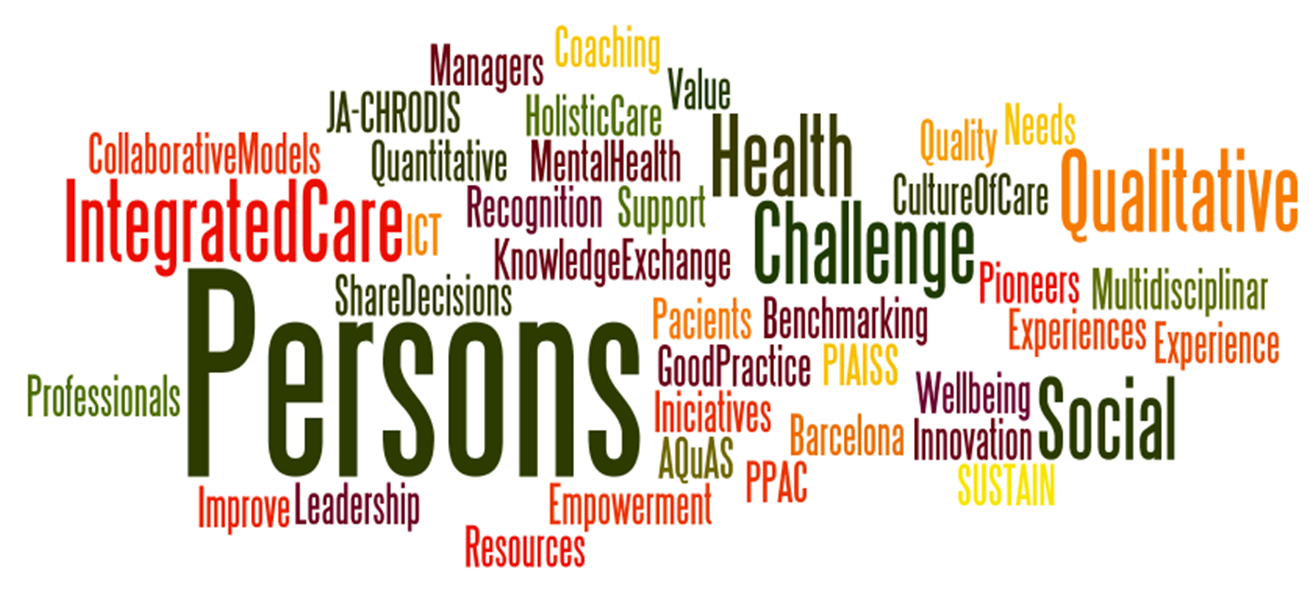
The main topics covered during the ICIC conference referred to people-centred care within the perspective of those treated and in the coordination, integration and, collaboration of services, professionals and systems (health, social, education, justice, corporate, etc.). In this regard, there were a variety of experiences presented from around the world of collaborative approaches that promote a multidisciplinary and integrated style.

ICIC-cloud-persons

The conference speakers emphasized the value of primary care and community health as being core to providing care to the community as well as the leadership of professionals from the areas of nursing, social work, the field of mental health and other disciplines and profiles.

Following this main topic, several presentations focused on different organizational models of collaborative care which report findings that endorse the adoption of strategies from the bottom up, in other words, strategies that would enable the initiatives proposed by health professionals to reach planners and administrators who, in turn, can provide the support and recognition.

It is important to highlight that there is an ever-increasing recognition of the importance of social determinants of health and looking to the community for the role it might play in shaping these determinants.

One highlight of the conference was the talk Changing culture and measuring what matters given by Alonzo L. Plough in which the speaker summarized the report: Building a National Culture of Health: background, action, framework, measures and next steps.

Don Reding from National Voices, gave an inspirational presentation with Putting what matters most to patients and communities at the heart of health and social care design.

Another outstanding presentation was that given by Professor Deirdre Heenan from the University of Ulster: Integrated care in Northern Ireland: meeting the challenge of mental health.

***You can read more about the ICIC 2016 conference by clicking on the following link:

http://lhalliances.org.uk/international-conference-on-integrated-care/

http://blog.hospitalclinic.org/2016/05/catalunya-acull-la-16-conferencia-internacional-sobre-atencio-integrada/

http://gestioclinicavarela.blogspot.com.es/2016/05/a-proposit-de-la-16th-international.html

That’s not all. Next year’s conference will be held in Dublin (land of innovators!) with the following themes:

ICIC #ICIC17 Dublin

Let’s come back to Barcelona for a while. For some time now, the Agency for Health Quality and Assessment of Catalonia (AQuAS as per the Catalan synonym) has been working on an assessment of integrated care, by way of example with the Evaluation of collaborative social and health care models.

It is also noteworthy the recent publication of the specialised report in the Social Work Magazine (Revista de Treball Social), titled: Integrated social and health care: points to reflect upon, which we believe to be a good cross-section of opinions and a good starting point.

Another iniciative in AQuAS is the SUSTAIN project -funded by Horizon2020, an opportunity for professionals to work jointly with their peers in other countries in an effort to define a roadmap and establish synergies in the field of Integrated care in Europe, a project of great interest for Catalonia.

Finally, it is vital not to lose sight of another key issue which is equality in the access to and outcomes from services, and this implies regular analysis of variations  in care which have not been justified.

A further helpful instrument for incorporating the opinions of those who receive care and the professionals involved is that of shared decisions. This involves a line of work which incorporates available evidence in a specific area or department of care, the preferences of patients when faced with the different health intervention options, and the essential information for improving the knowledge of all those involved (professionals, patients and their families and environment).

Post written by Vicky Serra-Sutton, Gabi Barbaglia (@gabibarblagia), Laia Domingo, Marta Millaret (@MartaMillaret) and Mireia Espallargues.