PEGASO: Fit For Future: connected health and long-term strategy

16 nov.
Elisa Puigdomènech

Developing a platform based on mHealth that has mobile applications (apps), a game and intelligent sensors has been the goal of the European project  PEGASO Fit For Future, which began in December 2013 and ended last July.

It is a platform that aims to improve both the lifestyles of adolescents (diet, physical activity and hours of sleep) and the knowledge that they might have about these life styles. To achieve this, intelligent sensors (t-shirt and bracelet) which record the physical activity and hours of sleep of an individual and also different apps which record the intake of food by means of a diary and footsteps taken by means of an accelerometer were developed and tested.

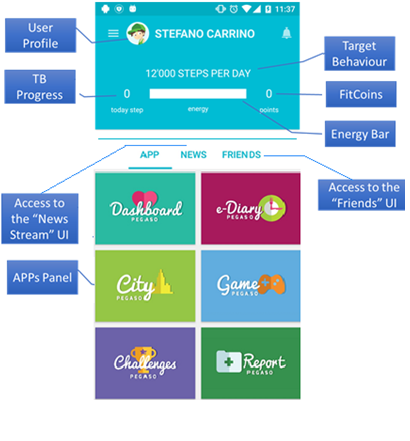
The PEGASO Fit For Future platform detects which lifestyles a user has and makes recommendations on how to improve them. In addition, it incorporates a gamification component: based on how healthy the lifestyle of a user is as well as how much their knowledge improves, which are then converted into obtaining a greater or lesser amount of points.

As an example, here we can see a screenshot of a fictitious user:
Professionals from different areas collaborated in the project: developers of games, apps and sensors, design and gaming experts, health professionals (doctors, nurses, experts in nutrition, experts in physical activity and psychologists) and also experts in health technology assessment and public health.

There were two different phases of the project: the development phase of the platform and the assessment phase.

During the development phase, while some professionals put their efforts into ensuring the quality and appropriateness of the medical and clinical content of the platform, others concentrated on aspects of a technological nature.

Nevertheless, the opinions of the end users themselves, adolescents, were always kept in mind during this process. In three iterative stages, boys and girls in Catalonia, Lombardy, England and Scotland tested this technology out in the different stages of its development.

The proposals for improvement made by the adolescents including their preferences were, whenever possible, kept in mind for the later versions of the platform. The aim was to guarantee as far as possible that what was being developed was practical for and accepted by the end users.

The last stage of the project was the assessment of the platform. The assessment of the different elements (apps, games and sensors) was to see if they really did help to improve the lifestyles and knowledge about lifestyles among adolescents and to assess the experience of the user after having used the platform.

To this end, a pilot study was carried out with adolescents from Catalonia, Lombardy, Scotland and England in which 365 mobile phones with the PEGASO platform installed were used by adolescents.

After six months of use, the intervention was assessed by means of validated questionnaires, a qualitative methodology and data obtained from the platform itself. A control group was introduced allowing for comparisons to be made with adolescents that did not have access to the platform.

The results of this study will help to evaluate whether new technologies are practical in helping adolescents improve both their lifestyles and knowledge about these lifestyles, a population group accustomed to using new technologies and that, in general, do not often visit health professionals.

Getting closer to the population by using mobile technology and the recreational aspect of gaming could be a good strategy for an intervention of this type related to the promotion of healthy lifestyles among adolescents. At a population level, it is a long-term strategy and hence the slogan “Fit For Future” of the PEGASO project.

Post written by Elisa Puigdomènech.
Innovate or innovate

29 set.

What do the following have in common? An integrated circuit of home based hospitalisation, a telephonic nursing management project, a plan to minimise risks and the safe use of drugs, the use of ICTs in patients treated with oral anticoagulants, an assistance route of collaboration between primary and specialised care, the redesign of a programme of assistance in sexual and reproductive health, a functional unit of chronic and subacute patients, the optimisation of assistance to a patient who has undergone surgery and an oncological-geriatric unit of intermediary care?

They are all innovative projects or experiences which are compiled in the  Observatory of Innovation in Healthcare Management, a reference framework to detect innovative initiatives and tendencies in the Catalan Health System. You can read about it in this post by Dolors Benítez.

“Promoting collaborations between organisations by creating synergies, interest groups and setting up challenges.”

If talking about challenges, we have quite a few and innovation is in fact intended to provide solutions to make improvements.

Innovating, therefore, can be seen as a constant and necessary attitude that we can identify in all professional fields and areas of life.

In the AQuAS blog, we have shared some projects with a strong innovative component.

Is it possible to combine active and healthy ageing with innovation?

Pediatrics in the Pyrinees, an innovative experience in the Alt Urgell (Catalonia)

“Virtual Nurse”, a promotional and educational portal for health at the service of people

Elderly person with stroke: integrated care from the acute phase to the return home

Post written by Marta Millaret (@MartaMillaret)

Time to digitally disconnect?

14 set.

It is very common to see groups of people looking at their mobile devices in any place at any time: on holiday, at work, at home, in the underground, on the bus, in a congress, ….. wherever. It is also common to take advantage of our holidays to say that we will make the most of these days to disconnect from our routines. Does this include disconnecting our mobile phones, tablets, laptops, the TV or email?
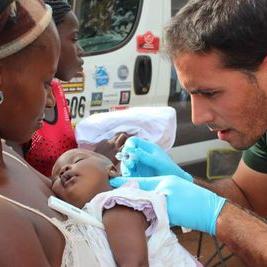
At AQuAS, as an agency involved in health assessment, we do not know this. What we do know is that there is more and more talk of connected health, a term which includes mHealth, eHealth and all related concepts, which have been a part of everyday life for some time now.

At a level of the Catalan system of health, we have in this post by Òscar Solans an example of the development of technological tools which involve new ways of interaction between patients and the health system. In this way, La Meva Salut and eConsult are useful tools when placing the patient, the person that is, at the centre of all the interactions there are with the health professionals coming from different fields.

At a European level, Jean Patrick Mathieu and Rossana Alessandrello wrote about how complex the subjects of interoperability and the implementation of mobile technological solutions are, in this other post. This was the framework for the European project DECIPHER whose goal was to facilitate the access to health information from different countries and health systems.

Let’s change the perspective. At an individual level, who does not have an app downloaded on their mobile phone? Which of these apps have to do with something related to health, such as weight control, for example, or as support when doing physical exercise, to keep track of menstrual cycles, fertility calendars or aspects of mental and emotional health? And no need to limit ourselves to talking about mobile devices: who has not heard of calculators for aspects of health such as calculators of life expectancy?

Downloading an app is very easy and can even be free. In this post by Elisa Puigdomènech, she highlighted the fact that in mid-2016 The Economist explained there were some 165,000 apps related to health. This figure must no doubt have increased.

What does the success of an app depend on? What guarantees of quality and safety do they offer?

Regarding the first question, the user experience was the subject on which Elisa Puigdomènech put the emphasis, based on the experience obtained in the PEGASO project. Along the same lines, Santi Gómez spoke about the fact that the development of a health application must, in all phases of its development, include the participation of those who will ultimately be the end users.

And in terms of the second question, any health intervention should be safe, be based on evidence, on the best quality knowledge available and should be assessable. This is the premise with which we at the AQuAS work and this is the role that an assessment agency can play when thinking about connected health. Thus, this post by Toni Dedéu places the emphasis on the fact that technologists, assessors, professionals and citizens have the opportunity to work together and combine their expertise but not forgetting the speed of innovation.

In conclusion, the assessment of connected health is a current topic. This article was recently published, and is a good example of a proposal for a conceptual framework. We end this post with an editorial about innovation and evidence which invites one to reflect on assessment and innovation.

Post written by Marta Millaret (@MartaMillaret)


“Virtual Nurse”, a promotional and educational portal for health at the service of people

15 juny
Marc Fortes

Stemming from the necessity to be able to access accurate health information, qualified and within reach of everyone, the Official Nurse’s College of Barcelona (COIB), launched the portal, Infermera virtual (virtual Nurse) in 2005 (in Twitter, @infermeria), for the promotion and education of health.

The almost 3000 pages of content that it contains aims to empower people in taking decisions about their own health while at the same time create a healthier society and achieve a more sustainable healthcare.

Citizens can find all this content adapted in formats such as video, infographs and health tutorials which make both the access and understanding of the information easier.

Additionally, Infermera virtual is a global professional project with the view of it becoming a working tool for nurses and other health professionals in the social area or that of education. The contents, which enable nursing knowledge on each of the health contexts to be shared in an enjoyable and rapid way, become links that allow professionals to prescribe or recommend this information directly to the people they attend, via email or sharing it via social networks.

To generate the content, there are structural, educational and scientific revision processes which are updated annually. The most important piece in the whole puzzle is undoubtedly the more than 70 authors and collaborators who generate all this content.

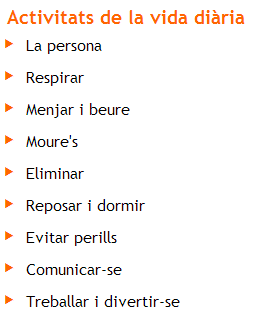
The Infermera virtual project is based on the 8 daily life activities, what we call “requirements that people must satisfy, in a specific time frame, for their own benefit with the aim of maintaining life, a healthy lifestyle, a continuous personal development and the greatest degree of wellbeing and quality of life possible”, and they are: to breathe, move, eliminate, avoid dangers, sleep, communicate with others, work and enjoy oneself, and eat and drink.

On the other hand, the units of content are organised in two large blocks which we call “life situations” and “health problems” which enable the other  files to be organised as “What you need to know”.

Among the health problems, one can find files ranging from an explanation of cancer to that about having a temperature, for example.

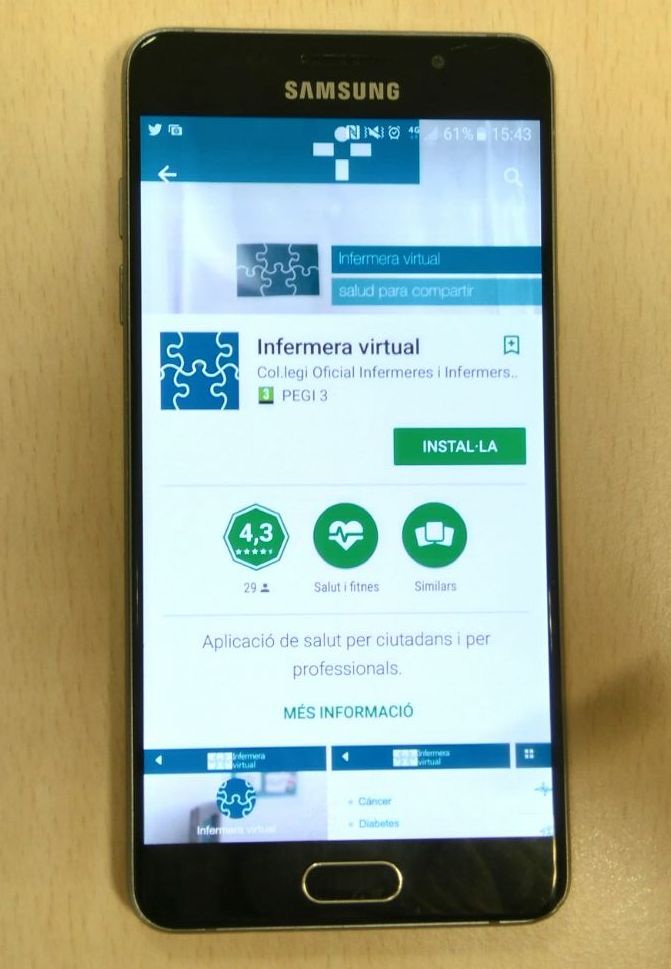
The portal is continuously growing and being improved and is also adapted to the circumstances of the changing context. This is why all the certified and personal content has been offered for more than a year via a free mobile application available both for Android and iOs.

A citizen can find all this content adapted in video formats, infographs and health tutorials which facilitate both the access to and the understanding of information. QR Codes can also be scanned using the application and notifications received related to health. On the other hand, health professionals can prescribe this content via a mobile phone or tablet.

One of the highlights of the application’s menu is the access to the more than  110 tutorials via ‘Look after your health’, aimed at clarifying doubts and obtaining more information about health problems, healthy life styles, life situations and aspects related to the different stages of life. Entering in ‘Files’, nurses and all health professionals can access the complete files created by nurses and other expert authors. Professionals also have direct access to consult on the structure and function of the human body.

If you are a user of the Metropolitan Transport of Barcelona, you may have seen the health advice in video format which is offered in collaboration with virtual Infermera in some of the metro stations and some Barcelona city buses.

The health advice comes by way of a friendly family of extra-terrestrials that have come to our planet unintentionally, the Bonsu Family, and this allows such diverse subjects as bullying at school to sun protection to be dealt with in less than 16 seconds.

Post written by Marc Fortes (@marcfortes).

The DECIPHER Project: from the interoperability to the procurement of innovation

8 juny
Jean Patrick Mathieu

In 2013 when Agència de Qualitat i Avaluació Sanitàries (AQuAS) relaunched the project DECIPHER (@DECIPHERpcpEU), we were pioneering in the field of Procurement of Innovation and little did we know on the journey ahead. The project proved to be a big challenge for the AQuAS, the Catalan Department of Health and the all consortium involved.

The European Commission Officers and the projects evaluators would also be faced with a new type of project and with the projects consortium and stakeholders, we all learned a lot in this exciting adventure.

The journey would end in March 2017 with the Barcelona final event, but the aftermath of the projects will definitely be felt in the years to come.

Rossana Alessandrello at the DECIPHER – FINAL EVENT (Barcelona 2017)

DECIPHER was a project funded by the European Commission under the 7th  Framework Programme (FP7) under a call for project in 2011 whose topic was “Patient Guidance Services (PGS), safety and healthcare record information reuse”.

The objective of the project was to enable secure cross-border mobile access to existing patient healthcare portals which are individually supported by public bodies.

DECIPHER would deploy Pre-commercial Procurement (PCP) to create step-change innovations in mobile patient ICTs. Using electronic patient records as the key enabling technology, this joint PCP would create technology-led service transformation in cross-border mobile healthcare, delivering qualitative and significant benefits to patients and healthcare organisations.

The Consortium consisted of ESTAR Centro (Tuscany), TicSalut (Catalonia) and CMFT (Manchester).  Suppliers will be challenged to build on outputs from epSOS, CALLIOPE, and LOD2, and advances in mobile technology. Moreover, experts from Greece, France, Finland, UK, Sweden and Ireland will provide support.

DECIPHER will generate a portfolio of interoperable applications, deployed on a pan-European platform. This resource will improve existing healthcare services by supporting mobility of patients and healthcare providers.

As a use-case scenario, the solutions were to focus on patients with a chronic health condition and Diabetes type II was selected.

From anywhere in the European Union, a patient will be able to use a secure mobile device safely to gain 24/7 access to their prescription data, emergency data, examination results and other health information.

By the end of the project, 6 prototypes solutions were funded of which 3 finalists received full funding to develop a full final version. Although the respective national Personal Health Records (PHRs) systems of the three procuring authorities are not able to implement those solutions in their current state, the achievements are important for DECIPHER:

  1. Invaluable experiences were gathered by all stakeholders involved in the project
  2. SMEs from all over Europe came under the radar of potential clients, the public procuring authorities in the consortium and those who were interested on the project
  3. AQuAS acquired an expertise in procurement of innovation that is now well-renowned in Europe and beyond.
  4. The lessons learned will be applied in the new PCP project coordinated by AQuAs, Antisuperbugs.

DECIPHER project was initially designed to address the interoperability issue in the healthcare sector. But, this project has been fundamental in the development of a model of procurement of innovation useful for the set-up of this kind of project. With this objective in Catalonia, we consider DECIPHER as a case use where AQuAS lead the path with a set of toolkit, methodology and expertise.

Post written by Jean Patrick Mathieu.

PERIS and people: research assessment by AQuAS

30 març
Núria Radó, Paula Adam

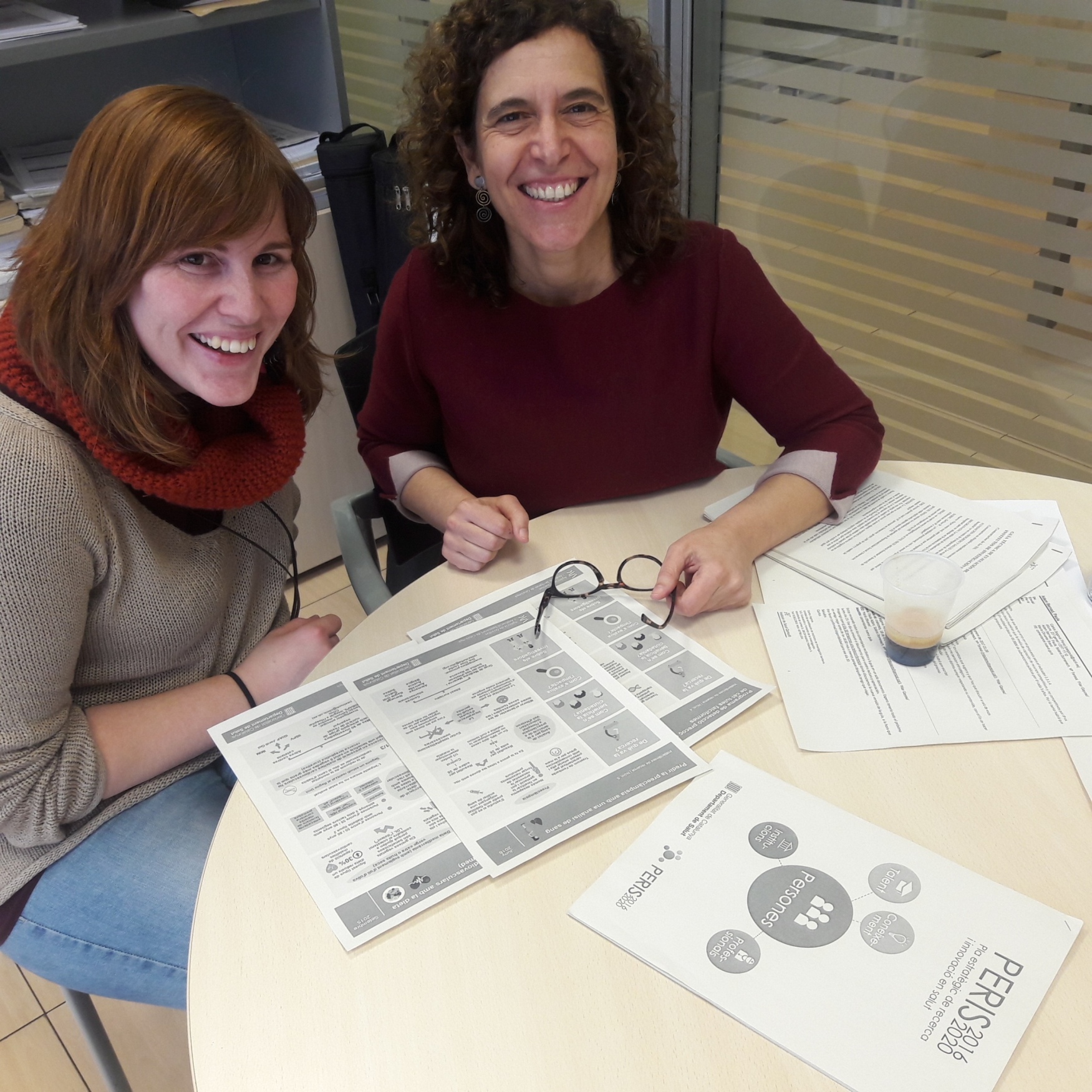
The first call of the Strategic Plan for Research and Innovation in Health 2016-2020 (PERIS in Catalan) for funding research and innovation, still pending resolution, prioritizes programmes which foster talent and employability and programmes of excellence in knowledge.

Accordingly, four actions have been initiated by competitive tendering to finance:

  1. The inclusion of scientists and technicians in national research groups
  2. The increase of nursing professionals in order to free up some of their workday so they can do research work
  3. Research projects aimed at primary care
  4. Major programmes focusing on four different subjects: personalised medicine, regenerative medicine, cooperative independent clinical research and cohort studies.

How are the PERIS calls assessed to determine which applications deserve funding?

The criteria for assessment are defined by the order of the requirements, forgive the repetition, and the requirements of each call. This is the instrument that sets out the rules to determine which projects or people are susceptible to receiving finance. Some will always be discarded and, depending on the specific criteria and resources available, others chosen which are considered worthy of funding.

Deciding which criteria to use and how they are assessed/rated/applied is a powerful science policymaking tool to design the research system it aspires to be: excellence, the subject, the discipline, the age of the applicants, the territoriality of the organisations or foreseeable impact are different variables to bear in mind when deciding who is worthy of being able to develop their research.

The Research Team at AQuAS has been commissioned to manage this process of assessment. This is why we accompanied the General Manager for Research and Innovation of the Health Department, Dr Andreu, in the public presentations he gave in different health research institutions linked to hospitals. We were impressed by the attendance at these informative sessions.

The assessment has been done by a panel of experts involving a total of 42 research professionals throughout Catalonia and Spain. It has required intense activity given that more than 490 applications of a very high level were received.

Looking back after having completed the assessment of the this first call, we feel, more than ever, that we made the right decision by putting people in the centre of the PERIS logo, large and circled by a prominent colour.

It is not only the plan itself which has been designed like this, to promote research with people at its centre, involving and motivating a great variety of professional profiles. PERIS has been a catalyst for mobilisation in the health system and in health research, even before the starting gun was fired, as seen in the packed informative presentations and in the involvement of the participants in the assessment panels, working deep into the night.

As can be expected, getting the staff at the Agency for Health Quality and Assessment of Catalonia (AQuAS) involved, has not been difficult either. We are eager to contribute to this strategic project by using a key tool for selection, accountability, continuous analysis and improvement of opportunities which is what assessment is all about.

Long life to PERIS!

Post written by Núria Radó (@nuriarado) and Paula Adam (@PaulaAdam4).

***Full information available here:

Pediatrics in the Pyrinees, an innovative experience in the Alt Urgell (Catalonia)

16 març

Today we interview Jordi Fàbrega (@jorfabrega), director of Pediatria en els Pirineus (Pediatrics in the Pyrenees), a cooperative of pediatricians that already has 7 years of life.

Glòria Ruiz, Neus Méndez, Toñi Parra, Jordi Fàbrega

The existence of rural areas hard to reach, remoteness with respect to large urban centres, an extensive area of land, a low population density and something of a shortfall of paediatricians in the area are the characteristics of the Alt Urgell that have given rise to the Pediatrics initiative in the Pyrenees., an innovative initiative from the Observatori d’Innovació en Gestió de la Sanitat a Catalunya (OIGS).

Observatori d’Innovació en Gestió de la Sanitat a Catalunya (OIGS)

With the experience acquired during these seven years, what improvements has the project provided in your opinion?

I think the most important has been stability and in ensuring a health care continuum for our boys and girls. We have been able to give 100% cover from the start in primary and hospital paediatric care and in on-going medical care including localised standby calls. This has meant excellent access for the population, with a 100% success rate of pre-arranged appointments for the same day, and, in addition, with a high success rate at primary level, with an increase in standards in the quality of care.

This has led to a drastic decrease in emergency visits to hospitals as well as in admissions and transfers beyond the borders of the territory. Although there are fewer admissions, a fact that brings with it an increase in the complexity of child admissions, the average hospital stays for these admissions have been reduced.

In keeping the umbilical cord tied to the Hospital Sant Joan de Déu for training paediatricians and in the referral our patients, it has meant that this rate of success has in fact increased in our territory.

In this way, children and their parents are always attended by the same paediatrician, or team of paediatricians, where all know the problem at hand and provide solutions following the same protocols that would be followed in the Hospital Sant Joan de Déu.

Another noteworthy element is that by integrating ourselves within the Maternal and Child Unit of the Alt Urgell, with obstetricians and midwives, we have widened the homogeneity of interventions to include the whole mother-baby area and this has allowed us to begin projects such as early postpartum discharges with follow ups by paediatricians/midwives together and postpartum support groups which have been very well received by the population.

The web set up in 2011 has also brought us closer to the population enabling us to spread information on paediatric subjects. In particular, the virtual doctor’s consulting room is a frequently used tool by parents to clarify doubts with great flexibility and without having to travel to the doctor’s rooms.

Good results and awards endorse the entity’s task that you began which has been able to guarantee efficient paediatric, primary and hospital care. What are the keys of this success?

I think having the autonomy to manage ourselves is fundamental. Being able to manage our own agendas, timetables and cover for each other, among other things, has allowed us to adapt the task of caring to the reality of the territory and also to the realities of each professional by trying to reconcile our work and family life. What is more, it allows for on-going training.

The other key point is the relationship with a top-level centre like the Hospital Sant Joan de Déu which ensures we get on-going training and it solves problems of professional isolation that we might experience in zones a long way from the metropolis.

In a way, we feel we have a ‘big brother’ that helps us when there are difficulties and who accompanies along our journey.

Do you think this innovative model of self-management could be applied to other medical specialities and extrapolated to other regions?

I am absolutely convinced that it is a model which can be reproduced in almost all areas of care and in all regions. The important thing is to find professionals who are willing to accept the challenge and that the administration believes in it and is willing to back it.

Information and communication technologies (ICT) have played a key role from the beginning. Of all the innovative actions you have fostered, which one has worked the best?

The web page and virtual consulting room without a shadow of a doubt.

The web page, with its internal part, gives us access to all professionals and it is where all protocols are hung and this means we all work in the same way, including family doctors that are on call in different doctor’s rooms in the Alt Urgell and who have access to it.

The virtual doctor’s consulting room, likewise, means parents’ doubts can be clarified in a relaxed way and without interrupting visits (as always happens with untimely phone calls). On-site visits that require time investment by parents and, above all, discomfort are thus avoided.

You opened a virtual doctor’s consulting room on your web page five years ago, addressed to parents and tutors. Do you receive a lot of consultations via this channel?

As a matter of fact, no. We get 12 consultations a day on average, shared between the four paediatricians on duty in the region (paediatrician and paediatric nurse).

It must be stressed that we have very good accessibility to on-site visits and we attend a total of 3400 children meaning that numbers are logically not very high. The family’s and professional’s satisfaction, respectively, is very high.

Innovation has been the motor of your initiative. Do you have plans for implementing a new project this year?

In December last year, we incorporated the obstetricians from La Seu d’Urgell into the cooperative society. In practical terms, they were already working in close collaboration since 2012 and now form part of the cooperative; this fact consolidates the project a lot.

We would like to have the midwives from the Alt Urgell in the cooperative because with a few small changes, this would allow us to improve care, especially in community health which is lacking at the moment in our region.

This year, CatSalut has asked us to implement the model in other areas of the Pyrenees where there are problems of cover and it is now one of the issues we are looking into.

Interview prepared by Neus Solé Peñalver (@neussolep).

Wishing you all a Joyous Festive Season from the AQuAS blog

29 des.
nadal-2016-marta-millaret
Marta Millaret

From the blog AQUAS we hope you are having a good festive season and would like to thank you for reading and following us.

We publish weekly in Catalan, Spanish and English on subjects related to the projects that are being carried out at AQuAS and we also publish contributions from guest authors. The editorial line of the blog includes a focus on assessment from different points of view and areas of the health system.

Along these lines, we have dealt with healthcare and quality results presented by the different agents who make up the healthcare system, the whole range of observatories of the Catalan Health System (including that which deals with the effects of the economic crisis on the health of the population and innovation), qualitative research, integrated care, the assessment of mHealth, inequalities in health, patient involvement, doctor-patient communication, shared decisions, patient and citizen preferences, variations in medical practice, the prevention of low-value clinical practices, the impact of research, information and communications technology, data analysis in research, tools for the visualisation of data, innovation and health management, the gender perspective in science, statistical issues, clinical safety with electronic prescriptions, chronicity (not forgetting chronicity in children), the effects of air pollution in health and current topics.

blog-aquas

The most read articles in 2016 have been:

However, we have published many more texts, 51 posts to be precise, without counting this one, with the aim of sharing knowledge and generating a space for reflection, open and useful for everyone.

Thank you very much, a joyous festive season and see you in the new year!

Post written by Marta Millaret (@MartaMillaret), blog AQuAS editor.

nadal-2016-aquas-bicicleta


Is it possible to combine active and healthy ageing with innovation?

22 des.
toni-dedeu
Toni Dedéu

The European Innovation Partnership on Active & Healthy Ageing (EIPonAHA) is an initiative of the European Commission to deal strategically with the social challenges associated to active and healthy ageing, to make good practices in innovation more visible and to facilitate exchanges between regions, all of which promote interregional cooperation and the value of excellence.

What is its aim? To improve the health and quality of life of Europeans, especially of people older than 65, and to give support to the sustainability and efficiency of health and social care systems in the long term as well as to enhance the competitiveness of EU industry through expansion in new markets.

The reflection on how health systems interact with an ageing population and care in chronicity has been been one of the main lines followed in the AQuAS blog during 2016; they are subjects that affect our society and, precisely because of this, are part of the Health agenda.

In this context, having links to European projects is fundamental, where networking, collaborative projects and assessment are absolutely essential.

eiponaha

This is the underlying idea of the Reference Sites awards which assess regional European health ecosystems based on four axes:

  1. Political, organisational, technological and financial willingness for an innovative approach to active and healthy ageing
  2. The capacity to share knowledge and resources for innovation
  3. Contributiing to European cooperation and transferability of own practices
  4. Providing evidence of positive impact

The status of “Reference Site” is awarded to systems, alliances and ecosystems in health which comprise different players at a regional European level (government authorities, hospitals and care organisations, the health industry, SMEs and start-ups, research and innovation organisations and civil society) which have invested in developing and implementing innovative-based approaches to active and healthy ageing. These practices must be carried out with a comprehensive approach and vision and proof of the impact of their results must be provided.

Four stars is the highest distinction awarded by EIP on AHA and this is the score obtained by Catalonia as a leading health ecosystem and a reference for institutions and European organisations in the area of innovation in active and healthy ageing. These factors encourage the internationalisation and visibility of the Catalan health system and at the same time increase the possibilities for creating initiatives and forming consortiums for collaborative work with other European regions.

Being self-critical of the  different health systems is as important as the knowledge and recognition of one’s own strengths and values. Sharing this is a way of acknowledging the involvement and work done by many professionals. We do not work in isolation; as a whole, this work has involved and involves AQuAS, the Fundació TicSalut, the HUBc (Health University of the Barcelona Campus), the ICS  (Catalan Health Institut),  the IDIAP Jordi Gol (Institute for Research in Primary Care), the Pere Mata Institute, the IRB Lleida (Biomedical Research Institution of Lleida), the VHIR (Vall d’Hebron Institut de Recerca), the Consorci Sanitari del Garraf  and the Institut Guttmann.

Last 7 December in Brussels, on behalf of the Department of Health, I received the award for the Catalonia Reference Site group given by the European Commission. It is relevant because this fact defines Catalonia as one of the most dynamic and leading European regions in number and quality of initiatives, investment and results in generating and implementing innovative solutions to resolving problems in care and health to elderly people, chronic patients and other groups of risk patients.

The fact that Catalonia has obtained this distinction from the European Commission has a very clear meaning: Catalonia is recognised as one of the leading European regions regarding active and healthy ageing and innovation.

On we go.

Post written by Toni Dedéu (@Toni_Dedeu), Managing Director of AQuAS.

The “perfect” health system

20 oct.
Joan MV Pons
Joan MV Pons

Mark Britnell is an international expert in health systems having held several senior positions in the NHS and currently provides consulting services for several countries. With this wealth of experience, Britnell wrote a book in 2015 with the inspiring title of, In search of the perfect health care system (1). In it, Britnell examines the dilemmas facing governments, the global challenges such as demographic, epidemiological, technological and economic transitions, as well as the more specific cases facing each country.

A significant portion of the book, more than half, is dedicated to examining individual countries grouped by continent: the Asian region including Australia (with large countries from Japan, China and India, to small densely populated enclaves such as Singapore and Hong Kong) Africa and the Middle East (just three very different examples such as Qatar, Israel and South Africa), Europe (from Portugal to Russia via the Nordic countries, Germany, Italy, France and the English) and the Americas (from the north; Canada, USA and Mexico and the south, such as Brazil). Too bad that the section on the Iberian Peninsula only speaks of our western neighbours (the eastern side but a general walk through).

There is no questioning that Britnells’ knowledge has been acquired first hand, given his worldwide expertise in conferences and consultancy. As the author mentions, he is often asked which country has the best health care system? Since the WHO report, Health systems: Improving performance (2), published in 2000, several country rankings have been published according to the assessment of their health systems using a variety of methodologies and outcomes. The table below serves as an example.

pons-comparison-health-systems

Nowadays, rankings proliferate as can be seen in universities and research institutions/centres. The indicators may be different, but it seems that one may always end up finding the most favourable ranking for them. Catalan public universities are a good example, given that centre advertises their position – besides that of excellence in comparison to other universities which are not necessarily British –  in the ranking system which makes it stand out to a greater degree that other Catalan universities.

Britnell, getting back to our point, after so many rankings, lectures and consulting, make a proposal on what the best health system might be by taking the best areas from the different countries. If the world could have a perfect health system, it would have to possess the following characteristics:

–    Universal healthcare values (UK)
–    Primary health care (Israel)
–    Community services (Brazil)
–    Mental health and welfare (Australia)
–    Promoting health (Scandinavian countries)
–    Empowerment of patients and communities (certain African nations)
–    Research and development (USA)
–    Innovation and new ways of doing things (India)
–    IT and Communication technologies (Singapore)
–    The capacity of choice (France)
–    Funding (Switzerland)
–    Care for the elderly (Japan)

References

(1) Britnell M. In Search of the Perfect Health System. London (United Kingdom): Palgrave Macmillan Education; 2015.

(2) The World Health Report 2000. Health systems: improving performance. Geneva (Switzerland): World Health Organization (WHO); 2000.

(3) Where do you get the most for your health care dollar?. Bloomberg Visual Data; 2014.

(4) Davis K, Stremikis K, Squires D, Schoen C. 2014 Update. Mirror, mirror on the wall. How the performance of the U.S. Health Care System Compares Internationally. New York, NY (US): The Commonwealth Fund; 2014.

(5) Health outcomes and cost: A 166-country comparison. Intelligence Unit. The Economist; 2014.

Post written by Joan MV Pons.