The main challenge in mHealth is understanding each other

3 març
Toni Dedéu - DECIPHER final event 2017
Toni Dedéu

In recent years, the debate about what we should do with health apps has centred around accreditation, certification or assessment. At the same time, multiple lists of health apps recommended by a range of known and recognised initiatives have been drawn up.

An example of this would be the iSYScore2017 ranking of the Fundació iSYS which was presented in the context of the CAMFiC a few weeks ago.

rànquing apps salut

In this context, and with the Mobile World Congress 2017 in Barcelona in full swing, we can ask ourselves what role a Health Technology Assessment (HTA) agency has when considering mHealth.

There is a reality which we cannot evade. Any health intervention needs to be based on evidence, on knowledge of the highest quality at hand, and must be evaluated.

This cannot be done by turning our backs on the real world or innovation. A health app is a tool to carry out a health intervention and so health apps need to be seen as just another intervention, but of course, with some characteristics of their own which will mean there is an extra demand placed on one and all.

Technologists, HTA experts, professionals and citizens have the opportunity to understand each other if we want to be facilitators of recommending safe apps in health. We are not talking about initiatives that can be developed from one sector only and it is not only about apps.

Now more than ever, we need to be flexible and work from a multidisciplinary position. We already talk about co-creation and co-design; quite simply, of co-produced mHealth initiatives based on the expertise of multiple agents including, obviously, citizens.

AQuAS is participating in the assessment of several mHealth projects financed by the European Commission. The PEGASO project stands out, centred on promoting healthy lifestyles among adolescents, and DECIPHER, as an integral solution to facilitate the geographical mobility of patients with chronic diseases such as diabetes type 2 and m-resist, centred on schizophrenia and patients resistant to treatment.

We are faced with the challenge of integrating totally different fields such as the language of technologists and developers; the speed of innovation and the culture of assessment. In addition, this needs to be done without losing sight of the key role of scientific societies and the different points of view of health professionals and end users.

We know there is a lot of work to be done. Technologists and experts in health technology assessment, respectively, have the opportunity to learn a lot from each other. It is about sharing knowledge and expertise to facilitate, ultimately, health tools for citizens and professionals, which have been assessed, are based on evidence, are safe and reliable and have a strong collaborative component.

MWC17
Digital Health and Wellness Summit – MWC17


Post written by Toni Dedéu (@Toni_Dedéu) and Elisa Puigdomènech.

mHealth & user experience: the user decides

23 febr.
Marta Millaret - Elisa Puigdomènech - MWC2017
Marta Millaret and Elisa Puigdomènech

The Economist recently published an article in which they reported that the number of mobile health applications, or apps, was in the region of 165.000, a very high figure that poses many questions.

A large part of these apps are related to well-being and promoting healthy lifestyles, but what makes us choose one over another?

The first thing that comes to mind is that mobile health apps, being a health technology, could and should be assessed based on their impact on health and this is where we are faced with our first problem.

While there is a gold standard when assessing this impact in the area of medication and static interventions in randomized clinical trials, how is this impact assessed in a highly dynamic world? In a world that can include a range of components that users can use depending on their needs? Where pressure is added due to the fact that advances in technology are being made in leaps and bounds and we cannot wait for years before getting results? It is not that simple.

If we venture into the area of mHealth, the first thing we find is great diversity. The design, requirements and assessment of an app developed to help manage diabetes in older people is very different to an app aimed at providing a dose for some medication where improving its adherence is sought, or an app to promote not drinking alcohol among young people before sitting in the driver’s seat, or an app to manage depression and anxiety.

What are we trying to say with all this? Easy and complex at the same time: the intervention that one wants to do via a health app and the target users will determine their use and their adherence.

And we are only just beginning. Apart from aspects related to health and the suitability of content or other more technological factors such as interoperability and security -by no means simple-, other factors come onto the scene such as acceptability, usability and satisfaction, factors related to User Experience (UX).

User Experience in mHealth is essential given that the main aim of it all is to make the tools which are being developed viable, accepted and used by the population who they are meant for, and also that the aim for which they were designed be respected.

After all, the end user who has the last word in deciding whether a health app is used or not, and this is why their participation in all phases of developing these mHealth tools is crucial.

Pursuing these aims of feasibility, acceptability and usability can make us reflect on, for example, the difficulty some old-age people may have when learning to use a smartphone for the first time. However, these obstacles related to the generational factor also exist among young people with new languages.

We suggest let yourself surprised by this video that shows how some adolescents react and interact when using Windows 95 for the first time.

The Mobile World Congress 2017 will be taking place in Barcelona next week. Monday will be one of the days circled into the diary of many professionals interested in subjects on mobiles and health with the Digital Health & Welness Summit 2017 programme.

DWHW 2017

But not everything will be happening at the Mobile. Another important mHealth event will take place on March 1st at the Palau Robert in Barcelona with the DECIPHER project final event.

logo decipherTo be continued

Post written by Elisa Puigdomènech and Marta Millaret (@martamillaret).


Integrated care: what is the main underlying idea?

9 juny

This past 23rd, 24th and 25th May, 2016, Barcelona hosted ICIC16 – The 16th International Conference on Integrated Care where 1,000 attendees from over 50 countries around the globe enjoyed an active and busy agenda.

The experience involved 92 speakers and over 23 hours, which was also possible to follow via streaming. All in all, a challenge which the organizers were successful in delivering. You can read or re-read the Twitter comments from here: #ICIC16.

ICIC - AQUAS
Gabi Barbaglia, Vicky Serra-Sutton, Laia Domingo, Mireia Espallargues, Marina Ordóñez, Montse Moharra

The International Conference on Integrated Care (ICIC) has become a must for professionals who provide care for people and managers working in the fields of health and social services, among others.

Different languages to express the same message: integrated care represents the path we need to follow in order to meet the challenges of our aging populations.

How can we do it? Integrated care proposes the integration of services as a response to the fragmentation of care practice, especially in the biomedical system. The coordination of professionals and institutions aims to improve the experience of patients’ who receive care, as well as their families and to improve their quality of life related to health. This becomes especially key when identifying patients with complex needs.

The main topics covered during the ICIC conference referred to people-centred care within the perspective of those treated and in the coordination, integration and, collaboration of services, professionals and systems (health, social, education, justice, corporate, etc.). In this regard, there were a variety of experiences presented from around the world of collaborative approaches that promote a multidisciplinary and integrated style.

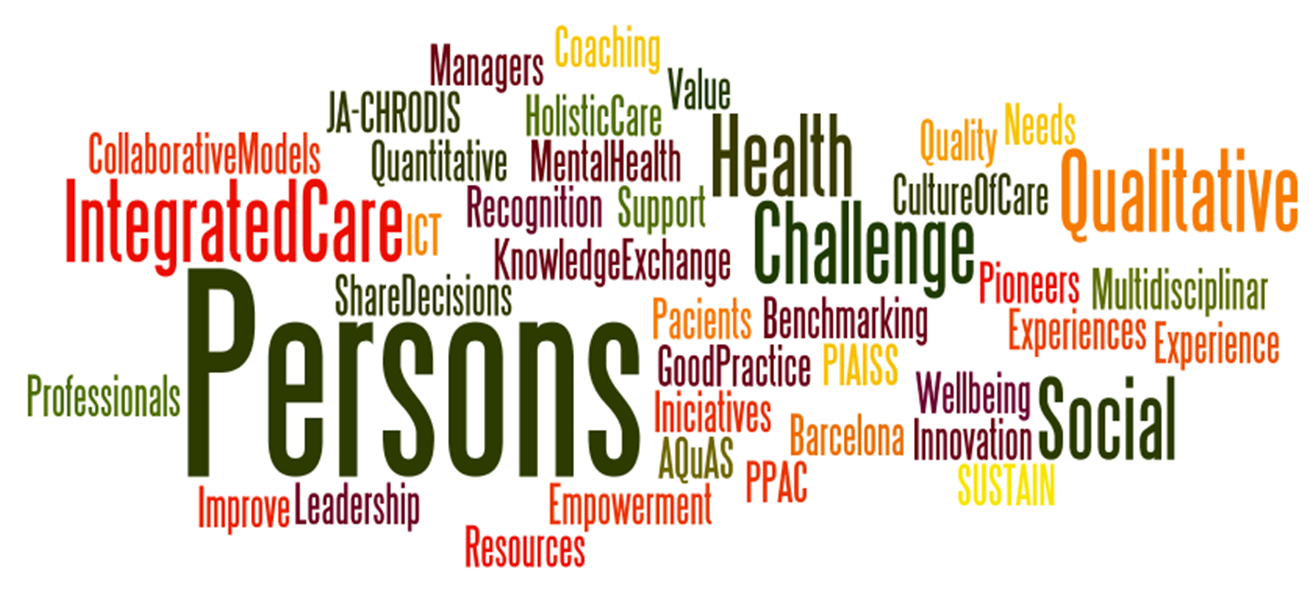
ICIC-cloud-persons

The conference speakers emphasized the value of primary care and community health as being core to providing care to the community as well as the leadership of professionals from the areas of nursing, social work, the field of mental health and other disciplines and profiles.

Following this main topic, several presentations focused on different organizational models of collaborative care which report findings that endorse the adoption of strategies from the bottom up, in other words, strategies that would enable the initiatives proposed by health professionals to reach planners and administrators who, in turn, can provide the support and recognition.

It is important to highlight that there is an ever-increasing recognition of the importance of social determinants of health and looking to the community for the role it might play in shaping these determinants.

One highlight of the conference was the talk Changing culture and measuring what matters given by Alonzo L. Plough in which the speaker summarized the report: Building a National Culture of Health: background, action, framework, measures and next steps.

Don Reding from National Voices, gave an inspirational presentation with Putting what matters most to patients and communities at the heart of health and social care design.

Another outstanding presentation was that given by Professor Deirdre Heenan from the University of Ulster: Integrated care in Northern Ireland: meeting the challenge of mental health.

***You can read more about the ICIC 2016 conference by clicking on the following link:

http://lhalliances.org.uk/international-conference-on-integrated-care/

http://blog.hospitalclinic.org/2016/05/catalunya-acull-la-16-conferencia-internacional-sobre-atencio-integrada/

http://gestioclinicavarela.blogspot.com.es/2016/05/a-proposit-de-la-16th-international.html

That’s not all. Next year’s conference will be held in Dublin (land of innovators!) with the following themes:

ICIC #ICIC17 Dublin

Let’s come back to Barcelona for a while. For some time now, the Agency for Health Quality and Assessment of Catalonia (AQuAS as per the Catalan synonym) has been working on an assessment of integrated care, by way of example with the Evaluation of collaborative social and health care models.

It is also noteworthy the recent publication of the specialised report in the Social Work Magazine (Revista de Treball Social), titled: Integrated social and health care: points to reflect upon, which we believe to be a good cross-section of opinions and a good starting point.

Another iniciative in AQuAS is the SUSTAIN project -funded by Horizon2020, an opportunity for professionals to work jointly with their peers in other countries in an effort to define a roadmap and establish synergies in the field of Integrated care in Europe, a project of great interest for Catalonia.

Finally, it is vital not to lose sight of another key issue which is equality in the access to and outcomes from services, and this implies regular analysis of variations  in care which have not been justified.

A further helpful instrument for incorporating the opinions of those who receive care and the professionals involved is that of shared decisions. This involves a line of work which incorporates available evidence in a specific area or department of care, the preferences of patients when faced with the different health intervention options, and the essential information for improving the knowledge of all those involved (professionals, patients and their families and environment).

Post written by Vicky Serra-Sutton, Gabi Barbaglia (@gabibarblagia), Laia Domingo, Marta Millaret (@MartaMillaret) and Mireia Espallargues.

Aline Noizet: “Digital tools transform the patient into the CEO of his own health”

5 maig

Health 2.0 Europe 2016From 10 to 12 May, Barcelona becomes the European capital of digital health innovation, thanks to the Health 2.0 Europe congress. The seventh edition of this event for experts from the healthcare sector gathers more than 120 speakers and around 600 professionals from around the world.

The Agency for Health Quality and Assessment of Catalonia (AQuAS) and the Observatory of Innovation in Healthcare Management (OIGS) will be present in the free panel Digital health tools transforming the nurses’ daily mission, where we can see live demonstrations of technological solutions, developed by and for nurses.

The coordinator of the convention and consultant in digital health Aline Noizet (@anoizet) gives more details in this interview and explains how the European healthcare system is being redefined through these digital tools.

AlineNoizet
Aline Noizet, consultant in digital health and organiser of Health 2.0 Europe 2016

What do we understand by digital health of health 2.0?

The group of all new technologies focused on the patient that can be interconnected and that provide data that facilitate decision-making is known as digital health or health 2.0. They are tools developed for start-ups that encompass items from applications for mobile phones and wearable devides to virtual platforms. They always appear in response to a very specific need and contribute to improving the work of medical professionals and the experience of users.

If experts claim these new technological solutions are redefining the healthcare ecosystem, in what does this transformation consist?

The current ecosystem is vaster and encompasses more agents, directly or indirectly involved in the healthcare management, such as the small technological companies, pharmaceutical industry and insurance companies. The main novelty, however, lies in the fact that it puts the patient in the centre of the healthcare system.

In this system, where everything turns around the patient, how can digital tools improve his experience?

The new solutions facilitate communication between patients and healthcare professionals. Currently, there are platforms and virtual spaces where you can find quality information and clear doubts, almost in real-time. Thanks to the new technologies, the patient can be more involved when it comes to making decisions and can use telematics to explain how he feels and how his treatment progresses. The digital tools grant him more autonomy and convert him into the CEO of his own health.

And the healthcare professionals, how do they benefit from the use of this technology?

There are many benefits to the use of digital tools. They help the medical team to make faster and more accurate diagnoses, and offer a wider view on the users’ health state. Furthermore, they allow cost reduction through patient monitoring at home and they could improve the quality of care with the use of augmented reality glasses. Moreover, new technologies facilitate communication between health professionals from anywhere in the world, who can share information or get a second opinion immediately.

In the panel, with the participation of the Observatory of Innovation and moderated by the Portuguese nurse Tiago Vieira, member of the Advisory Council of the European Forum for Primary Care (EFPC), demos of the most innovating digital health tools will be presented. Whom is this session addressed to?

The session will be most inspiring for nurses, since they are in direct contact with both doctors and patients, and they know from firsthand the needs of both groups. The new technologies are transforming their role and can offer them many advantages with respect to patient care. Entrepreneurs will show them the operation of their solutions and professionals from different European countries will explain the benefits of implementing digitalization in their Center. The session may also be of interest to doctors, patients, entrepreneurs, investors, pharmaceutical laboratories and insurance companies. Start-ups can find inspiration and ideas for new solutions for medical personnel, while investors will have the opportunity to learn about the most innovative projects in digital health. If you’re a healthcare professional, you will discover how these tools can improve your performance in your daily tasks, and if you’re a patient or normal citizen, you can participate by giving your opinion as a user or future user of these new applications.

In order to participate in this free session about health digital tools, you only need to register. We would be delighted if you could join us!

Interview prepared by Neus Solé Peñalver (@neussolep).

Ioannidis and the industry: a persistent distortion

7 abr.

John PA IoannidisJoanMVPons is a scientist and professor originally from Greece, currently working at Stanford (Meta-research Innovation Center – METRICS) who is, undoubtedly, among the most prolific authors of medical scientific literature.

Some of his papers, alone or in collaboration, have had a great impact. Who does not remember the one entitled “Why most published research findings are false?”. Nowhere in his large output will you find trivialities, and he recently came to Barcelona to speak about defective research and even about the waste of resources this implies. But we will leave the latter topic for another occasion.

The paper by this author I want to comment on is the one written in collaboration entitled “Undue industry influences that distort healthcare research, strategy, expenditure and practice: a review” published in 2013 in European Journal of Clinical Investigation.

One might think that all has been already said about the (bad) influence of drug and health care products industries. There is even a literary body or genre in biomedical scientific publications exclusively devoted to this topic. And books abound, too. All that could be said has been said. Well, actually it hasn’t. Undue influence, such as biases, is far more subtle than we think. It is often hard to tell how, similarly to interest conflicts in biomedical research or in prescription practices, the one who does it refuses any influence, since science could not admit it, as its own deontology doesn’t. Fools!

What is interesting about this paper is its review nature, not only for the number of papers gathered, but because it provides a more integrated (re)view of the different elements upon which industry acts, or is allowed to act. It should be noted that the interests and profit of the drug and health care products industry are quite legitimate, but it clearly shows some specifics that put it aside from other manufacturing industries, and not just because its important investment in R+D+i. It is believed to be one of the most profitable industries, possibly due to its large margins, but also because human diseases and ailments are here to stay, even though their end –which both the poor and the rich want to delay– is ultimately inescapable.

Ever since I learned it, I am very fond of a quotation by George W Merck (1894-1957) who for 25 years chaired the drug company that bears his family’s name (1925-1950). As this visionary man said: “We try to remember that medicine is for the patient. We try never to forget that medicine is for the people. It is not for the profits. The profits follow, and if we have remembered that, they have never failed to appear. The better we have remembered it, the larger they have been.“ I wonder what he would think of it now.

Coming back to Ioannidis and his paper, there he follows the outline of how this (bad) influence acts, and the main elements –which changed with time– upon which it exerts its distorting effect, although not as an exclusive factor. Governments, as with other industries also regulated by them, play an essential role.

Evidence based medicine - Clinical practice guidelines - Medical practice

Post written by Joan MV Pons.