Never before have we been so healthy and at the same time, never before have we been so sick

21 abr.
LluísBohígas
Lluís Bohígas

When I was born in 1950, life expectancy at birth was 65 years. I have now reached the 65-year mark and as such, according to the data, I should be starting to lose expectations. Fortunately, in recent years, medicine, health and lifestyles have improved and my reviewed life expectancy has increased, according to data from Idescat, by 20 years. This means that I have gained one year of life for every 3 years I have lived. That’s not bad! I am delighted with the figures, but there is one thing that worries me. That thing is called healthy life expectancy. This is calculated by combining mortality data which gives us life expectancy, together with morbidity data which can tell us how many years we are expected to be unhealthy. My healthy life expectancy is currently 12 years, in other words, I can spend 12 of the 20 years I have remaining healthy, and 8 unhealthy. Statistically speaking, that is.

And what diseases face me on the road ahead? Well the most serious life-threatening diseases are cardiovascular disease and cancer. Suffice to say that many of the gains we have achieved in terms of extending life expectancy have come from reducing cardiovascular mortality. Cancer is also in decline, thanks to improvements and research in health. Certain types of cancer are less common due to the decrease in the number of people who smoke. For example, lung cancer is declining in men but has increased in women. For other forms of cancer, there is now very effective treatment and medication that can relegate the disease to chronic status. However, despite the fact that these diseases are serious, they do not have us visiting the doctor every day. We visit the doctor complaining from high blood pressure, cholesterol, diabetes, heart failure, etc. Some of these diseases are linked to the largest public health problem today: obesity. Tobacco or alcohol are no longer the major public health problems, but instead it is obesity. The number of cases of are growing day by day and it is considered to be the root cause of certain diseases such as diabetes.

Obesity is caused by two factors: overeating and taking less exercise than we should. Most modern developments result in us doing less exercise: elevators, escalators, teleconferencing, etc., and a lot of the media input encourage us to eat more or to consume sugary drinks. The combination of these factors mean that today around 15% of the Catalan population is obese.

The most common disease in people over 65 years old today is called polypharmacy, in other words, the use of more than three types of medications on a daily basis. In many cases this can be more than 10 different drugs and there are some people who have a daily consumption of 20 drugs. Each drug is prescribed to address a particular health problem, and health problems have multiplied. Nowadays, we don’t have only one disease, we have several, and each disease has its own therapeutic arsenal. Doctors must monitor patients, not only to control the disease, but also to ensure they prescribe drugs that do not have adverse effects on the patient’s other conditions. When visiting our GP, they have to take into account a number of parameters, and a visit to the hospital can mean appointments with a number of different medical services. One of the most serious health issues today is derived from interactions between different drugs or therapeutic activities that can act as obstacles to each other.

Medicine has come a long way since I was born. We have discovered so much about diseases and we now have much more effective medicines and surgery to cure many conditions. Nevertheless, medicine is poorly prepared for the new patient: elderly, with several diseases, some mental (Alzheimer’s, dementia, depression, etc.), without family, and prescribed a lot of different medication. Because the system cannot cope with the complexity, they end up sending the patient to an elderly care nursing home.

For several years, voices have been raised in healthcare circles demanding the reorganization of services to meet the demands of these new patients. These voices have difficulty making themselves heard and it is very difficult to change the way health services operate. We have reduced mortality thanks to specialization and superspecilisation with diseases being defined with greater precision, but the patient has been reduced to a sack of diseases. The new medical perspective asks to view the patient as a whole and not only each one of the diseases they suffer from. There is still much work to do.

The current paradox is that we have never been so healthy and at the same time, we have never been so sick. Never before have we been able to live for so long in good health and never before have we lived so long with so many diseases to trouble us, to restrict us and make us dependent on health services. Faced with this situation, health services must adapt and patients must take a more active role in caring for their diseases.

Post written by Bohígas (@bohigasl), economist.
The Observatory, gateway to health open data

14 abr.

Núvol Open dataThe information generated by the interaction of citizens and the healthcare system keeps increasing in size. Just to get an idea, last year, only in Catalonia there were nearly 45 million consultations in primary care centres, more than 700.000 patients were hospitalised, and over 150 million prescriptions were made. However, there is much more stored in administrative records (diagnostic tests, medical imaging, hospital prescriptions, expenditures, etc.) which are kept and managed in large databases. Government officials are responsible for the safe keeping of this information, and it may use it to improve the quality of healthcare and for healthcare planning purposes.

Furthermore, advances in the development, interoperability and crosslinking of the different information systems are making it easier to gather a large amount of data that will contribute to better characterise both the general and the patient population, and they are essential to assess the results of healthcare policies.

There is a wealth of opportunities with the increasing amount of data, all of them available in electronic formats and with more quality, and with the better linking between administrative databases. Thus, the information gathered leads to new ways of generating knowledge, especially when multiple data sources are combined (genetic, environmental, socio-economic, etc.) and made available to the citizens.

This turns information into a valuable asset for planning and assessment, but also for third parties, especially in research and in initiatives aimed at enhancing the use of open data.

Open data are a actually a philosophy, as they represent a practice that encourages the free access of data for everyone, without technical limitations. This means that the original files containing the data are available to the public in the most structured way as possible. This enables any computer system to read them, and even to easily develop software based on them.

This trend towards freeing the access to data is parallel to the need of the Catalan healthcare system of managing the whole life cycle of information, from the generation of information to the knowledge dissemination.

Information and communication technologies, and information systems become key strategic allies to achieve the above objectives, and to succeed in the integration, transparency, assessment and accountability by the healthcare system and its different actors.

In the case of Catalonia, the Autonomous Government is committed to a progressive disclosure of the available public data while respecting the privacy, safety and property limitations applicable in each case through the Open Data portal, where all data are indexed and characterised. This is done following the international trends regarding the disclosure of public data, and it counts with the advice from the W3C experts (World Wide Web Consortium).

The Department of Health is thus also joining the initiative of supporting free access to data and public information. This will enable to further advance towards an open government system, based on the values of transparency, service and efficiency, on promoting the generation of value through reusing public information, on easing the internal organisation of the information systems, and on fostering interoperability among the components of the healthcare system.

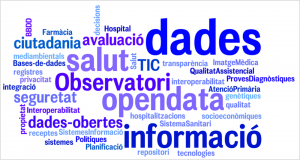
The Catalan Health System Observatory collaborates in this project by favouring the knowledge about the healthcare sector in Catalonia, and by supplying the citizens with health information to assess the healthcare system itself, to support decision-making and to favour transparency and accountability. With this objective, the Observatory is strongly determined to unveil to the general public all the information regarding their healthcare system. Along with other products, the Observatory publishes on its website a set of health and healthcare activity indicators, consisting of texts, charts and open data files.

Catalan Health System Observatory

Additionally, all the data published in the Observatory reports (Results Centre, Crisis & health, etc.) are also available to the public as open data formats and infographics.  Finally, the Observatory website provides a link to the open data portal and a collection of health open data available up to date.

Check the open data available at the Observatory website!

Open data gencat - open health data


Post written by Montse Mias (@mmias70) and Anna García-Altés (@annagaal).

Ioannidis and the industry: a persistent distortion

7 abr.

John PA IoannidisJoanMVPons is a scientist and professor originally from Greece, currently working at Stanford (Meta-research Innovation Center – METRICS) who is, undoubtedly, among the most prolific authors of medical scientific literature.

Some of his papers, alone or in collaboration, have had a great impact. Who does not remember the one entitled “Why most published research findings are false?”. Nowhere in his large output will you find trivialities, and he recently came to Barcelona to speak about defective research and even about the waste of resources this implies. But we will leave the latter topic for another occasion.

The paper by this author I want to comment on is the one written in collaboration entitled “Undue industry influences that distort healthcare research, strategy, expenditure and practice: a review” published in 2013 in European Journal of Clinical Investigation.

One might think that all has been already said about the (bad) influence of drug and health care products industries. There is even a literary body or genre in biomedical scientific publications exclusively devoted to this topic. And books abound, too. All that could be said has been said. Well, actually it hasn’t. Undue influence, such as biases, is far more subtle than we think. It is often hard to tell how, similarly to interest conflicts in biomedical research or in prescription practices, the one who does it refuses any influence, since science could not admit it, as its own deontology doesn’t. Fools!

What is interesting about this paper is its review nature, not only for the number of papers gathered, but because it provides a more integrated (re)view of the different elements upon which industry acts, or is allowed to act. It should be noted that the interests and profit of the drug and health care products industry are quite legitimate, but it clearly shows some specifics that put it aside from other manufacturing industries, and not just because its important investment in R+D+i. It is believed to be one of the most profitable industries, possibly due to its large margins, but also because human diseases and ailments are here to stay, even though their end –which both the poor and the rich want to delay– is ultimately inescapable.

Ever since I learned it, I am very fond of a quotation by George W Merck (1894-1957) who for 25 years chaired the drug company that bears his family’s name (1925-1950). As this visionary man said: “We try to remember that medicine is for the patient. We try never to forget that medicine is for the people. It is not for the profits. The profits follow, and if we have remembered that, they have never failed to appear. The better we have remembered it, the larger they have been.“ I wonder what he would think of it now.

Coming back to Ioannidis and his paper, there he follows the outline of how this (bad) influence acts, and the main elements –which changed with time– upon which it exerts its distorting effect, although not as an exclusive factor. Governments, as with other industries also regulated by them, play an essential role.

Evidence based medicine - Clinical practice guidelines - Medical practice

Post written by Joan MV Pons.

Stratification and morbidity database (2n part)

31 març
Foto Emili Vela
Emili Vela

(This post is the second part of this post)

A key element for completing the stratification of population in risk groups is information system. It’s necessary to have a database that integrates information collected from different health records and therefore, in order to meet this demand, the population morbidity database was created.

The point is that every day there is more and more emphasis on the need to provide patients with a comprehensive and integrated health and social care, but the analysis and evaluation of this care can not be carried out correctly with fragmented information systems, on the contrary: it must be done starting from the integration of the data these contain.

Population morbidity database structure

The population morbidity database is based on a system of related tables that pivot around the users table, which includes the main data of the insured patient (demographics or health status, to name two examples).

Currently, there are three more tables: the diagnostic, the contact with health services and the pharmacy, but this type of structure relatively easily allows incorporating both information from new records (outpatient clinics, dialysis, respiratory therapy, etc.) and new tables with other relevant information, such as results of clinical findings:

Figure 2: Structure and content of the population morbidity database. The clinical determinations table in gray is not yet implemented.

Taula d'assegurats

The population morbidity database integrates information from the following records:

  • Registro Central de Asegurados – (RCA) (Central Registry of Insured Patients) managed by public relations management of CatSalut. This register basically provides all the information of residence, socio-demographics and health status of the insured patient.
  • Registros del conjunto mínimo básico de datos – (CMBD) (Records of basic minimum data set) managed by CatSalut Division of demand and activity analysis. These records feed both into the diagnoses table and in the contacts tables. There are different registers to collect information from the healthcare lines:
  • Hospitalization (CMBD-HA): information provided by general acute care hospitals (hospital admissions, outpatient surgery, home hospitalization, day hospital) from 2005 to 2014
  • Socio – sanitary (CMBD-SS): information of the care provided by the health centres of internment (long and medium stay and UFISS) and outpatient care equipment (PADES) from 2005-2014.
  • Psychiatric hospitalization (CMBD-SMH): information of the care provided by psychiatric hospitals from 2005-2014.
  • Outpatient Mental Health (CMBD-SMP): information of the care provided by outpatient mental health centres for the period 2005-2014.
  • Primary Care (CMBD-AP) information on the care provided by primary care teams from 2010 to 2014.
  • Emergency (CMBD-UR): information of emergency care (hospital and CUAP) from 2013 to 2014.
  • Pharmacy activity Log (RAF) managed by CatSalut’ management of pharmacy and medicine unit. This record provides all the information about outpatient pharmacy dispensing for the period 2011-2014.
  • Record health services turnover (RF) managed by the Division of care services provision. This record provides information on any activity financed by CatSalut, but that does not rely on a specific record: hospital outpatient clinics, dialysis, home oxygen therapy, rehabilitation or non-emergency medical transport. This record provides information mainly on the contacts table for the period 2011-2014.

The possible uses of the population morbidity database are multiple: the population stratification, the specific analysis of certain health problems (broken femur, IC, COPD,…), the development of population indicators of efficiency in the use of resources, etc.

We can conclude that, for the volume of data that integrates, this database has the characteristics of a structured «big data», with a considerable capacity for growth and adaptation to new requirements and data sources and offers enormous possibilities for analysis.

Post written by Emili Vela, head of Modules for Tracking Quality Indicators (MSIQ). Health Care Area. CatSalut.

Preventing Overdiagnosis: appointment in Barcelona

24 març

Next 15th April is the new deadline for submitting article abstracts for the Preventing Overdiagnosis Conference which will be held in Barcelona at the end of September 2016.

Who is this congress aimed at?

This congress is open to the whole society; for this reason, the congress is not only aiming at health care professionals, but also welcomes the participation of patients and all other citizens.

What do we understand by overdiagnosis?

Overdiagnosis is defined as the diagnosis of an illness which would not produce symptoms during a person’s life, but the treatment and follow-up, to which this person could be submitted, would not produce any benefit, and can even be harmful and generate costs.

Does overdiagnosing have consequences?

Yes, on an individual level, the consequences of overdiagnosing go from the negative effects of unnecessary labelling, damage as consequence of medical tests (radiation effects, false positive or false negative tests), unnecessary therapy (surgery, medication) and, on a more demographic level, one of the consequences of overdiagnosing refers to the opportunity cost, generated by a misuse of resources which could have been assigned to prevention and treatment of real illnesses.

What can we read on overdiagnosis?

We recommend the section “Too much medicine” of BMJ, the section “Less is more” of JAMA, the recommendations made by the Project Essencial and the book “Overdiagnosed. Making People Sick in the Pursuit of Health”.

Anything else?

Yes, indeed. We’ll be expecting you for the 4th edition of the International Preventing Overdiagnosis Conference, which will take place on 20th, 21st and 22nd September in Barcelona. Taking into account the congress program, it will be an ideal setting to share initiatives and work for the future.

If you want to read more on this subject, you can read this other blog post.

Post written by Cari Almazán (@AlmazanCari) and Marta Millaret (@MartaMillaret).

Shall we talk about overdiagnosis? Yes, in Barcelona next September…

17 març
carialmazan
Cari Almazan

Overdiagnosis is defined as the diagnosis of an illness which would not produce symptoms during a person’s life; it’s the result of the correct diagnosis of an illness whose treatment and follow-up do not produce any benefit, but on the other hand, could be harmful and generate costs. Overdiagnosis is neither the consequence of an erroneous diagnosis, nor of a false positive test.

The broadest definition of overdiagnosis refers to its consequences: negative effects of unnecessary labelling, damage as consequence of medical tests (radiation effects, false positive or false negative test results), unnecessary therapy (surgery, medication) and the opportunity cost, generated by a misuse of resources which could have been assigned to prevention and treatment of real illnesses.

Well-known examples of overdiagnosis are the screening programs for the detection in an early stage of cancers, which would never cause neither symptoms in nor the death of a patient, or ever increasingly sensitive diagnostic methods, detecting the smallest of abnormalities which would remain benign anyway (incidentalomes). Also the progressive reduction of diagnostic thresholds can eventually lead to invented disorders and to the fact that healthy and asymptomatic persons could be classified as sick while they are not, receiving treatments with higher risks than possible benefits.

Let’s go back in time. The concept of overdiagnosis has been described for the first time approximately 50 years ago, in relation to cancer screening, but the term doesn’t become popular until the year 2011 through the book “Overdiagnosed. Making People Sick in the Pursuit of Health”. At present, overdiagnosis is discussed in some sections of prestigious scientific publications such as the BMJ (Too much medicine) or the JAMA (Less is more), and is the subject of some specific congresses as now the Preventing Overdiagnosis Conferences. In our specific context, there are also initiatives, such as Choosing Wisely and the Essencial, who work out recommendations to avoid clinical practices of little value and include subjects related to overdiagnosis.

Preventing Overdiagnosis

Even with the knowledge presently available, overdiagnosis is still facing important challenges. A consensus on a formal definition is still missing, and under the umbrella of overdiagnosis, we still see a wide range of clinical situations gathered, requiring different approaches both from the scientific point of view, as well as from the perspective of necessary strategies to minimise the impact of overdiagnosis.

In order to meet these challenges, we need to deepen our knowledge of the methods used, in order to get an estimation of the frequency of overdiagnosis, as well as develop efficient communication strategies to avoid the confusion that situations of overdiagnosis can cause, both among patients as in society in general, the impact on the doctor-patient relationship (trust), or the potential jeopardy to patients who have already been diagnosed.

These challenges, together with the economic, social and ethical impact of overdiagnosis, its causes, facilitating elements and consequences, the new genomics tools and their possible impact on overdiagnosis, as well as matters related with overdiagnosis and aging, are some of the subjects which will be addressed during the 4th edition of the International Preventing Overdiagnosis Conference which will take place on the 20th, 21st and 22nd of September in Barcelona. You can read a previous post about it here.

The Agency for Health Quality and Assessment of Catalonia (AQuAS) is participating actively in the organisation of this international initiative, which gathers institutions like the Centre for Evidence Based Medicine from the Oxford University (UK), the Dartmouth Institute for Health Policy & Clinical Practice (USA), the Centre for Research in Evidence Practice of the Bond University (Australia), the Consumer Reports and the British Medical Journal (BMJ) and Public Library of Science (PLOS) groups.

submit abstracts

Important information: Until the 31st March [deadline extended to April 15th], abstracts can be submitted without any thematic restriction, as long as they’re related to overdiagnosis prevention. You can register now.

We’ll be expecting you there!!!

Post written by Cari Almazán (@AlmazanCari).

Health care apps: a whole new world. Separating the wheat from the chaff?

10 març
Carme Carrion
Carme Carrion

Not too long ago, our grandparents, and even our parents, would be given closed envelopes at the practitioner’s, with the results of medical tests or reports that one healthcare professional would send to another one. Patients were mere couriers of the information regarding their very own health. Surely, more than one would not «respect the rules» and open the envelope, to read what actually belonged to them.

Things are very different now. The democratisation of society; the better education of citizens, at all levels; the growing concern about all issues regarding our health, be it physical, mental, emotional or social, or the fact that information flows fast, have occurred in parallel to the great technological revolution, which has dramatically changed many aspects of our everyday life. And amidst this change of paradigm, apps have appeared.

There is an app for each aspect of our daily life, and instead of helping make it easier, it ends up gets more complicated. Health is no exception, obviously. There are said to be more than 100,000 health apps now, of which less than 20% are addressed to the management of specific diseases, such as diabetes or depression. The rest of apps are included in what is called wellbeing apps, which promote healthy lifestyle habits.

Avaluació mHealth Carme Carrion

Within this new situation some questions are bound to arise: Will apps change the way we interact with our health and the healthcare system? Which is the best app to treat a particular disease? Are all apps appropriate for any kind of person? Do they add value to everyday practice? Are they effective? Will there be a day when healthcare professionals would prescribe the use of an app, along with a drug or a diet?

So far, there is no clear answer to these questions. It is widely accepted that the technological aspects -data safety or interoperability- should be validated. But what about validation of their contents? Is there some kind of scientific evidence behind the recommendations made by the apps? How should we validate their efficacy and cost-effectiveness?

In the recent Mobile World Congress in Barcelona, the attendants of a conference on the role of apps in lifestyle changes, most of them with a technological background, concluded that a renowned institution was needed to assess or validate the current bubble of health apps; this should be done, however, without thwarting innovation. It seems now that the concern on separating the wheat from the chaff is becoming obvious even to developers.

Digital Health & Wellness Summit

Digital Health & Wellness Summit - MWC - Picture of @EdwinMermans

Post written by Carme Carrion (@Carme Carrion).

A brief about digital health topics during the Mobile World Congress, here.

Mobile Is Everything

3 març

Barcelona Mobile FiraBarcelona is Mobile. The great mobile world exhibition has not gone unnoticed to the city. With a record 100,000 visitors, the Mobile World Congress took place last week in Barcelona, under the theme «Mobile is everything». Considering the innovations presented in it, it appears that healthcare is also becoming mobile (mhealth).

The massive mobile technology world fair gathered mobile operators, technology manufacturers, providers, distributors, and content providers who presented the industry’s latest innovations. According to Genís Roca (@genisroca), the contents  of this year’s Mobile World Congress has turned around these 6 topics:

1.    Graphene
2.    Virtual reality
3.    eSim
4.    Connected Car
5.    5G
6.    Internet of Things – IoT

Three of these large trends have very clear applications in the field of healthcare.

The first topic is graphene. The Catalan Institute of Nanoscience and Nanotechnology (ICN2), in collaboration with research centres from Barcelona and the Autonomous University of Barcelona, has presented a group of graphene electronic sensors that can be used to detect the electrical activity of the brain. The early detection of an epileptic crisis could be possible in patients suffering from epilepsy and implanted with these sensors. The implanted device on the cortex would alert the patient by, for instance, sending an alarm signal to an external mobile device.

Virtual reality has been the main character in the congress, or at least, the one that caused more anticipation. This was best seen in the long queues to visit Samsung’s roller coaster or SK Telecom’s submarine.

Gear VR Theater with 4DVirtual reality applications are starting to appear in the field of mental healthcare. Thus, startups such as MindWave (with their project HealthVR) or Psious offer treatments to tackle phobias, fears or generalised anxiety by exposing patients to virtual reality images, in some cases as part of a cognitive behavioural therapy.

Finally, the Internet of Things is gaining ground: Internet connected objects are creating new business models and involve more and more sectors. For instance, the monitorisation of vital signs (weight, glucose, blood pressure, physical training, etc.) is increasingly more common with connected wearables (smartwatches, bracelets, etc.) that allow to collect real time data. Connected devices also allow the control and follow-up of chronic diseases, such as diabetes with Insulclok.

The mobile industry will undoubtedly continue to evolve, and its applications in the field of healthcare will grow even more. I was lucky to attend the course Mobile Thinking Days-Digital Health (organised by Mobile World Capital Barcelona, IESE Business School and RocaSalvatella), and one of the key messages that appealed to me is that any product subjected to digital pressure will end up transformed into a service (Genís Roca dixit). Therefore, a big challenge of mhealth will be to offer disruptive, quality services that meet the patients’ needs.

Elena TorrenteEntry written by Elena Torrente (@etorrente), digital health coordinator in DKV Services.

When the system hampers innovation in healthcare

25 febr.
BARCELONA 15.01.2016 GEMMA BRUNA FOTOGRAFIADA EN BCN. FOTO LAURA GUERRERO
Sandra Bruna

It often occurs that old habits, bureaucracy and certain fossilized procedures hamper the chances that innovative projects, which have been proven effective for patients, may be extended from one organisation to another. Which are the causes that lead to this situation? And which tools can be offered to professionals?

This was one of the issues on the table in the session «Innovation in management: what are the keys to success?» organised last February 17th by the Catalan Society of Healthcare Management (SCGS) and the Agency for Health Quality and Assessment of Catalonia (AQuAS).

The event, which was chaired by the director of the Catalan Health System Observatory, Anna García-Altés, counted with the participation of the coordinator of the Observatory of Innovation in Healthcare Management in Catalonia (OIGS), Montse Moharra, the head of the Anaesthesiology Department of Hospital Vall d’Hebron, Domingo Blanco, and the founder and Global Business Development Manager of Doctoralia, Frederic Llordachs.

Domingo Blanco described the experience of the online pre-surgery programme started in 2006 by Hospital de Viladecans, which since has proven that not only unnecessary consultations in the centre can be reduced when planning a surgery, but it also helps avoiding repeated tests.

The team led by Dr Blanco, who is presently striving to extend this experience, is dodging some obstacles, such as the difficulty of gathering the patient’s complete clinical record. «There is no unified clinical record, there are difficulties to connect primary care and the hospital, and there still is a lot of fragmentation», he admitted.

Despite the great savings for the healthcare system obtained with this online programme, it is far from being generalised. He hints at the reason. «There is a resistance against change, and the enemies of innovation are healthcare professionals themselves. We lack courage and also the support from organisations», he added.

OIGS, a place to share innovation in healthcare

Within the structure of AQuAS, healthcare professionals can find the Observatory of Innovation in Healthcare Management in Catalonia, a space to share innovative experiences in management, fostering a collaborative environment and the exchange of knowledge.

The OIGS currently includes 180 innovative experiences that have already been implemented in the health system, and have generated change, and which can also be transferred, as well as 37 certified experiences, as explained by its coordinator, Montse Moharra.

The OIGS also offers a place for learning on innovation in management, with more than 600 professionals participating, an assessment quality certification procedure for the experiences, and the identification of strategic alliances and good practice.

The use of ICTs and the ePatient

The founder of Doctoralia, Frederic Llordachs made an appeal for the participation of healthcare professionals and to anticipate the patients’ needs thanks to the use of ICTs, in a world where 80% of the population has an Internet ready mobile device.

«Patients do already demand that you schedule their visits using WhatsApp, and they look up health topics on the Internet. We are talking about an increasingly more empowered ePatient, who wants to be the centre, who demands autonomy in decision-making and who is more and more expert,» he pointed.

25% of users search the Internet for information on healthcare topics, and 35% of people in Spain use the web to schedule visits with healthcare professionals, while they forsake other media, such as the telephone. Within this setting, Llordachs advocated to jump the obstacles, and that healthcare professionals themselves generate the change.

A contributor from the audience stated the need to guarantee transparency and to include innovation projects in result-based services purchases, and also in the writing of healthcare agreements.

At the time of carrying out an innovative project, a key element is that it originates from a need, that it is placed under a continuous improvement, and that it is eventually assessed, to test its results and possible benefits.

Post written by Gemma Bruna (@gemmabruna), journalist specialised in health and head of Communications of the Catalan Society of Healthcare Management (@gestiosanitaria).

Animal (non-human) testing

18 febr.
Joan MV Pons
Joan MV Pons

It is striking that there are more data on the animals used in experimentation than on humans (patients or not) who take part in clinical trials. Certainly, in both cases, the regulations are stern and there are different organisms which ensure the safety of participants in experimentation.

Recently data on the experimental use of animals in Spain were published. Overall, the number of applications has been over 808,827 throughout 2014: 526,553 rodents (mostly mice), about 190,354 fish (more than a third were zebrafish) 44,169 birds and 23,881 rabbits, to name the most used animal species. It should be noted that a quarter of those, and despite being mostly mice, are genetically modified animals. The vast majority (75%) are used for what is called basic research and translational and applied research.

Informes anuales de la utilización de animales en la investigación y docencia

Is this too many or too few? What are the latest trends? Despite recent changes in the way we collect information, data show an increase over previous years, which does not seem to quite support the principles that should inspire animal testing, which were collected by the Royal Decree 53/2013, the so-called 3 Rs replacement, reduction and refinement.

Aside from quantity, quality also is important and there is a remarkable lag in  initiatives to improve data collection and reviews of experimental studies compared to human clinical research. We are referring to the CAMARADES (Collaborative approach to Meta-analysis and Review of Data in Experimental animal Estudies), which is essential before starting a new study, and the ARRIVE guidelines (Animal Research: Reporting In-Vivo Experiments) to improve the design and publication of animal experimentation, and ultimately, to reduce the risk of biases.

One might wonder, how many biomedical research funding agencies, in their peer review process, call or require the use of these guidelines when assessing projects involving animal experimentation? Surely we could also discuss the implementation of the guidelines CONSORT (Consolidated Standards of Reporting Trials) and PRISMA (Preferred Reporting Items for Systematic Reviews and Meta-analysis) in the case of clinical trials in humans.

It seems clear that the higher the risk of bias, the more overestimation of effects,  thus it is not surprising that the subsequent proposals for translating this into human experimentation end up being disappointing.

The field of neuroscience is full of such cases of failed transfer, usually for involving imperfect animal models, or less than careful study designs and too prone to bias.

A recent paper by Malcolm R. Macleod from the Centre for Clinical Brain Sciences, University of Edinburgh, published in PLoS Biology, insisted on those qualitative aspects often found in animal research. It also underlined that reporting the risk of bias is not related to the journal’s impact factor, which again emphasizes this measure as a poor indicator of the quality of research.

Post written by Joan MV Pons.