Programming the 2016 agenda… some (good) recommendations

11 febr.

2016 is loaded with interesting and innovative events regarding management, patient experience, health 2.0, overdiagnosing, integrated care and research impact. These are our recommendations:

Innovation in management: which are the keys to success
Barcelona, February 17th, 2016

What can be done so professionals exchange their experiences and learn from one another? What can be done to spread the knowledge on innovation generated by the health system? This session of the Catalan Society of Health Care Management (SCGS) will be held in the Catalan Observatory of Innovation in Health Care Management (OIGS), and it will discuss innovation in management topics.

Practising Community on Patients’ Experiences

Esplugues de Llobregat (Barcelona), February 18th, 2016

What is person-centred care in practice? Hospital Sant Joan de Déu will hold a session with workgroups that will deal some topics of interest, such as what person-centred care involves, the presentation of practical cases of participative design techinques for patients’ experiences, and one session on this technology as a lever to help improve patients’ experiences.

Health 2.0 Europe 2016
Barcelona, May 11th and 12th, 2016

Health 2.0 Europe 2016

European and international innovation focused on the patient-practitioner relationship, consumers’ health, data analysis, and more. More than 120 participants and 600 attendants from all over the world will gather to experience live innovative solutions for the European health care systems. Those with an innovative experience included in the OIGS register can benefit from a 15% discount in the registration fee.

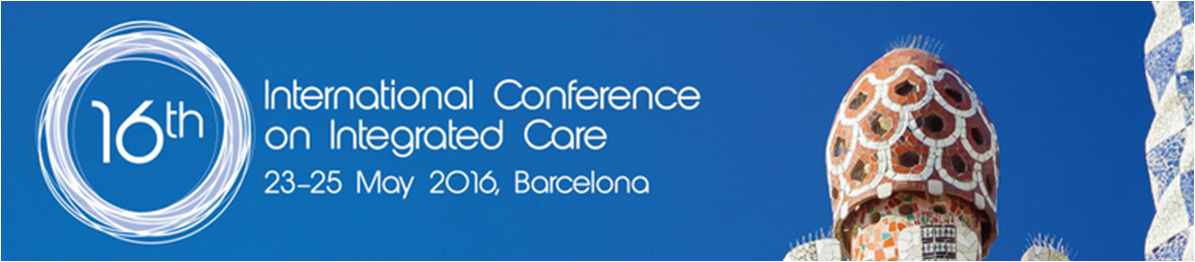
ICIC16 – 16th International Conference on Integrated Care
Barcelona, May 23th – 25th, 2016
ICIC16

A gathering of researchers, clinicians and managers from all over the world. This international conference offers a chance to share experiences and the most recent evidence on the integration of public healthcare, health and social services. Among other issues, it will deal with the challenges of the population’s ageing, the integration at hospital care level of mental care services and rehabilitation services, and the new tools mhealth and digital health. Clinical leadership and models of joint work between patients, caregivers and the community will also be discussed.

EHMA Annual Conference 2016: New Models of Care. Reinventing healthcare: why, what, how

Porto (Portugal), 14-16 June 2016

The EHMA Annual Conference: “New Models of Care. Reinventing healthcare: why, what, how”  will bring together policy makers, health managers, health professionals and educators to discuss new models, approaches and solutions for facing challenges that healthcare Systems will experience  in the next decade and beyond.

Preventing Overdiagnosis 2016
Barcelona, September 20th – 22th, 2016

Preventing Overdiagnosis

Barcelona will follow Washington, as AQuAS, together with Oxford University, will organise the next issue of this international conference, a space to share knowledge to help debate and reflect on overdiagnosing and its nature, its potential risks, its impact on people’s health and the cost of opportunity it may offer to healthcare systems. You can register at this link.

The International School on Research Impact Assessment
Melbourne (Australia), September 19th – 23th, 2016

ISRIA2016

Annual meeting point to improve abilities in the assessment of research impact. The the International School on Research Impact Assessment (ISRIA), co-founded by AQuAS in 2013, will reach its 5th edition being faithful to its original goals of fostering the science of research impact in all scientific fields and of supporting the sustainability of research system in all the world. Up to date, ISRIA has reached the figure of 300 participants from 17 countries in the three previous editions altogether.

Indicators for the health services assessment

4 febr.

What are indicators and how to set them?

In the clinical evaluation field, specifically for health care, an indicator in an instrument used to measure or assess specifici aspects of quality of care, and ultimately, the improvement of quality: assessment to improve.

The methodology used for creating or developing health indicators is distinct in that it combines different methodologies. In the first place, when elaborating indicators, the standard and most recommended procedure is to begin with a conceptual framework of reference, as this provides the premise for reflecting aspects of assessment, dimension, attributes, key areas of care specific to the field of study, as well as the target population. Moreover, the process of defining indicators takes into consideration two sources: scientific evidence experience and expert opinion.

A literature review enables authors to take into consideration scientific evidence and experience in the use of the indicator. A review of the scientific evidence ensures the validity of both the construct, (the indicator measures the intended target), as well as the guidelines (there is close correlation between an indicator and the outcome or another measure considered the gold standard). In addition, previous experience in the application of an indicator provides some basis as to its acceptability or use thereof. Generally, users find an indicator helpful if variations in the values it presents are ​​due to changes in the quality of care, and vice versa.

As far as expert opinion is concerned, it is important to highlight the advantages to using consensus methods during the process of identification and selection of indicators, a highly participative course of action. In general, the process is based on a consensus-centred approach (i.e., a group of professional experts which may, in addition, incorporate opinions from a group of patients and users), which is subsequently extended to a larger body of associated groups. Thus, the involvement of a significant number of participants in reaching a consensus on indicators reinforces the embeddedness of the assessment strategy and collective responsibility, furthering the eventual adoption and implementation of the indicators.

Figure 1. Combination of methodologies for developing indicators

Methodologies Developing Indicators

How to implement indicators?

Once the indicators have been defined, there are several different approaches to their implementation. These include performance analysis and comparison between units of analysis, or benchmarking, whether this refers to organizations, centres, services, teams or professionals. The first approach seeks to analyse the relationship between health outcomes (in quantity and quality) and the resources utilized, in other words, the value of health care. The objective is to identify the gap between what might be achieved using existing technology and resources (efficiency, the maximum achievable potential), and what is actually being achieved (effectiveness), adjusted due to the available resources and other variables which impact the outcome.

Figure 2. An example of mapping indicators used to analyse performance. In this case, the graph maps the ratio of observed/expected cases for the indicator subject to the study for Basic Healthcare Areas (ABS, as per the Catalan acronym).

Mapping

Source: Metodologia dels atles de variacions en la pràctica mèdica del SISCAT. Atles de variacions del SISCAT, número 0. Barcelona: Agència de Qualitat i Avaluació Sanitàries de Catalunya. Departament de Salut. Generalitat de Catalunya; 2014.

Finally, if the process is taken to the next level, we find ourselves in the realms of benchmarking, which allows us to make a comparative assessment. Basically, this involves using any product, service or work process within an organisation and which manifest best practises in the area of interest and using it as “comparator” or benchmark. The objective of this process is to transmit information regarding best practices and their implementation.

Figure 3. Sample mapping of an indicator used to make comparisons between units of analysis (benchmarking)

Comparisons

Source: Metodologia dels atles de variacions en la pràctica mèdica del SISCAT. Atles de variacions del SISCAT, número 0. Barcelona: Agència de Qualitat i Avaluació Sanitàries de Catalunya. Departament de Salut. Generalitat de Catalunya; 2014.

Post written by Mireia Espallargues, Noemí Robles and Laia Domingo.


Public policy in times of crisis

28 gen.

SalutPoblacióWhat has happened in periods of economic crisis has also occurred at other moments in time and in other contexts. It is also a well-known fact that this can lead to an increase in mortality rates among the population (both due to general causes, as well as for certain specific causes, such as suicide), an increase in mental health problems and a worsening of lifestyles. We also know that inequalities in healthcare can increase, particularly as the crisis affects the most vulnerable members of society first.

The second report from the Observatory on the effects of the crisis on public health, publicly presented just before the Christmas holidays, closely monitors the principal socio-economic and health indicators at a territorial level (by regions) and analyses their evolution. It also analyses the relationship between socioeconomic and health indicators and provides information to define, or redefine, strategies aimed at tackling the effects of the crisis based on the needs identified through the report.

In this period of crisis in Catalonia, long-term unemployment, above all, has increased, and production (the gross value added in the economy) has declined. Household income has fallen, the percentage of people living below the poverty line has increased, especially those under 16 years of age, and the percentage of families receiving assistance from the social protection system has increased.

The fall in public revenue triggered a decrease in the budget, including the budget of the Department of Health, which was especially significant between 2011 and 2013. The health sector was forced to adjust, doing the same work but with less resources, improving efficiency while making every effort to do so without hindering the quantity and quality of healthcare service provision. However, in the period 2007-2013, life expectancy increased by 1.8 years (1.5 in women and 2.6 in men), as has been the case for life expectancy in good health.

Nevertheless, the impact of the economic situation on people’s health is evident: the unemployed have worse self-perceived health, especially those who have been out of work for over a year and present a higher risk prevalence of poor mental health. Similarly, tobacco sales, which is on the decline population-wide, increased among the unemployed, especially among men. Excessive alcohol consumption levels are also higher among the unemployed.

Focusing the analysis on the most vulnerable social groups, the report compares the population group aged 15 to 64 years, in other words, those who are exempt from the pharmacy copayment rates (basically unemployed people who have lost the right to unemployment benefits, receiving social insertion benefits, or have non-contributory pensions), with those who are subject to copayment. In Catalonia, in 2014 there were 187,775 people aged between 15 and 64, exempt from copayment rates (2.3% of the population). Those who were exempt are statistically twice as likely to consume psychoactive drugs that people subject to co-payment and have 1.5 times greater likelihood of being admitted to hospital. This group made 1.4 times the number of visits to primary care, and were treated in mental health centres 3.5 times more than the other group.

There is no question that public, social and economic policy has an impact on a population’s level of health and that they modulate the influence of socioeconomic, gender and immigration factors on health inequalities. Social protection policies seem to be effective in cushioning the influence of macroeconomic fluctuations on mortality rates. Policies aimed at equality contribute to improving health inequalities. The consequences of the crisis in Russia in the early 90s had little in comparison with those suffered by Finland during the same period. The main reason for this being the policies implemented by both governments.

Given the complexity and the multiple impacts produced by economic crises, the public policy-centred method to mitigate its effects must be approached from different sectors. Tools like the Interdepartmental Public Health Plan (PINSAP), as per the Catalan acronym, are key to ensuring this cross-sectoral approach, targeting factors which impact health to reduce or eliminate health inequalities. Another fundamental step is to maintain social protection (unemployment benefits, retirement benefits, family assistance, etc.) to mitigate the decline in family income and its consequences. However, this must go hand-in-hand with policy aimed at generating employment and promoting the rapid reintegration into the workplace. Education policy is the other mainstay, given the relationship between education, income and health, and the fact that it acts as a “social ladder” between generations. Policies aimed at the most vulnerable groups, such as lower income families and children, also deserve special attention.

Finally, it is essential that the implementation of these public policies are evaluated in the medium and long-term in order to continually validate their utility and impact, and to enable policymakers to adapt these programs to meet an ever-changing environment.

Post written by Veva Barba, Dolores Ruiz-Muñoz and Anna García-Altés (@annagaal),

The Great Escape

21 gen.
Joan MV Pons, Head of Evaluation AQuAS
Joan MV Pons

A few days ago, Anna Garcia-Altés in a previous post referred to the Nobel Prize in Economics, which Alfred Nobel never granted – that was awarded in 2015 to Angus Deaton and his work on inequality. This is not the subject that I wish to talk about today but another that also features in the recent book from this Nobel proze winner which is titled “The Great Escape” (The Great Escape). Yes, just like the movie, set in a German camp for prisoners of war starring Steve McQueen and recalling a real fact of World War II. Unlike reality, the book predicts a better ending. For Deaton, the greatest escape in human history was in overcoming poverty and ageing.

For centuries, those who did not die at a young age could face years of misery. Beginning in period called the Enlightenment, with its scientific revolution and subsequent later industrial revolution, some people in certain countries began to escape this meagre fate.

Meanwhile, germ theories founded in the late nineteenth century surpassed the paradigm of the miasma theory in explaining contagious diseases. The key was and still is scientific knowledge and its dissemination. This point in history marks the extraordinary increase in life expectancy, initially for the better-off and then for the rest of the population.

This higher life expectancy, manifested especially in the developed countries, is largely due to the remarkable reduction in infant mortality and, more recently, to the epidemiological transition to chronic non-contagious diseases, the improvement in life expectancy in adulthood (increased life expectancy ≥ 50 years from 1950), but without a substantial improvement in longevity. Deaton shows us all this with data and graphics.

To illustrate it, Deaton mentions the progress in combating smallpox with a vaccination of smallpox (initially using matter from infected people and later the much safer vaccine Edward Jenner introduced in 1799). The public health measures introduced in the last few hundred years, including sanitation, water supply, nutrition and better hygiene, have led to a significant reduction in infant mortality.

Here, it was due to not only the knowledge but also the determination of the authorities in improving the conditions of the population. The improvement in life expectancy in adulthood is explained largely by reducing cardiovascular mortality through diagnostic and therapeutic advances in this field.

As mentioned before, we witnessed not only increased life expectancy but also a significant increase in the world population, an authentic explosion starting in the second half of the twentieth century. Malthusian alarms re-emerged but they were fortunately overcome by improvements in agricultural productivity, without excluding initiatives – for better or worse – for controlling the birth rate in developing countries; again, examples of scientific knowledge and its dissemination.

Deaton is very critical about the operating methods in which help flows from developed countries to developing countries. From the times of imperialism and colonization where (natural) resources were moved from poor countries to rich ones (Nineteenth century) and since the end of World War II we’ve also seen a flow of resources from developed countries to developing countries.

This external help, whether from governmental or NGO sources and despite the illusion that might it create if it continues as usual, may end up doing more harm than good. There’s no shortage of examples in the book of wasted resources by governments and corrupt politicians, granting donations or grants to countries (government to government) without these ever reaching the people. Not to mention situations where these grants are part of the geopolitics of the former colonies or contemporary powers.

Contrary to what an engineered hydraulic vision (communicating vessels) may show, we must invest in projects and programs that promote conditions for economic development to make external aid unnecessary, as is the reality in Africa, where paradoxically, the more external help yields the least growth in GDP per capita.

Health aid, without underestimating its achievements (vaccination campaigns, infrastructure construction, drugs against HIV / AIDS, mosquito nets), continues to be in most cases, vertical health programs with a very specific focus. This contrasts with the horizontal programs aimed at strengthening local health care systems, especially a good network of primary and community care.

Often foreign aid and the development of local capacity are not aligned; on the contrary, often one damages the other. Rich countries’ subsidies to their agriculture – consider the famous European PAC – is detrimental to farmers in poor countries where most of the workforce still works the land. There are more effective ways to help.

(It notes that another Nobel laureate in economics, Robert Fogel (1926-2013), had already written about the great escape in “The Escape from Hunger and Premature Death, 1700-2100” (2004), Deaton and had revised appointment. Thank Anna Garcia-Altés to call me about this)

17 plus 1

14 gen.
LluísBohígas
Lluís Bohígas (@bohigasl), economist

Whenever the Spanish health system is described, the conclusion is that it consists of 17 different healthcare systems. The truth is that they are not very different as they all share a common past and the same rules inherited from the Instituto Nacional de Previsión (INP), but the discourse of diversity, (always excessive), is favoured by supporters of the new centralized model. There are, however, a significant portion of the Spanish people who do not receive healthcare cover from any of the 17 autonomous systems. These people are referred to as System 18. System 18 comprises almost 2 million Spaniards who are beneficiaries of the MUFACE, ISFAS and MUJEJU health insurance plans; in other words, senior state officials, members of the military, judiciary and their families. These individuals can choose where they want to be treated each year, either in an autonomous region, or, as in the majority of cases (80%), by a private healthcare insurance provider.

System 18 has a larger population than many of the autonomous regions in Spain. It is in fact similar in population to the Basque Country and has not been transferred to the autonomous communities, but is still managed by the state. We are unaware of all the healthcare data regarding this group: morbidity, infection, health care utilization, etc. Members of this group do not possess medical cards, electronic medical records, or use electronic prescriptions. Despite being the responsibility of the State, System 18 does not meet the criteria established by the State and required of autonomous regions. The service portfolio is similar to that available to the general public covered by Spain’s National Healthcare System, but with differences in the area of co-payments, although these differences have never been considered as inequalities. It is common for a beneficiary of System 18 to be treated in the autonomous region in the event that they require expensive medical treatment and tend to prefer the services of the NHS when they retire and make greater use of health services. When a MUFACE recipient uses an autonomous community health care system, the state is saved the expense.

System 18 is exclusively made up of civil servants who, despite all the anti-private controversy that has been unleashed, prefer private care. System 18 has been spared the health cuts inflicted on those of us whose healthcare services are provided by autonomous regions. It is possible that the members of System 18 are those responsible for deciding on the cuts to be made in public health, given that it is highly likely that the vast majority of the cabinet is made up of members covered by MUFACE.

“In five years’ time, patients will be able to have a virtual appointment with a specialist together with their GP”

7 gen.
Frederic Llordachs
Frederic Llordachs

Frederic Llordachs (referred to below as FL), doctor and founder of the online portal Doctoralia, in an interview with Montse Moharra (referred to below as MM), coordinator of the Catalonia’s Observatory of Innovation in Health Management (OIGS), defends the position that medical professionals should take advantage of the current boom in new technologies to improve service provision. Frederic is confident that in the next few years’, teleconsultation, distance care provision and above all virtual triage will become established practice.

MM: How would you rate the level of innovation in the Catalan healthcare system as it stands today?

FL: It’s an excellent public service and the public are still not fully aware of the social advantages this represents. However, I believe that the current healthcare model is not the most ideal and we should be evolving towards more sustainable models such as those implemented in Holland and Germany.

MM: And do you think the field of Healthcare 2.0. is progressing at the right pace? 

FL: Great effort is being made in this area and the digitalization process of public resources on the scale of the HIMSS (Healthcare Information and Management Systems Society) is a good example of this. Progress has also been made by way of providing the public access to their data via the La Meva Salut (My health) channel. However, as yet there is no integration with the private healthcare sector, which represents almost 30% of services used by the public. But I’m sure this will be addressed.

MM: Are initiatives such as those undertaken by the Innovation in Healthcare Management in Catalonia (OIGS, as per the Catalan acronym) helping in this shift towards innovation? 

FL: As Lord Kelvin said: “If you cannot define it, you cannot measure it; if you cannot measure it, you cannot improve it; that which is not improved will always become degraded”. In this sense, the Observatory helps define and measure potential improvements, and provides the sector with ideas to implement.

MM: Which of the Observatory’s experiences would you highlight as the most noteworthy on a practical level? 

FL: Undoubtedly, the pre-operatory online assessment carried out by the Hospital de Viladecans, a multi-award winning practice internationally since 2012 which, inexplicably, has yet to be implemented in the rest of the public healthcare network.

MM: How should healthcare professionals approach the changes associated with innovation in their day-to-day? 

FL: Three years ago, the multi-millionaire technologist Vinod Khosla announced that in ten years’ time, 80% of doctors’ work would be performed by machines and it is easy to see how this prediction could be expanded to include other healthcare professions. The best way to cross a river is to do so with, not against the current, so the best way to survive the innovation tsunami heading our way is to become part of it. We must concentrate on the areas where we can make improvements and lead innovation from the positions we hold: sometimes changes can seem insignificant, but the outcomes can make an enormous impact. As the fictional Catalan TV character Capità Enciam used to say: “Small changes are powerful!”.

MM: Where do you see the developments in the Catalan healthcare system in terms of e-health in five years’ time?

FL: I imagine a patient with access to their public and private information who is connected via a standard similar to the American system Blue Button, and that health professionals have access to this information. I imagine sensorization and telemedicine services capable of resolving issues online for chronic patients. I imagine the public not having to travel unnecessarily for routine services, such as postoperative wound check-ups, and also that patients will be able to receive physiotherapy from the comfort of their homes. Above all, I envisage online triage using algorithms designed to reduce the care workload and reinforce self-healing, but then maybe I’m letting my imagination run a little wild…

MM: And what do you think Doctor’s work will be like? 

FL: Just as we make house calls now, doctors will be performing teleconsultation, because finally, the system will compensate them for this. And patients will be able to have a virtual appointment with a specialist together with their GP, just as health Insurance and mutual health Insurance companies are doing nationwide today, organizations such as Sanitas and Mutua Universal. But the one thing that’s sure to happen is that we’ll continue doing what doctor’s do.

LOSC 25 years: the health information systems

30 des.

Veva BarbaAnna Garcia-Altés


Veva Barba & Anna García-Altés (@annagaal)

The evolution of information systems in the last 25 years: from paper to benchmarking*

Since the adoption of the LOSC (Catalan health care planning law), we have witnessed profound changes that have occurred within and outside the health context. The health needs of the population and the ways in which they express them have cause a change in the way citizens relate to the health services. The development of nowadays’ society compared to the one of the nineties has given rise to concepts such as the right to information or shared decisions that twenty five years ago were hardly imaginable. On the other hand, we can foresee a wide range of opportunities for professionals and healthcare organizations that see information as a tool of irreplaceable proficiency in facing the challenge of meeting the population’s health needs with the available resources.

The transformation of health information systems for the past 25 years is the result of changes that have occurred in society and in the health system itself but would not have been possible without the impressive advancement of information technology and communication systems. The current information systems have been built according to each moment’s opportunities and priorities and despite not always having had a clear roadmap, we have been drawing a system model that is increasingly appropriate to fulfil its objective, allowing to relate the health status of the population with resource use and costs and to assess the achievement of the health system’s objectives in terms of effectiveness, efficiency and safety.

The current information system with its weaknesses and its strengths would not be conceived without the existence of some of its elements. The implementation of the individual health card and the register of insured people allow us to place individuals at the centre of the system, both in terms of health care management and in terms of service usage analysis. The computerized medical record with utilities such as shared history has been an element of improving continuity of care and efficiency. The process of purchasing and provision of services would not be conceivable without the MBDS or the pharmacy records.

At another level, the Health Plan and the health survey have facilitated the shift from a health system based on illness and curative care activity towards a new way of understanding health and service guidance. At the level of management and strategic decision making, the Central of economic balance of the nineties and Results Centre of recent years have allowed us to share information in order to evaluate different aspects of the health system. In the context of the Results Centre, one of the most important decisions has been the publishing of nominalised indicators.

In some care areas, the most sophisticated scanning technologies and image transmission function simultaneously with the manual forms, the absolute lack of registration, the most basic data storage and use. In the areas of planning and management we also witness the coexistence of all kinds of systems. The economic information systems allow a good insight in budgetary accounting but are yet to be sufficiently developed in terms of cost analysis. Generally, it’s still too difficult to obtain information on the health needs and on the services’ outcomes. Surely, the challenge of improving the extent of the services’ performance will accompany us for a while.

We’re still facing several challenges for the future. We must develop information subsystems in relatively deficient areas such as the supply of services; we must work to improve the balance between transparency and personal data protection, we must capitalize on the available information, thus facilitating the data access for as many users as possible.

The journey has been long and extensive, but our society and its technological context have also been transformed. The information system must be dynamic enough to adapt to future requirements and should be capable to do it in an environment of necessarily limited resources. The future changes ought to be consistent with a model of information system that all actors in the system know and agree with.

* This post has been adapted and translated from: Barba V, Garcia-Altés A. 25 anys de LOSC. L’evolució dels sistemes d’informació en els darrers 25 anys: del paper al benchmarking. El Referent 2015.

The article just published in the latest issue out of Referent dedicated to analyse the first 25 years of the LOSC.

Nurses with more responsibilities

17 des.

Sense títol

Montse Moharra (@mmoharra), Dolors Benítez and Anna García-Altés (@annagaal)

The Department of Health provides the basis so that the collective can prescribe medication.

Nurses have increasingly more challenges on their plate. The health care is permanently immersed in innovative processes that improve health care and the services for citizens.

Since last summer, a working committee formed by members of the Department of Health, Catalonia’s Council of Nurses Colleges and Barcelona, Tarragona, Lleida and Girona Official Nurses College is developing a proposal to rule that this group may indicate, use and authorize the dispensing of drugs and medical devices.

In addition, the Department of Health, the CatSalut, the Catalan Health Institute (ICS) and other nurse entities have signed another agreement to improve aspects of the management autonomy, necessary so that its effectiveness and benefits can be exercised and collected by nursing professionals. Thus, among other aspects, it’s intends to continue improving the participation of these professionals in clinical management with more presence in the participating organizations, recognizing nurses’ professional leadership in primary care and improving the organization and management of the sector’s simplification and streamlining.

OIGS’ innovations in nursing management

Catalonia’s Observatory of Innovation in Health Management (OIGS), which incorporates advances within the Catalan health system to innovate different areas of management, has several experiences that focus on improvements affecting nurses. Indeed, two of the initiatives that received AQuAS quality certificate last September during the Third OIGS Conference were focused on innovations within this group.

One of the acknowledged experiences was ‘Integration of skilled nurses into the anaesthetist team for deep sedation in the field of digestive endoscopy’, driven by the service of anaesthesiology and section of digestive diseases and endoscopy unit of the Hospital Clinic of Barcelona. This project has established a special unit formed by anaesthesiologists and nurses specializing in sedation which has improved the service and support ensuring greater safety in this type of processes by giving more responsibility to nurses.

The ‘demand nurse’ experience of Castelldefels Health Agents (CASAP) was also awarded the quality certificate. This project has improved agility and increased encouragement in its primary focus of fostering nursing as a gateway to the system. Thus, it was able to attend to a series of consultations, such as traumas, vomiting and diarrhoea, skin lesions, genitourinary problems or emergency contraception. This initiative allows offering a quick and effective health care to citizens and the general practitioner can devote more time to other services.

Besides these two certified projects from over 180 projects registered in the Observatory, there are other initiatives that emphasize nurses as protagonists of the improvement in health management. This applies, for example, to projects for the implementation of online preoperative services or remote medicine to cure ulcers, activation of a specific high-resolution unit in rheumatic and musculoskeletal diseases that would further the nurse collective’s response capacity or the standardization of care systems. You can view these projects and other innovative experiences in the OIGS’ portal.

Unequal welfare, the present and future of social rights and benefits

10 des.

foto_portadaGuillem López-Casasnovas

In El bienestar desigual (The Unequal Welfare), I analyze the deplorable state in which our welfare system nowadays finds itself. The title is not a pun, but an acknowledgement of the reality of a discontented citizenry, accustomed to expect more and more social protection.

The economic crisis brought about a certain degree of returning to the past. The lack of income growth and the consequent decrease in tax revenues, caused the customary levels of services with their new features that were taken for granted, to become financially unsustainable. Previously, social spending had been growing even above revenues, the recession at least slowed down its growth.

The outrage caused by sharing the costs of the crisis, the growing inequality of its incipient departure and perception that little or nothing has been done to immunize the economy against another future pandemic, have focused citizen’s hate towards social spending cuts. Consequently, political circles and citizens protest against austerity without assessing what has been achieved and without questioning how it has been achieved, whether the same or less may be better and even more reasonable when faced with potential waste; all of these factors erode financial sustainability and nurture professional corporations who want to be able to decide as self-employed and be charged as employees. Continue reading

Stratification and morbidity database

3 des.

Foto Emili VelaEmili Vela, Head of “Modules for Tracking Quality Indicators” (MSIQ) Health Care Area, CatSalut

In recent years there has been an increase in the prevalence of chronic diseases partly due to increased life expectancy, an aging population and improved health care. These factors have also led to the emergence of patients with a high number of simultaneous illnesses with a high risk of de-compensation. These patients represent a relatively small percentage of the population but they use up a high amount of health resources. In fact, we can say that, with respect to chronic patients, multiple morbidity is the norm, not the exception.

In these circumstances, the stratification of the population at risk groups, which allows us to know and anticipate future health resources needs is an objective set out in several strategic areas defined in the Catalan Health Plan (2011-2015) and is especially relevant in the transformation of healthcare models (making them more proactive), in the treatment of chronic diseases (establishing target populations for certain actions) and the integration of health and social care levels. Continue reading