We begin the year by giving thanks to all the people that have collaborated in the blog AQuAS during 2018: Ferran Barbé, Olga Martínez, Xavier Mora, Cari Almazán, Gaietà Permanyer, Dolors Benítez, Clàudia Pardo, Francesca Moya, Iria Caamiña, Núria Radó Trilla, Núria Cuxart, Glòria Novel, Jordi Varela, Ernest Abadal, Marta Millaret, Núria Rodríguez-Valiente, Marc Fortes, Mercè Salvat, Anna García-Altés, Marcel Olivé Elias, Jean Patrick Mathieu, Enric Limon, Gonçalo de Carvalho, Alícia Avila, Elisa Poses Ferrer, Ion Arrizabalaga, Joan MV Pons, Joan Escarrabill, Felip Miralles, Montse Moharra, Lina Masana, Mireia Espallargues, Xavier Bonfill, Marta Gorgues, Gemma Cabré, Jorge Arias, Johanna Caro Mendivelso, Kayla Smith, Angelina González Viana, Dolores Ruiz Muñoz and Ramon Maspons.
In recent years, the number of projects in innovation has increased exponentially. The presence of disruptive solutions has an impact on our day to day lives. From the use of mobiles and apps to that of robots and automation, the ecosystem of disruption has opened the way to a new paradigm: there are technological solutions which monitor and manage data of all types clearing the way for new scenarios.
With a transregional training and recruitment programme in the field of innovation, it will be possible to create a robotic continuum between the home environment and professional environments which will facilitate the adoption of innovation, individual preferences and HTA methodologies.
We are talking about the ecosystem of innovation and the ALEXHTA project.
The ALEXHTA project will develop a robot capable of writing HTA reports on any subject of interest, prioritised by the individual or community.
The next step (in its prototype phase at the moment) will be the AHTA algorithm (accelerated HTA). By means of a system of machine learning, it will create updated knowledge on demand based on previously written assessment reports and will synthesise the PICO question in a PCCO answer (Potent, Current, Compelling, Optimised) by also using information published in real time using a virtual search engine in Pubmed/MEDLINE.
Once the most novel publications with the highest methodological quality on a subject have been identified, selected and summarised, this search strategy will be replicated on all sources of available information including scientific publications which as yet have not been elaborated but which already form part of the DNA of researchers. We are not talking about including pre-prints, but pre-thinks.
What is the aim of all this? Assess by innovating and accelerate by innovating (AI-AI). We will soon have more information about the ALEXHTA robot, developed by the main assessment agencies, which will no doubt become part of the everyday fabric of citizens’ lives in the future.
With the aim of sharing knowledge and generating a space for thought, we have published 48 posts in 2018.
The editorial line of the blog deals with subjects of assessment and health systems, of the participation of patients and citizens, of low-value practices (Essencial project), of eHealth and connected health, of the analysis of data, of research, of gender questions, of inequalities in health, of innovation and of current affairs. The contents are produced by authors at the AQuAS and invited authors.
The five most read posts in 2018 have been the following (in alphabetical order of the title):
Innovation has been present in the AQuAS blog with projects such as Antisuperbugs and Ritmocore but there are many more on the go right now. Today we put the focus on the purchase of innovation and on how this innovative methodology can have an impact on clinical practice.
We interview Ramon Maspons, engineer specialised in the management of innovation and technology, coordinator of innovation at AQuAS.
What tools does the health system at present have within its reach to add value to healthcare?
The public procurement of innovation is one of the facilitating instruments when adopting innovation and developing policies for technology and innovation. Due to the characteristics of the health sector this becomes a strategic element. There are other sectors where this does not happen because the public purchaser does not have market power.
In what way does innovation provide added value?
At a first level, we could say that if there is no application no value is generated. At a second level, I would say that the changes in the process are what add value. And at a third level, we could talk directly about the user.
A very brief article was published not long ago on this subject in the journal Annals de Medicina. Recently, in another context, the King’s Fund published a report on models of innovation.
Could you highlight an innovative project within the field of innovation?
Yes, the PIPPI project, coordinated by the Karolinska University Hospital in which AQuAS is involved, together with six other institutions in the hospital and university environment in Sweden, Holland, Italy, Austria, Spain, Finland and the United Kingdom. It is a platform made up of hospitals from the European Hospital Alliance, which is the network of the most relevant European hospitals, and then AQuAS. The focus of this work group is the new models of procurement based on value using digital technologies as an element to transform health services.
Work group of the PIPPI project
Have you considered changing the name of the project?
No, but in fact yes, because the name has curious meanings and connotations in different languages. This was one of the subjects that arose in the Kickoff meeting of the project.
Jokes aside, what is the involvement of AQuAS in the PIPPI project?
The expertise of AQuAS in assessment, innovation and the procurement of innovation is key. This project proposes an environment where the different stakeholders involved in change can come to an agreement and work together, both when revealing the needs of a health system, of hospitals, as well as when involving companies, technological centres, universities, patients and caregivers.
It is a very ambitious aim. What would you say is special about this project?
Its strategic focus of putting the different stakeholders involved in improving healthcare in the same project but having the support of the leadership of hospitals and an assessment agency. Identifying needs and solutions using this vast network of diverse expertise is one of the strengths of this project.
How will the PIPPI project work?
The project needs to develop a community of practice where challenges can be posed and solutions considered within an international framework.
Could you be a little more specific about which environments digital technologies will have an impact on in the health services?
By all means. We can include very different subjects such as co-creation with clinicians, telemedicine, data analytics, artificial intelligence, and so on. Some aspects are nearer on the horizon and others more distant. There exists a powerful reflection on digital technologies: it is said that everything that is digitalised is dematerialised and demonetised (it may be a subject too complex to go into here) and there are also those who say that, in the end, what is digitalised is democratised, but now that really would be going into other subjects.
Earlier you mentioned involving patients – who and what are we talking about exactly?
The patient is a key element in procurement based on value because the patient generates value and this is something difficult for other sectors to understand. When we talk of digital transformation, the involvement of patients is often as necessary as it is a sensitive issue and a certain methodology is therefore required, or specific game rules. We are talking about complex systems which require complex ways of working where, among other things, very diverse sensitivities, organisational models, governances, health systems or types of providers are involved. In short, what we are talking about is getting patients to become a part of identifying needs and taking decisions; we are talking about expert patient concepts, the participation of citizens and about health literacy.
And how are you going to achieve all this?
As members of this consortium, we have the experience, knowledge, methodologies and leadership to forge ahead with a project of this nature. I recommend looking at the presentation of Romualdo Ramos and Tanja Stamm of the Medical University of Vienna to know more about this project.
What is the aim of the PIPPI project in a few words?
Impossible in just a few words, but can I do it in nine? Facilitating the joint design of the best healthcare possible.
In this AQuAS blog post we’ll continue talking about registries. Last month Jorge Arias focused on registry collaboration between clinics and researchers, and at the beginning of the year we touched on the same topic during interviews with Olga Martínez and Xavier Mora, where the focus was on arthroplasties and new materials used in protheses. A few years ago, in 2015, we celebrated 10 years of the Catalan Arthroplasty Register (RACat), managed and coordinated by the Agency for Health Quality and Assessment of Catalonia (AQuAS). In that post, Olga Martínez and Laia Domingo discussed the experience of the registry as a whole, in terms of history and function.
We’ll start today’s post with the importance of registries.
1. What do we mean by ‘registry’?
A registry is a collection of standardized information that can range from patient diagnoses, outcomes, procedures, diseases, device performance, among other aspects, and uses this data to evaluate specific outcomes for predetermined clinical, scientific, or research purposes.
More concisely, a registry collects standardized information, to be used for a specific purpose, about patients who share a condition or certain characteristics. Patient registries have existed for decades, with the first arthroplasty registries, in the Nordic region, making their debut in the 1970s: the Swedish Hip Arthroplasty and the Swedish Knee Arthroplasty Registers, in 1975 and 1979, respectively, followed by the Finnish Arthroplasty Registry in 1980.
This post will focus specifically on implant registries and their importance at the local, national, and international levels, though other types of registries exist.
2. Why are they important?
Registries are of vital importance for a number of reasons.
In terms of the health sector, since a standardized set of data is collected, a registry enables health professionals and researchers to make systematic comparisons across multiple datasets and traverse geographic locations. Healthcare personnel are kept abreast of other variables that different registries take into account and they can draw conclusions based on the experiences of others. Registries can facilitate professional development while simultaneously bringing clinical practices, outcomes, and possible areas of improvement to light.
With this data, we can highlight best practices, using previous outcomes as a guide, as well as glean important information, quickly, if a need arises for implant recalls.
A brief example focuses on Poly Implant Prothèse (PIP) breast implants, which were made in France from a cheaper, industrial-grade silicone that was not approved for medical use. The implants were rupturing twice as frequently as the industry average and causing health problems in thousands of women.
Following this occurrence, the NHS created and implemented a register, The Breast and Cosmetic Implant Registry (2016), for patients in England with breast and other cosmetic implants that allows them to be traced quickly and efficiently, should any similar safety concerns arise.
3. Strengths and barriers of international registries?
Registries are not only important when keeping track of information at the local or national levels, they are also extremely helpful in an international context as techniques and methods can be easily shared among countries.
However, certain barriers can play a part in international data access. Recent changes in European law, specifically in terms of patient data protection, could have effects on international registries.
According to an expert with the Dutch Arthroplasty Register (LROI), these laws, introduced in May 2018, could be detrimental to registries whose national regulations are flexible and who are now forced to adapt to more rigid regulations.
In terms of the personnel involved in international registries, whether they are stakeholders, policy makers, healthcare professionals, or others, they have to keep abreast of potential barriers resulting from encompassing multiple countries as well as other regulatory aspects at the regional, state, and European levels to ensure correct implementation and functioning of the registry itself.
Experts from two international registries, the Nordic Arthroplasty Register Association (NARA) and the International Collaboration of Breast Registry Activities (ICOBRA), have both stated that multiple countries, and thus multiple jurisdictions, participating in a single registry could prove difficult, given that the registry as a whole is obliged to function using the regulations imposed by the strictest country.
Though there could be a few barriers to international registries, they continue to be a fountain of useful information. They facilitate advancement in knowledge, processes, and data regarding types of implants to use and/or avoid.
4. What can this knowledge do for AQuAS?
Registry implementation, long-term functionality, and best practices are of great importance to AQuAS, who created and is in charge of the RACat, the Catalan Arthroplasty Register.
The RACat currently collects information on hip and knee arthroplasty procedures from 53 out of 61 health centers in the Integrated Healthcare System of Public Healthcare Network of Catalonia (SISCAT), and is on the cusp of including shoulder arthroplasty procedures.
Given the breadth and depth of existing knowledge in the international community, AQuAS, and those involved closely with the RACat, are interested in the information available in terms of best practices for implementation and sustainability, as well as the types of variables that other registries collect.
With the ability to follow in the footsteps of registries that are already well established, AQuAS, the Catalan health system, and the international community as a whole, can improve the care given to their respective populations.
This year, the annual Preventing Overdiagnosis conference was held in Copenhagen, co-sponsored by the World Health Organisation, where delegates from about 30 countries attended.
The space generated in this conference provides the opportunity to approach the subject of how health professionals, researchers and patients can implement solutions to problems related to overdiagnosis, overtreatment and overuse by using the evidence available.
Overall, some of the subjects discussed were the implementation of recommendations to “stop doing”, the challenge of dealing with excessive diagnosis in clinical visits, the impact of overdiagnosis, the fact of converting citizens into patients and the role of risk factors in excessive diagnosis.
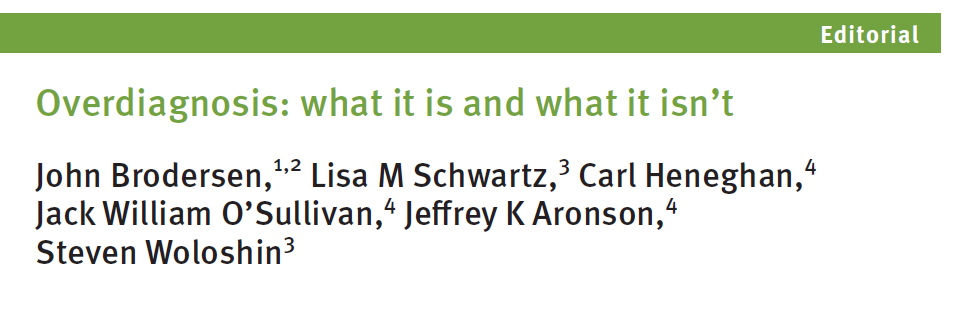
John Brodersen, professor of family medicine at the University of Copenhagen, started the conference by making a reflection on what is and what is not overdiagnosis. In general, overdiagnosis means turning people into patients unnecessarily by identifying problems that were never going to cause harm or by medicalising ordinary life through expanded definitions of diseases. This overdiagnosis can trigger a cascade of excessive treatments.
Later, Iona Heath, general practitioner and member of the Organising Committee of Preventing Overdiagnosis, asked the audience the question Why are we so afraid of normal? She reflected on why doctors are willing to rush into a diagnosis and pointed out that the task of defining “who is normal” is a challenge. Who should define who is normal and with what criteria?
Gisle Roksund, general practitioner in Norway stated that the general tendency in medicine is: “find it as soon as possible and do more”. Similarly, he pointed out that people are being labelled as ill with “pre” conditions when they are not. And he ended off by saying that life itself is a “pre-mortality” condition.
On his part, Paul Glasziou, general practitioner and professor at the Bond University in Australia, presented three key points to reduce overdiagnosis: reducing over-detection, over-definition and medicalisation. Juan Pablo Brito, endocrinologist and researcher at the Mayo Clinic, talked about a new term in his conference on diagnosis centred on the person: Extradiagnosis: when the diagnosis is not appropriate for the biology, context or preferences of a patient. The diagnosis centred on the patient is based on identifying the problem and carrying out actions to find the solution. That is, “reaching a conclusion together which makes intellectual, emotional and practical sense”.
In mental health, Allen Frances, psychiatrist in the United States, highlighted that overdiagnosis in psychiatry could be avoided if general practitioners had more time in their visits to get to know their patients better.
On the other hand, Steven Woloshin and Lisa Schartz, general internists and co-directors of the Center for Medicine and Media at The Dartmouth Institute, explained that some advertising campaigns could broaden the definition of diseases which can lead to an overdiagnosis and a medicalisation of life experiences. These reflections highlight the importance of having regulation related to these campaigns.
Lastly, the Preventing Overdiagnosis is a space which allows for the sharing of experiences, both theoretical and practical, of what is being done in the world with regards overdiagnosis and overtreatment.
From the AQuAS, and in collaboration with health professionals and scientific societies, the Essencial project in Catalonia tries to address these issues by contextualising them in our environment and by trying to implement recommendations that avoid low value practices and in consequence, an overuse.
Post written by Johanna Caro Mendivelso (@jmcaro103).
The implementation of improvements, changes in procedures, the introduction of good practices in specific health contexts and the new regulation regarding the assessment of health technologies, respectively, are subjects on the agenda at the AQuAS. Today, we will look at them in broad terms and in the future we will delve into them in more detail from this space.
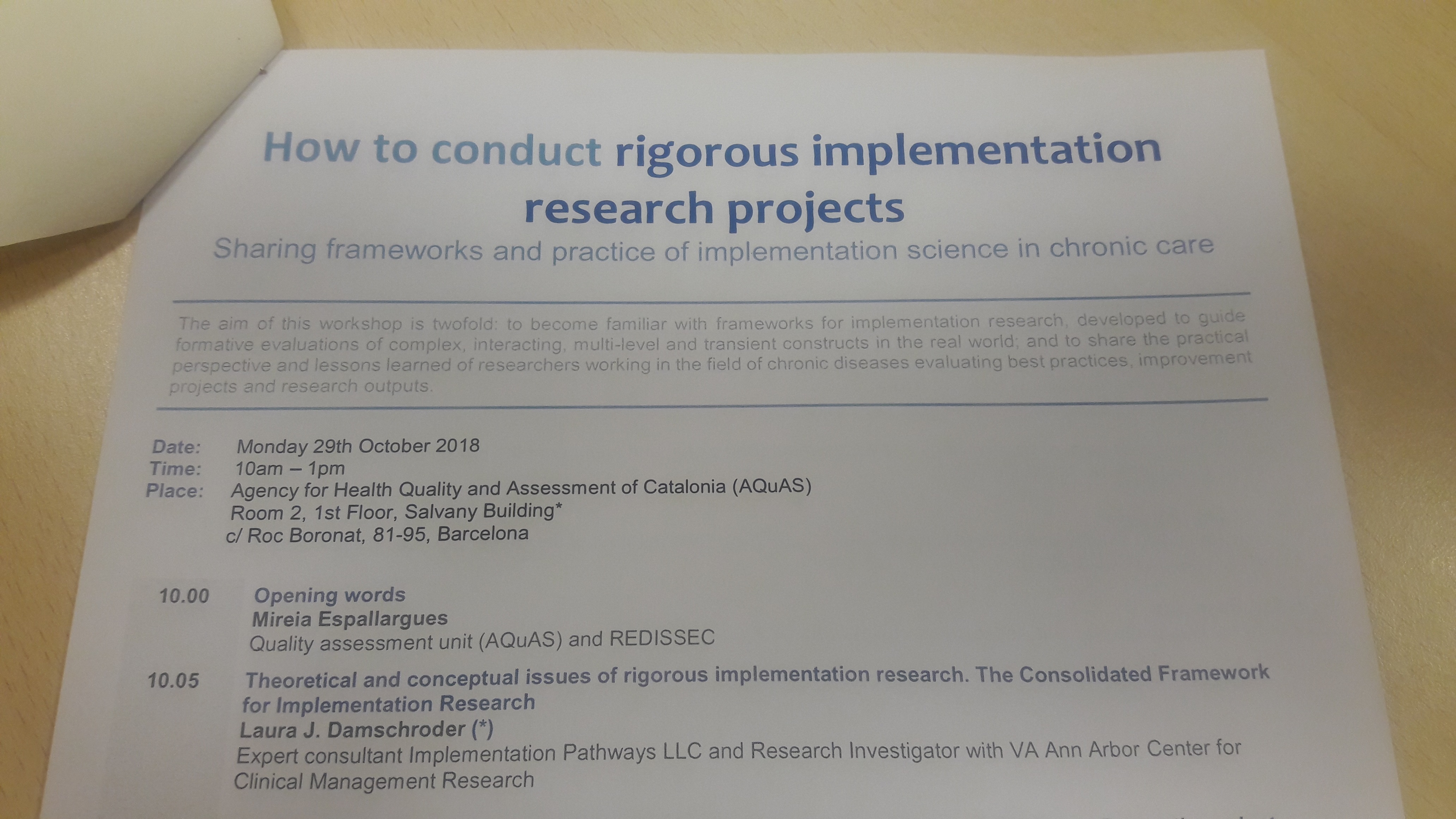
To learn more about “implementation science” or “research implementation” we held a workshop at the headquarters of AQuAS with Laura J. Damschroder, an expert consultant in implementation science and researcher in the United States.
From her talk we highlight the idea of building collective knowledge and identifying the barriers and facilitators in implementation, the time factor and the value of assessment.
It is also important to know the theoretical and conceptual framework of implementation and the “basics” of implementation science which is useful for any project being implemented, as is designing and following an adequate plan of action.
The workshop proceeded by looking at different examples of the implementation of good practices in the context of REDISSEC, the Health Services Research on Chronic Patients Network.
It all stems from the annual meeting of this network held in Madrid last week at the Instituto de Salud Carlos III, in which the idea of organising this workshop was put forward in order to bring some of the contents of the meeting closer to the Catalan context, with the participation of the AQuAS, the Hospital del Mar, and the Fundació Avedis Donabedian.
In terms of the AQuAS, three talks were given on projects in which implementation research is being done, with a different perspective in each case:
Quality standards in implementation by Vicky Serra-Sutton from the European project on dementia Act on Dementia Joint Action. The AQuAS team involved in this project was in fact given a mention this week at the Alzheimer Europe Conference which was held in Barcelona
The transfer of good practices and impact assessment by Elisa Poses-Ferrer from the European Project CHRODIS PLUS on chronicity
Regarding the Hospital del Mar, we heard a talk by Maria Sala on the personalisation of screening for breast cancer and regarding the Fundació Avedis Donabedian, we heard a talk by Carola Orrego and Marta Ballester, who brought reflections on aspects of improvement and lessons learnt in implementation.
This workshop was a good opportunity for speakers and attendees to share experiences and knowledge.
Moving on to the second subject.
In terms of the new European HTA regulation, which is in its final stages of discussion in the European Parliament, Iñaki Imaz, from the Instituto de Salud Carlos III in Madrid gave a seminar which we were able to follow live at the AQuAS.
It was very interesting for many reasons. Situations were contextualised that justify the need for health technology assessment (HTA) as a starting point, which is always present in our context.
The emphasis was also placed on the complexity of assessment and the different possible scenarios (or levels). On the other hand, aspects being discussed regarding the proposal for legislation which would allow for, among other objectives, joint clinical assessment at a European level, were commented on in detail.
Talking about HTA in Europe, a lot has been done (more than 30 assessments available within the framework of EUnetHTA), there is work in progress and, above all, there is the desire for all to gain in terms of confidence, guarantees, transparency and the sustainability of health systems. What is especially sought after is to avoid duplicities and to share knowledge and methodologies.
Establishing collaborations with different research projects driven from the arthroplasty registry of Catalonia (RACat) reveals the importance of the relationships and communication between professionals who manage and analyse data on the one hand and clinicians on the other.
A registry is a data base with a huge potential. The RACat, both in the number of cases registered and in the way data is used, is a very powerful research tool which needs the collaboration between clinicians and researchers. It concerns two visions, both equally necessary and complementary.
Today, we interview Jorge Arias, a researcher that works at the RACat who is involved in different research projects driven by the registry itself at the AQuAS.
Do clinicians and researchers speak the same language?
Yes and no. Even though we are usually in it together, we do not have the clinical experience to be able to fully interpret results and propose sufficiently precise studies which reflect the reality of clinical practice. Clinicians, on the other hand, are often not used to the different analyses used so that collaboration becomes a key element to obtain results of interest.
How do you solve this?
By speaking, of course.
Who decides what statistical analyses are done?
I would say that the researcher directs things but in practice it doesn’t happen quite like this. In some ways, the analysis is determined by the data itself and the objective that is established.
Let me explain. Depending on what one wants to investigate, to achieve the greatest possible precision the analysis needs to be “pre-defined”, in some way or another, so to speak. It is true that there is always scope for innovation and you almost always need to choose (from among several approaches to the problem) the most appropriate one. But in my opinion, in most cases the type of analysis is determined, as I mentioned before, by the aim of the research and the data available.
What are you working on at the moment?
At a Catalan level, we are starting a relatively new line of work in our environment in collaboration with the Hospital de Sant Rafael. It is related to the assessment of results according to the annual volume of procedures (arthroplasties in our case), and we are pleased with the interest which the project seems to be generating.
When you talk of interest, what are you referring to?
In this case, we are referring to the fact that we presented our results at the congress Sociedad Española de Cirugía Ortopédica (SECOT) (Spanish Society for Orthopaedic Surgery) and several
hospitals have since contacted us showing their interest in collaborating in this line. We feel this is very important.
Could you point out any other experience?
Yes. We are also involved in comparing results based on specific models of prosthesis, in comparing a “more general” type of implant, bone cements and in analysing the possible influence of comorbidity in surgical results.
In terms of patients, how do you incorporate their views or experiences?
Although the patient is at the centre of all the projects mentioned, in particular I would like to highlight the projects related to those known as “PROMS”, Patient Reported Outcome Measures. These results are particularly interesting because it is in fact the patient who rates the surgical results in terms of, for example, pain and improvement in life quality.
Focusing on the idea of collaboration, I would like to highlight what I think is a particularly relevant project. We began it with clinicians at the University of Exeter in the United Kingdom by “looking for” the questionnaires we could include in the registry, but seeing that the most used questionnaires in other registries were not available in our context we decided to take the initiative and adapt them ourselves.
In addition, in the following weeks, we hope to obtain a “direct” product from this project in collaboration with the University of León and the University of Oviedo, respectively, because I am in fact right now working with them to pilot one of these questionnaires on the quality of life, more specifically the HOOS, Hip disability and Osteoarthritis Outcome Score.
What do all these experiences have in common?
Without doubt, collaboration.
In your opinion, what influence can this collaboration have?
Collaboration in any field of science is basic and necessary in order to obtain results with real practical implications which in the end improve some important aspect.
We have spoken of collaboration at a clinical-researcher level but I guess we should talk of the need for this collaboration at all levels; that is, not only with clinicians but also with patients, managers and even the industry.
The subject is vast but focusing on the clinician-researcher collaboration, I would like to end by saying that from the RACat we encourage and are delighted to work with health professionals with foresight and clinical experience that want to collaborate with us. And, it goes without saying, us with them.
The EIT Health consortium includes a total of 144 leading companies, universities and research centres from across 14 European countries whose aim is to develop ecosystems of innovation in health and also to generate new ideas in business, support start-ups and involve students in the range of programmes driven by EIT Health.
The Spanish hub was formally created on 31 July, 2015, and its headquarters is located in the Parc Científic in Barcelona. The EIT Health Spain is made up of entities in the areas of research, education and business creation from 5 regions (Catalonia, Madrid, Valencia, the Basque Country and Andalusia). The AQuAS is one of the associated members of EIT Health and is part of the Spanish hub, EIT Health Spain.
However, we put the focus on the health community. The mission of EIT Health is to enhance the competitiveness of European industry while also improving the quality of life of citizens and the sustainability of public health systems.
In practice, all this translates into calls which EIT Health makes annually in order to finance innovative projects where proposals can be presented that meet the requirements of the European Institute of Innovation and Technology.
In addition, EIT promotes networking and training activities aimed at its members to develop new projects and establish synergies which favour innovation in health.
What role does the AQuAS play within the EIT Health framework?
The AQuAS began participating in this community of knowledge and innovation in 2016 with a Big Data in health training programme as part of the Summer School.
In 2017, the Co-Creating Innovative Solutions for Health project (CRISH) was launched. It is an educational programme that brings all the stakeholders together – including patients and caregivers – with the aim of learning how to participate, co-create and co-design top research projects and innovative projects in healthcare through patient experience, responsible research and innovation.
It is important to point out that this project has been running over the last two years by means of combined training with the aim of providing knowledge, skills and tools on patient experience methodology, responsible research and innovative components, entrepreneurship elements and reciprocity and co-design methods. All in all, the aim is to foster a better collaboration among disciplines and specialities so as to anticipate and jointly address emerging trends in health and ageing.
Another project initiated in 2017 was the Health Movement project with the aim of creating an ecosystem of the community’s stakeholders to help people lead a healthy lifestyle, adhere to treatments and receive personalised attention by means of Social Impact bonds, a financing instrument, a subject which we will delve into deeper on another occasion on this blog.
During 2018, new health technology assessment projects have been initiated. Examples are the ApneaBand project, where a protocol will be designed with which to assess the implementation of an innovative device to detect and measure sleep apneas and the LiverScreen project in which a new, cheap, fast and non-invasive method used to diagnose cirrhosis at an early stage will be assessed.
In short, there are a lot of innovative projects in the pipeline with which to continue learning and adding value.
Annals de Medicinais a journal of the Academy of Medical Sciences and Health in Catalonia and the Balearic Islands. It is published quarterly in Catalan but is now done so exclusively in its electronic version since 2012. It offers articles of dissemination, debate and synthesis related to aspects of health and the local health environment with a diverse, open and independent spirit.The AQuAS collaborates with the magazine in creating awareness of projects and initiatives in a section called “Trials and evidence”. If we ask ourselves about the value of this collaboration we can highlight the importance of publishing top scientific articles in Catalan and also its distribution at a country level among members of the Academy.
On the other hand, it goes without saying that being an open publication means there are no restrictions in making oneself known to all readers who might be interested, including citizens, patients, health professionals and those in other sectors.
Articles written by authors at the AQuAS are the result of a desire and a commitment to share knowledge with the citizenry and health professionals.
Today we speak with the people in charge of Annals de Medicina, Xavier Bofill and Marta Gorgues.
How long has the magazine Annals de Medicina been around?
The first issue of the journal dates back to 1907 (although between 1878 and 1879 some issues were published as “Anales de la Academia y Laboratorio de Ciencias Médicas de Cataluña”.) Over time, there have been several interruptions which have marked the different stages of the journal. The last time it was relaunched was in 1998 and it has been running ever since.
In a few words, how would you define Annals de Medicina?
Close proximity, committed and diverse. Close proximity, in the sense that it deals with subjects of our most immediate environment; committed, as it is about current problems; diverse, because of the variety of sections it is made up of.
What added value does the journal provide society with in your opinion?
It is a source of rigorous information on a wide range of subjects related to health and it is of open access to all; it is written in Catalan; it enables professionals in our area to explain their work and to share experiences; it revisits old texts that we should keep in mind; it pays tribute to medical personalities of our own.
Could you point out similar journals?
All journals have their role to play. In the same way that Annals de Medicina is the Academy’s magazine, we could highlight the importance for all organisations to have a journal of their own (or in a similar format) which serves as the mouthpiece of their institution.
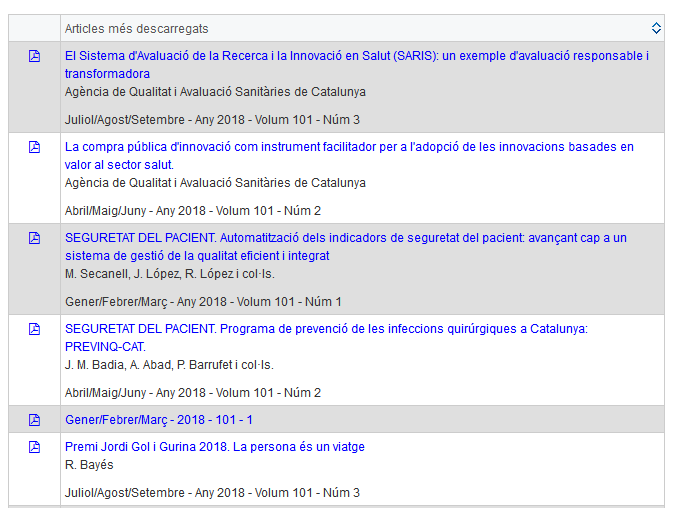
One of the novelties of the magazine’s website is that the most downloaded articles can be consulted.
If you would like to see the history of collaborations of the AQuAS in the Annals de Medicina journal, below is a list of the most recently published articles: