How to improve chronic patient medication … in only 9 cases!!

17 set.

Arantxa Arantxa Catalán, Head of AQuAS Pharmacy Assessment

To date, more than 900 physicians and primary care pharmacists have completed the «Management of chronic patient medication (MMPC)» an online course acreditated with 11.7 points by the Consell Català de Formació Continuada de les Professions Sanitàries (Catalan Council of Continuing Training of Sanitary Professions) which has just completed their 3rd edition.
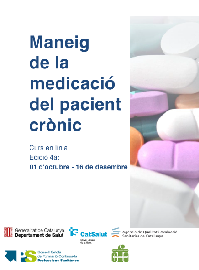
Sense títolThe MMPC course consists of 3 modules and 9 real clinical cases of multi-medication and multi- pathology patients (Figure 1) and is a 60 hour training course. During this time and by solving each case, the trainee acquires the knowledge and skills needed for the processes of reconciliation, review and de-prescription of medication for chronic patients; knowledge and skills whose systematic application will certainly promote relevant changes in clinical practice. Continue reading


We must improve monitoring of heart failure patients and increase the activity of day hospitals

10 set.

Captura de pantalla 2015-09-09 a las 18.21.46Antoni and Beatriu Bayés (B&B in the text), Head of Cardiology and respectively Medical Director of the University Hospital Germans Trias i Pujol (HUGTiP), in an interview made by Anna García-Altés (AGA in the text), Head of the Catalan Health System Observatory, explain their efforts of improvement for patients with heart failure and expose what direction cardiologic medicine should take for innovation.

AGA: You attended the Results Centre’s workshop in the Hospital of Sant Pau on innovative experiences in the field of cardiology. What are your views?

B&B: We believe that the initiative to hold these kind of meetings is very interesting and necessary, given that all those innovative experiences that enhance aspects of management assistance and sharing processes are essential.

AGA: What would you highlight most from this workshop?

B&B: What we’d like to highlight regarding this workshop is the transparency in the indicators’ presentation and the individual analysis that the centres’ professionals or managers have undertaken in order to justify the differences. Also we’d like to emphasize the enthusiasm in sharing those ideas and projects that have improved the indicators or that demanded courses of action towards improvement. Continue reading

Active and thriving aging as a key element of the future

3 set.

Sense títolThe current demographic trend turns people over 65 in the fastest growing population group. By 2060, the number of people over 65 in Europe will be twice todays and 1 in 8 people will be 80 or older.

Older people could have a more active social role at all levels and contribute to future generations with their life experience and wisdom. Thus the concept «being active» directly involves the three components of the welfare of the person: physical, cognitive and social, and these improvements in quality of life also impact on savings in health expenditure for the whole of society.

With three key objectives of enhancing the role of older people in society, the European Union launched in 2012, the European Year of Active Ageing and Intergenerational Solidarity; and as one of the key points, the importance of promoting active and healthy aging and independent living is highlighted. Continue reading

Results Centre. Mental Health and Addictions Areas. 2014 data.

27 ag.

AGA2Anna García-Altés, Head of the Catalan Health System Observatory

This report presents the results of all SISCAT mental health centres for 2014. This year, the structure of the report is slightly different from previous years. It deals with fewer topics but in a more concrete, in depth manner. A special effort has been made to include new indicators such as the age of the first visit, or the percentage of patients with Severe Mental Disorders (SMD) in the AMHC requiring hospitalization during the year. However, The tables with the values ​​of all indicators centre by centre -the distinguishing feature of the Results Centre- remain. As in previous years, all reports include innovative experiences that provide good care results, included in the Observatori d’Innovació en Gestió de la Sanitat in Catalonia as well as the experts’ opinions. Continue reading

Results Centre. Long-term Care Setting. 2014 Data.

20 ag.

AGA2Anna García-Altés, Head of the Catalan Health System Observatory

This report presents the results of all SISCAT long-term care centres for 2014. This year, the structure of the report is slightly different from previous years. It deals with fewer topics but in a more concrete in-depth manner. Similarly to last year, the results emerging from the information provided by the basic minimum acute hospitalization data sets and long-term care resources are presented which allows us to evaluate the coordination between care levels and early referral to a convalescent care centre. The tables with the values ​​of all indicators centre by centre -the distinguishing feature of the Results Centre- remain. As in previous years, all reports include innovative experiences that provide good care results, included in the Observatori d’Innovació en Gestió de la Sanitat in Catalonia as well as the experts’ opinions. Continue reading

Results Centre. Primary Care Setting. 2014 Data.

13 ag.

AGA2Anna García-Altés, Head of the Catalan Health System Observatory

This report presents the results of all SISCAT primary care teams (PCT) for 2014. This year, the structure of the report is slightly different from previous years. It deals with fewer topics but in a more concrete, in-depth manner. A special effort has been made to include indicators of nursing care evaluations, an area little discussed up until now in the Results Centre reports, and other new indicators from records that so far have not been analyzed in the reports. Some examples of these indicators are: the percentage of diabetic patients with related treatment diagnoses or the A&E MBDS indicators. However, the tables with the values ​​of all indicators centre by centre -the distinguishing feature of the Results Centre- remain. As in previous years, all reports include innovative experiences that provide good care results, included in the Observatori d’Innovació en Gestió de la Sanitat in Catalonia as well as the experts’ opinion. Continue reading

Results Centre. Hospital Setting. 2014 Data.

6 ag.

AGA2Anna García-Altés, Head of the Catalan Health System Observatory

This report presents the results of all public hospitals network (SISCAT) for 2014. The structure of this year’s report is slightly different from previous years. It deals with fewer topics but in a more concrete, in depth manner. A special effort has been made to include indicators of nursing care evaluations, an area little discussed up until now in the reports of the Results Centre, and other new indicators from records that so far have not been analyzed in the reports. Some examples of such indicators are: mortality in low mortality DRG’s, mortality in patients who have developed complications, bedsores, or indicators relating to donation and transplants registration and the A&E MBDSHowever, the tables with the values ​​of all indicators centre by centre -the distinguishing feature of the Results Centre- remain. As in previous years, all reports include innovative experiences that provide good care results, included in the Health Care Innovation Observatory in Catalonia (OIGS) as well as the experts’ opinion and specific results indicators of a monographic hospital, this year the Hospital Maternoinfantil de Vall d’Hebron.
Continue reading

Sometimes doing nothing is the right action

30 jul.

Joan-PonsJoan MV Pons. Head of Evaluation AQuAS

Doing or acting is irresistible; it must be a feature of being human, just like a spring is always ready to bounce, unless we’re talking about contemplators, hermits and stylites (St. Simeon). In medicine and public health we’re more afraid of failures by omission than of failures by commission, so we find ourselves unable to abstain from action. Often we act by asking for analytical or image tests, thinking that these, consisting in a mild pierce or radiation (a lot more if it’s a CT scan) can do no harm, can have no adverse effects. But it’s not quite so. Besides the fact that any unnecessary test (which will not bring new information and if it does will not alter patient management) means throwing money (tax payer’s money), any medical, preventive, diagnostic or therapeutic intervention, in whatever form, brings risks along with any benefits. It can not be otherwise. Needless to say, the main issue is properly knowing how to weigh the pros and cons and how to choose wisely. Continue reading

Promoting patients’ proactive attitude in the care of their illness, can this generate more inequalities?

23 jul.

Joan EscarrabillJoan Escarrabill, Director Chronic Care Program at Hospital Clínic Barcelona

As participants in a mature society, we’re responsible for our actions and it’s clear that these actions have consequences. Take healthy habits as part of this responsible attitude. From the health point of view, this attitude of individual responsibility leads us to value this role of «active patient» to the maximum. In addition, we know that active patients have better health outcomes.

Now this storyline has a weakness that wouldn’t exist if we all had the same cards to play with. Unfortunately there are social inequalities. In 2014, in an article in the NEJM, Sayer and Lee explain very well this relationship between social conditions and health. Not all citizens (patients) start the race from the same point and in the same conditions. Social inequalities cause that not even «starting up early, very early…» can offset these imbalances. Naturally, from the point of view of the health care organization we can not attempt to resolve social inequalities. However, we can hope to mitigate them. From my point of view, to mitigate social inequalities we’d have to act in three directions simultaneously: Continue reading

Collaboration between professionals and citizens, a key factor for health data visible and useful

16 jul.

CrisRibasCristina Ribas, President of the Catalan Association of Scientific Communication (ACCC). Professor of Journalism in Internet. Universitat Pompeu Fabra

AQuAS and ACCC recently organized a data visualization workshop for health technicians and science journalists. The outcome of this session resulted stimulating and enriching for both profiles. Undoubtedly, sharing knowledge between disciplines encourages innovation and professional growth.

The workshop, taught by Eva Dominguez and Paula Guisado, showed visualization examples applied, mainly to journalism, but other institutions, are increasingly moving in the same direction. And it’s that the public rarely knows how to interpret and treat available data unless it’s accompanied by graphics and interactive tools. The Catalan Health System Observatory, for example, makes an extra effort to gather all network data from Catalan institutions in a single portal and, as Anna Garcia Altés explains, they are investigating how to use visualization tools with the purpose of providing a better service . Continue reading