Health data: Do we give citizens what they want?

24 nov.
central-de-resultats-qualitatiu
Dolores Ruiz-Muñoz, Anna García-Altés and Hortènsia Aguado

The right to receive advice with regards to the information available on the network is reflected in the Carta de drets i deures de la ciutadania en relació a la salut i l’atenció sanitària (Citizens Bill of Rights and Duties relating to health and healthcare), updated in 2015. In particular, it specifies that a person has the right to obtain accurate and reliable recommendations from health professionals in terms of the available health information on the network (web pages, applications, etc…).

It is a fact that, from different professional sectors, we are more and more frequently identifying citizens as a key group to take into consideration when communicating the outcomes of our work, including the health sector. The different actors involved in disseminating health information resulting from the Catalan health system activity are no exception. When we publish our data we do it more and more in a way that is not only aimed at informing health professionals on the one hand but also at being accountable to citizens as end users.

But have we really asked citizens what information they want to obtain from us?

From the Results Centre of the Catalan Health System Observatory we publish a series of reports annually with quantitative indicators that aim to measure, assess and disseminate the results obtained in the different areas of the public health system. Up to the present, to disseminate this information beyond the comfort zone of the health sector, we have published a series of infographics with the information that we have considered to be most relevant for citizens, making the effort to create a user friendly format.
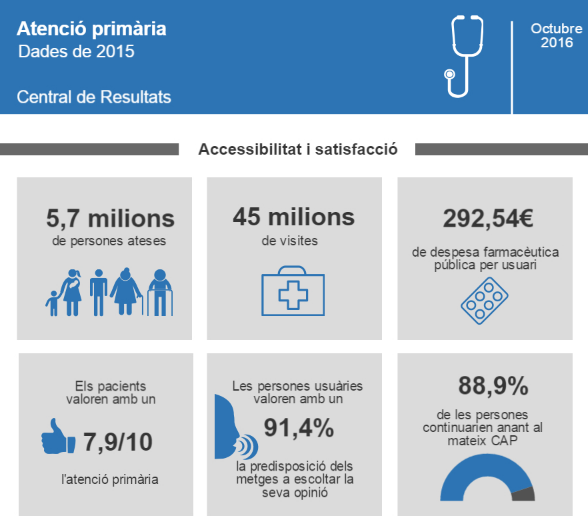
infografia-atencio-primaria


During the first semester of 2016, we spent time reflecting on our labour and we realised that we did not in fact know whether what we were publishing for citizens really reached or interested them. We did not even know what it was that citizens wanted to receive from us. To answer these questions we carried out a qualitative study of Catalan citizens to find out what their needs for health information were, but not limiting ourselves to that produced by the Results Centre.

We created three discussion groups and invited citizens randomly selected from Registre Central d’Assegurats del CatSalut (CatSalut’s Central Registry of the Insured) to freely express what they felt their necessities for health information were. What we discovered was that the population is not interested in receiving health information in a general or systematic way but rather only wants health information when they have a specific personal need and which is directly related to what is affecting them at a given time. They are not interested, therefore, in receiving health information about the population as a whole nor of how the health system works. They state that this information is necessary but feel it is health professionals who need to have it and know how to manage it. In this way, they place their trust in the health system by dissociating themselves from this type of information.

Furthermore, they consider it of interest that the information be made available on the networks but state that, whether they actively search for it on the internet or not, what they need is to be able to contrast the information at a later stage with their primary care physician or specialist, and that it be this professional who discerns what the best information available is for each occasion. What is more, they clearly identify this professional as being the person who needs to know the health information produced systematically by the Catalan health system.

We presented the results of this study at a recent congress, to be exact, the XXXIV Congress of the Spanish Society for the Quality of Healthcare and the XXI Congress of the Andalusian Society for the Quality of Healthcare, generating a very interesting posterior debate regarding these results. One of the attendees at the congress stated their concern for the fact that citizens were not interested in receiving general health information. The debate centred on how we could educate the population into showing an interest in this information and on how to make it reach them. We believe that the key underlying question here is whether this need be done at all.

The public at large have an overwhelming amount of information at their disposal on an infinite number of different subjects on a daily basis. It seems clear that when a person has a specific need regarding their state of health they consult a professional in whom they trust. It is obvious that to us, as healthcare professionals, we will always feel that the information we produce is of such interest as to make others want to know about it, but it is also probable that our enthusiasm makes us biased when interpreting reality. We should perhaps ask ourselves whether we need to make the effort to provide the public with information they say they do not need nor interests them, and whether we are prepared to accept their decision and respect it.

Post written by Dolores Ruiz-Muñoz, Anna García-Altés and Hortènsia Aguado.

Indicators for assessing care for chronicity

10 nov.

In a previous post we discussed the advantages of using indicators in the assessment of health services. At AQuAS we have been applying indicators to assess different care processes and areas, with care for patients suffering from chronic conditions being one of the principal areas of interest in terms of new care models and programs assessment. Interventions in the field of care for chronicity are extremely complex given that by their very nature, they tend to involve multiple actors and many different levels of care concurrently, as well as different elements utilising therapeutic instruments and technology with very variable intensity. Moreover, their effectiveness is often linked to contextual factors, making it difficult to attribute an outcome to a particular component of the program. So, given this level of complexity, the question remains, why should we be using indicators in this area? The answer is that these indicators may provide us with several benefits compared to other assessment approaches, such as:

  • Incorporating professional opinion and consensus
  • The possibility of including structural and procedural indicators allows us to obtain an understanding of the environment and the reality in which the initiative is being implemented
  • Providing a type of assessment that is more accessible and understandable for professionals
  • Greater simplicity and speed in evaluation and obtaining results
  • Possibility of defining standards
  • Allowing comparisons to be established and objectifying trends
  • Identifying successful characteristics and factors that can define which models are most effective, for which groups of chronic patients, in what context and at what cost

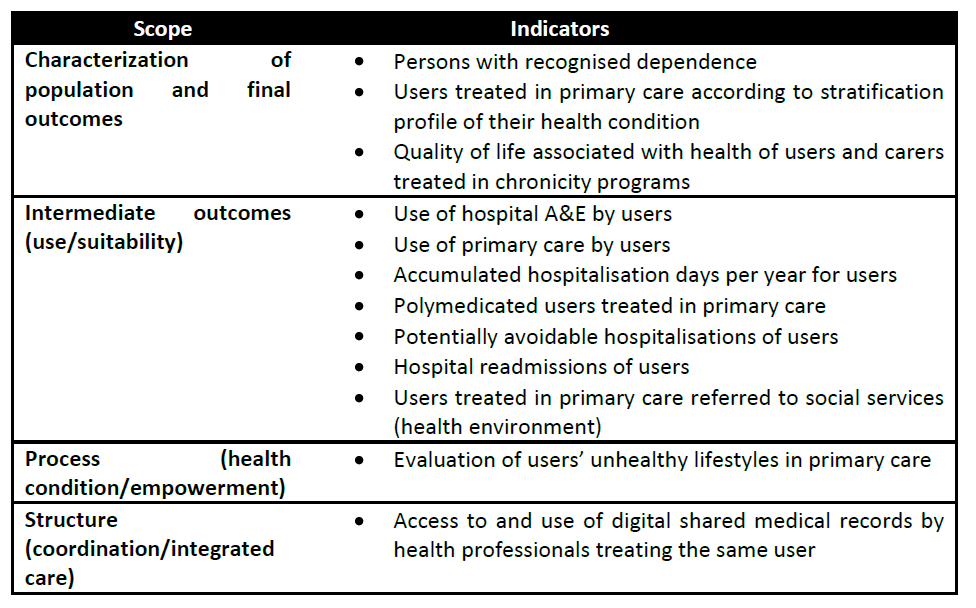
The first project in which AQuAS began using quality of care indicators for assessing chronicity got underway in 2012 with the commission by the Program for Prevention and Care for Chronicity (PPAC) to define a set of indicators to assess the quality of integrated care programs for chronicity within the health sector, where an ‘integrated program’ is understood as those programs involving the coordinated participation of different levels of care. Following the methodology described in the previous post (review of literature, establishing a theoretical framework and expert opinions) a total of 18 indicators were obtained, mainly from intermediate and final results, which experts considered relevant and feasible for assess these types of programs and which are currently being implemented (see table 1 and web).

Table 1: Indicators assessed as relevant and feasible for evaluating integrated care programs for chronicity

indicadors-2-en-1

From this experience, AQuAS developed a proposal for indicators, published recently to, assess chronic care as part of the strategy for tackling chronicity within the National Health System. As a result of this work, a set of indicators considered to be crucial for evaluation emerged, which included several previously prioritized indicators which are repeated such as polymedication, avoidable readmissions and hospitalisations, but which incorporates new factors which are more closely associated with the patients’ experience, such as the assessment of the patients’ and carers’ quality of life, or patients’ lifestyles (see Table 2).

Table 2: Proposal for prioritized indicators for promoting more uniform measurement of the entire National Health System for evaluating of chronicity care strategies

indicadors-2-en-2

Later, from 2014 onwards, the Catalan Institute of Healthcare and Social Services (ICASS – Dpt. Social Welfare and Family) and the PPAC (Health Dept.), commissioned extensive work to be carried out in evaluating collaborative social and health care models in Catalonia. These models not only consider the different levels of care in the health system but also include social services, a crucial aspect in caring for patients in this category. The objectives of the project were to outline the organization and operations of these collaborative experiences, identify barriers and facilitators, propose a conceptual framework for assessment and define a set of well-founded indicators based on feedback from participants and the expertise acquired from previous assessment studies. The proposed indicators continue to take into account traditional indicators while consolidating assessment that includes the views of those involved, not just the patient, but also the caregivers and professionals, and placing special emphasis on the evaluation of the coordinated actions of healthcare and social services, for example considering the avoidance of duplicate processes or carrying out joint social and healthcare initiatives.

We must also highlight in this line of work the efforts undertaken by the ITES FORUM (Forum of innovation, transformation and excellence in health and social services) to define a joint health and social services evaluation framework with a proposal of indicators (line L6) and in which AQuAS is also involved jointly with professionals from different fields. The Forum is a tool to facilitate the necessary conceptual debate required for transforming existing social services and healthcare in favour of a new model of integrated care.

Finally, and to continue discussing the area of assessing the integration of health and social services, since 2015 AQuAS has been involved in the Horizon2020 SUSTAIN (Sustainable tailored integrated care for older people in Europe) project. This European project aims to compare, assess and implement strategies to improve integrated care experiences aimed at non-institutionalized elderly individuals, in other words, those living in their own homes. The project has an additional goal, which is to seek to ensure that the best integrated care initiatives in this area are applicable and adaptable to other European health systems and regions. The project involves seven European countries working simultaneously on the basis of the definition and implementation of a set of indicators pending definition, tailored to this type of population and integrative approach.

Indicators, therefore, are useful tools for assessing an area as large and as complex as chronicity and they can be applied from a broader or narrower perspective, in other words, taking into account not only the different levels of care in the health system, but also including social services. The results obtained from the implementation of these indicators will provide professionals with objective criteria regarding the quality of their interventions, by facilitating the identification of the strengths of chronic care programs, as well as areas with scope for improvement.

Post written by Noemí Robles, Laia Domingo i Mireia Espallargues. Àrea d’Avaluació, AQuAS.

Utilities and challenges of applying qualitative methodology in community health projects

13 oct.

This is a follow up of the previous post regarding health-applied qualitative methodology. It is linked to the VII Ibero-American Congress of Qualitative Health Research but today’s approach is focused on the application of this methodology in community health projects.

During the process of construction and implementation of community health programs, dynamics of participation and networking are promoted in all its phases: from the analysis and identification of needs, to prioritizing initiatives and subsequent implementation. Such processes involve the corresponding allocation of actions, according to technical areas, which should enable for planning the specific programs required for each population centre, and the initiatives proposed to tackle health inequalities.

In this sense, the Catalan Agency of Public Health (ASPCAT) is making a significant commitment to community health. PINSAP (Interdepartmental Public Health Plan) is concrete evidence of this fact and a government instrument which collects and promotes health actions from a global approach (health in all policies). The aim is to improve the health of the Catalan population by involving the entire community (from Primary Care, Public Health and municipal agents from all areas, to the community – cultural, social, sports, neighbourhood, youth, school associations, etc.).

marc-conceptual-com-salut

One aspect which justifies this networking and cross-sector collaboration is one of the premises of PINSAP, that of determinants of health and the fight against social inequalities. As we all know, the health of the population depends not only on factors directly related to this element, but multiple factors in the immediate environment and the daily lives of people. For this reason, the objective is to develop a multidisciplinary type of project at a community level including health in all policies.

Within the context of PINSAP, community health projects called COMSalut (Health and Community) are being implemented in different municipalities throughout Catalonia. The community itself can, and does assist in providing health. The starting point for these community projects is the creation of a local steering committee or team (EML, as per the Catalan acronym) which includes members of the different areas mentioned above (primary care, public health, municipal services and members of the community fabric). The second step is the diagnosis of health, to be followed by the prioritization and proposals for action phases. The health diagnostic process begins with a quantitative diagnosis, in which different indicators of health and lifestyles and determinants of health are identified. This phase is then followed by a qualitative diagnosis.

One of the objectives of health diagnosis in a community process is to identify needs and resources/assets which influence the health of the population in a specific neighbourhood, district or town, by drawing on the opinion of the community, both from members of the public as well as professionals, within the framework of the community process. In order to do this, a qualitative diagnosis must be carried out using the specific techniques which this methodology entails given that the aim is to identify the individual opinions of informants resulting from shared experience in that particular environment, placing the health diagnosis in a specific socioeconomic and political context. It was decided to conduct two nominal groups in each local process, one professional and one made up of members of the public, during which participants were invited to discuss positive aspects of the community, areas for improvement and potential proposals for improvement, both in general terms, as well as issues that might directly affect health. The issues are presented from a general perspective so that informants take the broadest possible approach in the area of health, expanding their viewpoint to include all community resources which might contribute to or subtract from health.

This is precisely one of the challenges involved in these community processes, since during the course of these sessions, especially in the case of groups comprising members of the public, attendees tend to focus the discussion on issues regarding urban infrastructure and local organization, as well as airing political demands and discarding for example, aspects of habits and individual and shared group lifestyles (family, neighbours, close friends, etc.).

The experience of using qualitative tools adds value to the research process carried out by the Catalan Department of Health and this is exactly what we brought to the VII Ibero-American Congress of Qualitative Health Research, which took place in Barcelona from 5 to 7 September.

2016-congreso-iberoamericano-de-investigacion-cualitativa-en-salud-ponencia-arjona
Carmen Cabezas (ASPCAT), Dolors Rodríguez Arjona (ASPCAT), Vicky Serra-Sutton (AQuAS), Santi Gómez Santos (AQuAS-ASPCAT)


Key ideas to take home:

  • It is very interesting to see how the same qualitative process is weaving a network of collaboration and participation at the professional as well as community level. Networking is a successful tool in the process, but at the same time is a result that remains within the community and becomes an asset. The first phase of the process requires the setting up of a Local Committee to carry out a community diagnosis and subsequent follow-up. The succession of meetings and interdisciplinary teamwork leads to networking.
  • At this point we encounter one of the greatest challenges, and that is to raise awareness within the community, through joint reflection, of the assets and resources of their immediate environment that affect their individual and collective health. This is presented as a driving force for change to achieve increased health.


On the other hand, these community processes present a number of challenges to be faced:

  • In the first place, appropriate sampling strategies should be used to ensure the participation of key members and those who are knowledgeable of the community to be researched. The latter can be achieved by involving the local team or committee in the process in order to reach vulnerable population groups or those with special needs, as would be the case for youth, elderly people living alone, women, long-term unemployed, immigrants, etc. The individuals who should contact potential informants must be those who know the community well and are appreciated by the community.
  • Secondly, this type of community process involves another challenge which is, how to translate the results into a credible technical report and one that is beneficial to local team members and the community at large.

As a reflection within the context of this conference and the development of local community processes, we can see that qualitative tools can provide opportunities for active participation. This leads to networking and motivation and the implication of the team and the community. The process itself achieves the ultimate goal of raising awareness within the community about the factors present in the immediate environment and this represents a potential driving force for change.

This result is achieved through interdisciplinary activities and motivation, values which are ever-present and very current. However, I believe that we should carefully rethink what is really involved in a multidisciplinary project. Is it simply the sum of forces or does it involve something else? I think we should undertake the task to put into practice networking operationally, through incorporating all those in the community and shouldering responsibility together. Interdisciplinary work implies cooperation between different agents, combining efforts towards a common goal and establishing synergies and talent-sharing.

Post written by Dolors Rodríguez Arjona, sociologist specializing in qualitative health research.

Broadening perspectives in health service assessment

8 set.
Vicky Serra-Sutton
Vicky Serra-Sutton, sociologist PhD

What lies behind a significant volume of hospital readmissions? What makes a service present a good healthcare praxis? What obstacles are there when changing to a healthcare model such as in major out-patient surgery which encourages patients to go home on the same day as their operation? Do managers and nursing staff have the same opinion about what efficiency is in an operating theatre? What is the perception of professionals of the possible benefits of people-centred attention?

Do we all see a dragon?

Drac

Reality is complex and therefore approaches are needed which facilitate the interpretation and understanding of that reality. With qualitative research, places can be reached otherwise unattainable when using other methodological aproximations. When answering questions like those we asked ourselves previously, a truly qualitative approach is required. We need to make the approach using an adequate and credible technique to validate the process of all those involved and  to ensure precision in results as is done in quantitative research but not forgetting that we need to be critical and independent in the analysis made.

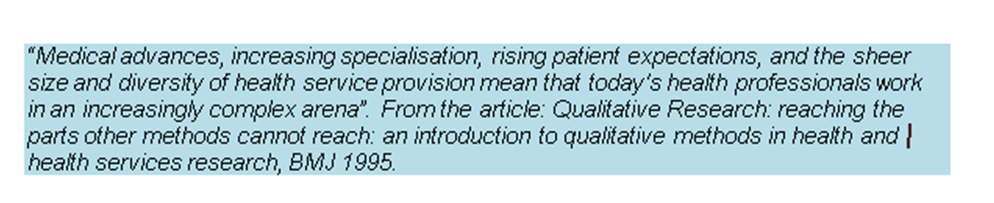
We will briefly outline the evolution of the qualitative approaches in the context of the assessment of health services. A reflection on the usefulness of qualitative techniques  in the assessment of health services or medical technologies is not a new one and you can find a series on this subject in the British Medical Journal of 1995 and in the Health Technology Assessment report of 1998.

bmj-1995-eng

Health assessment agencies have given great importance to questions about the scientific evidence available when talking about the efficiency and safety of treatments and biomedical interventions of a clinical nature. Randomized controlled trials and systematic reviews are considered to be the reference standards for causal atributions of the benefits of an intervention for the improvement in the health status of patients.

Society has evolved and the needs of the system adapt to this. We formulate new questions related to the preferences and expectations of users facing treatment and how different professionals contribute to providing better results in patient health care. One must bear in mind that when assessing the benefits and results of attention given,  many factors come into play.

In this context, the paradigm of evidence based medicine and the supposed superiority of quantitative approaches and of some study designs above others, have created obstacles in the application of qualitative research. In this sense, the letter to the editors of the British Medical Journal signed by more than 70 researchers of reference for giving their support to qualitative research is clear proof of this remaining obstacle.

bmj-2016-eng

Questioning the efficacy of a medical drug cannot be answered using a qualitative approach but we can broaden the scope of questions that we pose ourselves.

For example, we can consider asking ourselves questions, among others, about the preferences of patients, the perception of the benefits of a medical drug, the expectations or opinion of professionals that prescribe it or the possible reasons for a low adherence of the medical drug.

Another scenario could be that of a patient with osteoarthritis who has undergone a knee replacement (arthroplasty) and who is being attended by several professionals such as the primary care doctor, the traumatologist surgeon, the anaesthetist, the nurse, the physiotherapist and other professionals if the patient has other comorbidities. That patient has certain preferences and expectations which need to be understood and then give the health care to cover those needs, which can go beyond the mere surgical procedure.

With qualitative research we develop a discourse, texts, opinions and perceptions of people, communities, with images, perspectives, ideologies and complexities. We must guarantee rigour and that the photograph and interpretation of reality that we make remain valid and coherent for the research group and the populaton or group of people that we are assessing.

The application of qualitative techniques has been on the rise using interviews, semi-structured questionnaires, field notes, focus or discussion groups to gather the opinion of different groups of professionals and users.

From my point of view, there are three examples which can be of great use to know the approach and the process in carrying out an assessment of services with a qualitative approach:

  1. Opinions, experiences and perceptions of citizens regarding waiting lists
  2. Job satisfaction or productivity, a study exploring the opinions of different professional profiles regarding the efficiency of operating theatres
  3. What opinion do professionals have of the benefits of an integrated attention in the United Kingdom?

Avoiding the classic metrics means being able to measure in an alternative or complementary way by combining different approaches be they qualitative or quantitative. I find the introduction to qualitative research we find in René Brown’s TED talk the power of vulnerability. This qualitative researcher recommends we measure that which is apparently unmeasurable and go more in depth into the complex phenomenon of vulnerabilty.

We broaden perspectives by understanding the reality from within, by bearing in mind the multiple existing points of view to improve that which is disfunctional or by identifying better practices to spread them. We can measure what we want to measure. It will be necessary to adapt the approach to the context and audiences and to continue progressing to show with rigour and practice the usefulness of qualitative approaches.

We continue learning. This time, it has been at the Congrés Iberoamericà de Recerca Qualitativa en Salut (in Twitter #IICS2016) held in Barcelona, 5-7 September. The Agència de Qualitat i Avaluació Sanitàries de Catalunya (AQuAS) and the Agència de Salut Pública de Catalunya (ASPCAT) shared the stand to explain their experiences.

2016 Congreso Iberoamericano de Investigación Cualitativa en Salud
Santi Gómez Santos (AQuAS/ASPCAT), Dolors Rodríguez Arjona (ASPCAT), Mireia Espallargues (AQuAS), Vicky Serra-Sutton (AQuAS)

Post written by Vicky Serra-Sutton (@vserrasutton), sociologist PhD in AQuAS.

Stratification and morbidity database (2n part)

31 març
Foto Emili Vela
Emili Vela

(This post is the second part of this post)

A key element for completing the stratification of population in risk groups is information system. It’s necessary to have a database that integrates information collected from different health records and therefore, in order to meet this demand, the population morbidity database was created.

The point is that every day there is more and more emphasis on the need to provide patients with a comprehensive and integrated health and social care, but the analysis and evaluation of this care can not be carried out correctly with fragmented information systems, on the contrary: it must be done starting from the integration of the data these contain.

Population morbidity database structure

The population morbidity database is based on a system of related tables that pivot around the users table, which includes the main data of the insured patient (demographics or health status, to name two examples).

Currently, there are three more tables: the diagnostic, the contact with health services and the pharmacy, but this type of structure relatively easily allows incorporating both information from new records (outpatient clinics, dialysis, respiratory therapy, etc.) and new tables with other relevant information, such as results of clinical findings:

Figure 2: Structure and content of the population morbidity database. The clinical determinations table in gray is not yet implemented.

Taula d'assegurats

The population morbidity database integrates information from the following records:

  • Registro Central de Asegurados – (RCA) (Central Registry of Insured Patients) managed by public relations management of CatSalut. This register basically provides all the information of residence, socio-demographics and health status of the insured patient.
  • Registros del conjunto mínimo básico de datos – (CMBD) (Records of basic minimum data set) managed by CatSalut Division of demand and activity analysis. These records feed both into the diagnoses table and in the contacts tables. There are different registers to collect information from the healthcare lines:
  • Hospitalization (CMBD-HA): information provided by general acute care hospitals (hospital admissions, outpatient surgery, home hospitalization, day hospital) from 2005 to 2014
  • Socio – sanitary (CMBD-SS): information of the care provided by the health centres of internment (long and medium stay and UFISS) and outpatient care equipment (PADES) from 2005-2014.
  • Psychiatric hospitalization (CMBD-SMH): information of the care provided by psychiatric hospitals from 2005-2014.
  • Outpatient Mental Health (CMBD-SMP): information of the care provided by outpatient mental health centres for the period 2005-2014.
  • Primary Care (CMBD-AP) information on the care provided by primary care teams from 2010 to 2014.
  • Emergency (CMBD-UR): information of emergency care (hospital and CUAP) from 2013 to 2014.
  • Pharmacy activity Log (RAF) managed by CatSalut’ management of pharmacy and medicine unit. This record provides all the information about outpatient pharmacy dispensing for the period 2011-2014.
  • Record health services turnover (RF) managed by the Division of care services provision. This record provides information on any activity financed by CatSalut, but that does not rely on a specific record: hospital outpatient clinics, dialysis, home oxygen therapy, rehabilitation or non-emergency medical transport. This record provides information mainly on the contacts table for the period 2011-2014.

The possible uses of the population morbidity database are multiple: the population stratification, the specific analysis of certain health problems (broken femur, IC, COPD,…), the development of population indicators of efficiency in the use of resources, etc.

We can conclude that, for the volume of data that integrates, this database has the characteristics of a structured “big data”, with a considerable capacity for growth and adaptation to new requirements and data sources and offers enormous possibilities for analysis.

Post written by Emili Vela, head of Modules for Tracking Quality Indicators (MSIQ). Health Care Area. CatSalut.

Health care apps: a whole new world. Separating the wheat from the chaff?

10 març
Carme Carrion
Carme Carrion

Not too long ago, our grandparents, and even our parents, would be given closed envelopes at the practitioner’s, with the results of medical tests or reports that one healthcare professional would send to another one. Patients were mere couriers of the information regarding their very own health. Surely, more than one would not “respect the rules” and open the envelope, to read what actually belonged to them.

Things are very different now. The democratisation of society; the better education of citizens, at all levels; the growing concern about all issues regarding our health, be it physical, mental, emotional or social, or the fact that information flows fast, have occurred in parallel to the great technological revolution, which has dramatically changed many aspects of our everyday life. And amidst this change of paradigm, apps have appeared.

There is an app for each aspect of our daily life, and instead of helping make it easier, it ends up gets more complicated. Health is no exception, obviously. There are said to be more than 100,000 health apps now, of which less than 20% are addressed to the management of specific diseases, such as diabetes or depression. The rest of apps are included in what is called wellbeing apps, which promote healthy lifestyle habits.

Avaluació mHealth Carme Carrion

Within this new situation some questions are bound to arise: Will apps change the way we interact with our health and the healthcare system? Which is the best app to treat a particular disease? Are all apps appropriate for any kind of person? Do they add value to everyday practice? Are they effective? Will there be a day when healthcare professionals would prescribe the use of an app, along with a drug or a diet?

So far, there is no clear answer to these questions. It is widely accepted that the technological aspects -data safety or interoperability- should be validated. But what about validation of their contents? Is there some kind of scientific evidence behind the recommendations made by the apps? How should we validate their efficacy and cost-effectiveness?

In the recent Mobile World Congress in Barcelona, the attendants of a conference on the role of apps in lifestyle changes, most of them with a technological background, concluded that a renowned institution was needed to assess or validate the current bubble of health apps; this should be done, however, without thwarting innovation. It seems now that the concern on separating the wheat from the chaff is becoming obvious even to developers.

Digital Health & Wellness Summit

Digital Health & Wellness Summit - MWC - Picture of @EdwinMermans

Post written by Carme Carrion (@Carme Carrion).

A brief about digital health topics during the Mobile World Congress, here.

Indicators for the health services assessment

4 febr.

What are indicators and how to set them?

In the clinical evaluation field, specifically for health care, an indicator in an instrument used to measure or assess specifici aspects of quality of care, and ultimately, the improvement of quality: assessment to improve.

The methodology used for creating or developing health indicators is distinct in that it combines different methodologies. In the first place, when elaborating indicators, the standard and most recommended procedure is to begin with a conceptual framework of reference, as this provides the premise for reflecting aspects of assessment, dimension, attributes, key areas of care specific to the field of study, as well as the target population. Moreover, the process of defining indicators takes into consideration two sources: scientific evidence experience and expert opinion.

A literature review enables authors to take into consideration scientific evidence and experience in the use of the indicator. A review of the scientific evidence ensures the validity of both the construct, (the indicator measures the intended target), as well as the guidelines (there is close correlation between an indicator and the outcome or another measure considered the gold standard). In addition, previous experience in the application of an indicator provides some basis as to its acceptability or use thereof. Generally, users find an indicator helpful if variations in the values it presents are ​​due to changes in the quality of care, and vice versa.

As far as expert opinion is concerned, it is important to highlight the advantages to using consensus methods during the process of identification and selection of indicators, a highly participative course of action. In general, the process is based on a consensus-centred approach (i.e., a group of professional experts which may, in addition, incorporate opinions from a group of patients and users), which is subsequently extended to a larger body of associated groups. Thus, the involvement of a significant number of participants in reaching a consensus on indicators reinforces the embeddedness of the assessment strategy and collective responsibility, furthering the eventual adoption and implementation of the indicators.

Figure 1. Combination of methodologies for developing indicators

Methodologies Developing Indicators

How to implement indicators?

Once the indicators have been defined, there are several different approaches to their implementation. These include performance analysis and comparison between units of analysis, or benchmarking, whether this refers to organizations, centres, services, teams or professionals. The first approach seeks to analyse the relationship between health outcomes (in quantity and quality) and the resources utilized, in other words, the value of health care. The objective is to identify the gap between what might be achieved using existing technology and resources (efficiency, the maximum achievable potential), and what is actually being achieved (effectiveness), adjusted due to the available resources and other variables which impact the outcome.

Figure 2. An example of mapping indicators used to analyse performance. In this case, the graph maps the ratio of observed/expected cases for the indicator subject to the study for Basic Healthcare Areas (ABS, as per the Catalan acronym).

Mapping

Source: Metodologia dels atles de variacions en la pràctica mèdica del SISCAT. Atles de variacions del SISCAT, número 0. Barcelona: Agència de Qualitat i Avaluació Sanitàries de Catalunya. Departament de Salut. Generalitat de Catalunya; 2014.

Finally, if the process is taken to the next level, we find ourselves in the realms of benchmarking, which allows us to make a comparative assessment. Basically, this involves using any product, service or work process within an organisation and which manifest best practises in the area of interest and using it as “comparator” or benchmark. The objective of this process is to transmit information regarding best practices and their implementation.

Figure 3. Sample mapping of an indicator used to make comparisons between units of analysis (benchmarking)

Comparisons

Source: Metodologia dels atles de variacions en la pràctica mèdica del SISCAT. Atles de variacions del SISCAT, número 0. Barcelona: Agència de Qualitat i Avaluació Sanitàries de Catalunya. Departament de Salut. Generalitat de Catalunya; 2014.

Post written by Mireia Espallargues, Noemí Robles and Laia Domingo.


Public policy in times of crisis

28 gen.

SalutPoblacióWhat has happened in periods of economic crisis has also occurred at other moments in time and in other contexts. It is also a well-known fact that this can lead to an increase in mortality rates among the population (both due to general causes, as well as for certain specific causes, such as suicide), an increase in mental health problems and a worsening of lifestyles. We also know that inequalities in healthcare can increase, particularly as the crisis affects the most vulnerable members of society first.

The second report from the Observatory on the effects of the crisis on public health, publicly presented just before the Christmas holidays, closely monitors the principal socio-economic and health indicators at a territorial level (by regions) and analyses their evolution. It also analyses the relationship between socioeconomic and health indicators and provides information to define, or redefine, strategies aimed at tackling the effects of the crisis based on the needs identified through the report.

In this period of crisis in Catalonia, long-term unemployment, above all, has increased, and production (the gross value added in the economy) has declined. Household income has fallen, the percentage of people living below the poverty line has increased, especially those under 16 years of age, and the percentage of families receiving assistance from the social protection system has increased.

The fall in public revenue triggered a decrease in the budget, including the budget of the Department of Health, which was especially significant between 2011 and 2013. The health sector was forced to adjust, doing the same work but with less resources, improving efficiency while making every effort to do so without hindering the quantity and quality of healthcare service provision. However, in the period 2007-2013, life expectancy increased by 1.8 years (1.5 in women and 2.6 in men), as has been the case for life expectancy in good health.

Nevertheless, the impact of the economic situation on people’s health is evident: the unemployed have worse self-perceived health, especially those who have been out of work for over a year and present a higher risk prevalence of poor mental health. Similarly, tobacco sales, which is on the decline population-wide, increased among the unemployed, especially among men. Excessive alcohol consumption levels are also higher among the unemployed.

Focusing the analysis on the most vulnerable social groups, the report compares the population group aged 15 to 64 years, in other words, those who are exempt from the pharmacy copayment rates (basically unemployed people who have lost the right to unemployment benefits, receiving social insertion benefits, or have non-contributory pensions), with those who are subject to copayment. In Catalonia, in 2014 there were 187,775 people aged between 15 and 64, exempt from copayment rates (2.3% of the population). Those who were exempt are statistically twice as likely to consume psychoactive drugs that people subject to co-payment and have 1.5 times greater likelihood of being admitted to hospital. This group made 1.4 times the number of visits to primary care, and were treated in mental health centres 3.5 times more than the other group.

There is no question that public, social and economic policy has an impact on a population’s level of health and that they modulate the influence of socioeconomic, gender and immigration factors on health inequalities. Social protection policies seem to be effective in cushioning the influence of macroeconomic fluctuations on mortality rates. Policies aimed at equality contribute to improving health inequalities. The consequences of the crisis in Russia in the early 90s had little in comparison with those suffered by Finland during the same period. The main reason for this being the policies implemented by both governments.

Given the complexity and the multiple impacts produced by economic crises, the public policy-centred method to mitigate its effects must be approached from different sectors. Tools like the Interdepartmental Public Health Plan (PINSAP), as per the Catalan acronym, are key to ensuring this cross-sectoral approach, targeting factors which impact health to reduce or eliminate health inequalities. Another fundamental step is to maintain social protection (unemployment benefits, retirement benefits, family assistance, etc.) to mitigate the decline in family income and its consequences. However, this must go hand-in-hand with policy aimed at generating employment and promoting the rapid reintegration into the workplace. Education policy is the other mainstay, given the relationship between education, income and health, and the fact that it acts as a “social ladder” between generations. Policies aimed at the most vulnerable groups, such as lower income families and children, also deserve special attention.

Finally, it is essential that the implementation of these public policies are evaluated in the medium and long-term in order to continually validate their utility and impact, and to enable policymakers to adapt these programs to meet an ever-changing environment.

Post written by Veva Barba, Dolores Ruiz-Muñoz and Anna García-Altés (@annagaal),

New perspectives of assessment: good health outcomes in communities with unsatisfactory care

29 gen.

Mireia Espallargues Mireia Espallargues. Head of Healthcare Quality AQuAS

Identifying patients with good results in communities with unsatisfactory care can be the key to finding success factors.

There are several initiatives that advocate a high value care in order to contribute to greater efficiency and sustainability of health systems. This value is interpreted as obtaining better health gains relative to the costs, which translates into better use of available resources (1). The more traditional approach to detect this potential value was based on the identification of patients with poor health in order to establish subsequent remedial measures that lead to a good result.

In an article published in The New England Journal of Medicine, Sequist and Taveras (2) propose to analyze the problem from a different perspective:

  1. Identify patients who are doing good (“positive outliers“)
  2. Analyze what factors may influence their good health
  3. Disseminate the identified success factors and expand them to the rest of the system

To accomplish this, the authors propose a new approach to measure and analyze information. It’s about relating the supply system, the community and the patient in an effort integrated as a strategy with the aim of improving population health. This type of approach strengthens assessment models that AQuAS is applying in areas such as attention to chronicity and integrated health and social care in our country (3-5).

Health determinants and social determinants

According to the authors, the population’s health status is the result of a complex web of interactions between individual patient characteristics and other determinants of health dependent of the area of residence (community). The more evident is that most determinants that affect the health of people would be generated outside the health service delivery system. These factors, that some studies estimated constitute about 80%, have a profound effect on how the patients interact with the system and consequently, the quality of care they receive and their health outcomes.

Thus, the policies and the actions in areas such as housing, employment or social welfare can not be decoupled from assessments on health and from the health system. We must emphasize the need of introducing in the context of public and social policies, the concept of health as an item to be referred to in all its dimensions and evaluated in an integrated manner, together with other social determinants besides the health system (6).

The challenge of evaluating integrated care

Given this new approach it’s necessary to analyze the performance at the community level, usually focused on the area of residence. This analysis will allow provision system to obtain a better understanding of its population and identify where patients are grouped within communities, as well as what are the environmental factors that can affect health outcomes. This represents a quality leap beyond traditional analysis of each service providing system units (hospitals, primary care, care teams, etc.). Among the advantages of this new strategy we must specify the identification of patients who reside in communities where the quality of care and the results are not satisfactory, the detection of promising approaches for patients in these communities and integrating these successful strategies into care plans for the patients.

The definition of the community and the analysis of data for evaluation

To perform this type of assessment it’s necessary to first have a good working definition of “community” as well as a robust infrastructure for data analysis. The second step consists in identifying positive outliers – extreme values with good results- in communities with poor performance or with a high burden of disease – hotspot communities– more specifically, the identification of treated patients with good health outcome in an environment of unsatisfactory service provision and, in particular, those who historically had poor results and who recently improved. Once the success factors are identified, we would move on to the phase of climbing or extending the strategies in the rest of the territory.

In the precise case of the project assessment of the care for chronic diseases, the territories with programs or models of care to chronic diseases seeking greater care integration have been identified, given the large impact on morbidity and mortality and the use of resources caused by a complex chronic population. Consequently, the analysis from this territorial or community vision -taking into account the various healthcare resources and interventions in the territory- has allowed us to identify programs or models that perform better in relation to a number of health result indicators of various quality of care dimensions. This way we can select those that are “outstanding” (good outcomes for patients) and then identify good practices and success factors.

The last step is the integration of these strategies or models with the plans of patient care. Sequist and Taveras cite some other examples of community initiatives that relate to clinical practice (care or welfare services provision) as communicating vessels between the data analysis and the interventions that can be made in various areas.

This analytical approach can have several potential uses and can also be a powerful tool for addressing socioeconomic inequalities in health outcomes; as long as they focus on the differences at the context level, on patients’ membership to a community, on differences in gender, income, or education. Finally the authors mention that, as a prerequisite for a successful implementation, it’s necessary to have a well-defined operational infrastructure in which funding is aligned with the approach of linking the community and the health care.

Similarly, sustainability challenges also occur, as it may be that the service providing system “buys” this concept of factors that historically have been considered outside the area of influence or responsibility of health care. We must also ensure that resources and community interventions are safe and reliable if we want to have the support of professionals to refer patients to these resources as well as determining the most appropriate information updating intervals.

To conclude, we’re looking at an approach that instead of focusing on the “non-compliant” patients, it’s based on the observance and analysis of the best, especially in disadvantaged areas, with the purpose of applying the same keys to success to other territories.

Bibliography

(1) Porter ME. What is value in healthcare?. N Engl J Med. 2010;26:2477-81.

(2) Sequist TD, Taveras EM. Clinic-community linkages for high-value care. N Engl J Med. 2014;371(23):2148-50.

(3) Desenvolupament d’un marc conceptual i indicadors per avaluar l’atenció a la cronicitat. Primer informe. Barcelona: AQuAS; 2013.

(4) Consens i selecció d’indicadors per avaluar l’atenció a la cronicitat. Segon informe. Barcelona: AQuAS; 2013.

(5) Serra-Sutton V, Montané C, Pons JMV, Espallargues M. Avaluació externa de 9 models col•laboratius d’atenció social i sanitària a Catalunya. Barcelona: AQuAS; 2014 (en premsa).

(6) Determinants socials i econòmics de la salut. Efectes de la crisi econòmica en la salut de la població de Catalunya. Barcelona: Observatori del Sistema de Salut de Catalunya. AQuAS; 2014.