Committed to research assessment 100%

31 ag.

Since 2001, the AQuAS (Agency for Health Quality and Assessment of Catalonia) has been in charge of evaluating the proposals of research projects that are eligible to receive funding from the Fundació La Marató de TV3. It means prioritising the research with the most quality using a quantitative and qualitative methodology in a process that lasts months and that ends in a face-to-face meeting of international experts.

Group photograph of the final meeting with international experts in assessing the FMTV3 call on Diabetes. Barcelona, September 2016. From left to right and top to bottom: Gerald Tomking (Diabetes Institution of Ireland), Joan MV Pons (AQuAS), Johann Wojta (Medical University of Vienna), Stephan Zipfel (University of Tuebingen), Karlheinz Friedrich (University Hospital Jena), Maite Solans (AQuAS), Harold de Valk (University Medical Centre Utrecht), Hans-Georg Joost (German Institute of Human Nutrition), Juergen Eckel (German Diabetes Center), Ernest Vinyoles (external observer), Anna Monsó (external observer), Gabriel Capellà (external observer), Jaume Reventós (external observer), Bea Ortega (AQuAS), Esther Vizcaino (AQuAS), Núria Radó (AQuAS)


The assessment of research which is centred at the AQuAS considers three different stages in the cycle of research. The assessment of research proposals (avaluació ex-ante), assessment during research (ongoing assessment) and assessment once the research has been completed (avaluació ex-post). The AQuAS has a long track record and lengthy experience in all these stages of research.

The fact that one and the same institution does assessment of research and assessment of the health system is altogether exceptional and is one of the strong points of the AQuAS. The two types of assessment benefit each other mutually as a result of the knowledge that is generated.

Another area of research in which the AQuAS has been a pioneer is in assessing the impact of research. This year, the International School for Research Impact Assessment (ISRIA) will be held in Denmark (more information here).

Since last year, the PERIS call is also assessed, which is an important new event and a strong boost for Catalan biomedical research. With regards to this call, it is worth highlighting the will and determination in placing people at the centre of research, and that we, in fact, right now find ourselves in a very good period because the analysis of data offers many opportunities in research.

Apart from all this there is a long-term task, which will take years, which has to do with the question of research and gender.

The article A global call for action to include gender in research impact assessment very quickly had a strong impact in social networks. It has been a year since we published a post recommending that it be read.

Almetrics evolution of this article: 220 (26/8/2016), 258 (31/8/2017).

The article heads the publications of this magazine in terms of impact.

Noteworthy facts:

Regarding the question of research and gender, we took the topic up again on this blog with another post as a call for reflection and to be aware of the reality that surrounds us, both within and beyond the area of research.

At AQuAS we ask ourselves how such a small team in number but huge in involvement manages to deal with the complex mechanism of comprehensive assessment of several research calls, research impact and also carry out research on the involvement of citizens in research, research in the media and the already mentioned question of research and gender.

In short, a lot of work done and a lot of work on the go at present with 100% involvement of the research team at the AQuAS and of many other collaborators and experts.

Post written by Marta Millaret (@MartaMillaret)
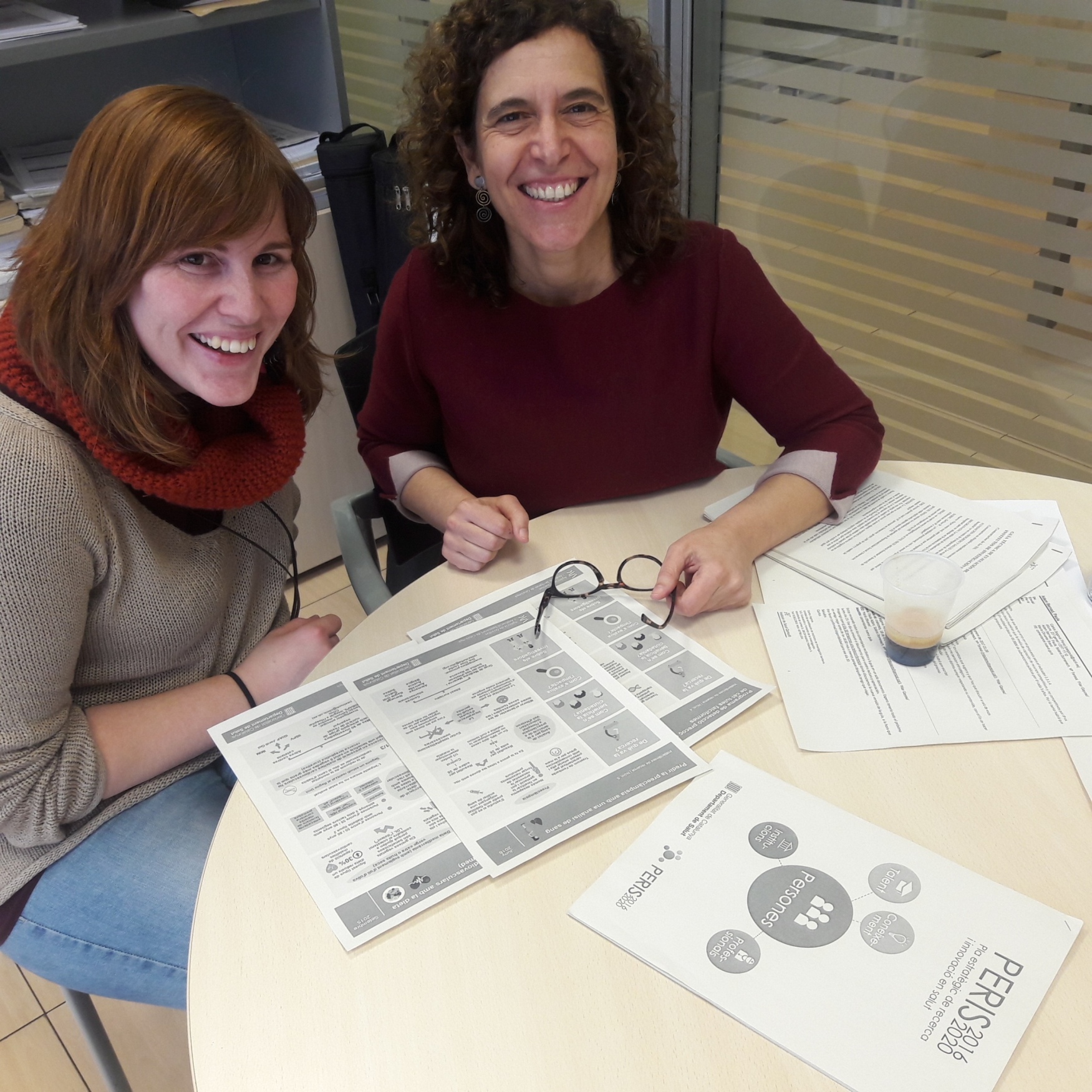
PERIS and people: research assessment by AQuAS

30 març
Núria Radó, Paula Adam

The first call of the Strategic Plan for Research and Innovation in Health 2016-2020 (PERIS in Catalan) for funding research and innovation, still pending resolution, prioritizes programmes which foster talent and employability and programmes of excellence in knowledge.

Accordingly, four actions have been initiated by competitive tendering to finance:

  1. The inclusion of scientists and technicians in national research groups
  2. The increase of nursing professionals in order to free up some of their workday so they can do research work
  3. Research projects aimed at primary care
  4. Major programmes focusing on four different subjects: personalised medicine, regenerative medicine, cooperative independent clinical research and cohort studies.

How are the PERIS calls assessed to determine which applications deserve funding?

The criteria for assessment are defined by the order of the requirements, forgive the repetition, and the requirements of each call. This is the instrument that sets out the rules to determine which projects or people are susceptible to receiving finance. Some will always be discarded and, depending on the specific criteria and resources available, others chosen which are considered worthy of funding.

Deciding which criteria to use and how they are assessed/rated/applied is a powerful science policymaking tool to design the research system it aspires to be: excellence, the subject, the discipline, the age of the applicants, the territoriality of the organisations or foreseeable impact are different variables to bear in mind when deciding who is worthy of being able to develop their research.

The Research Team at AQuAS has been commissioned to manage this process of assessment. This is why we accompanied the General Manager for Research and Innovation of the Health Department, Dr Andreu, in the public presentations he gave in different health research institutions linked to hospitals. We were impressed by the attendance at these informative sessions.

The assessment has been done by a panel of experts involving a total of 42 research professionals throughout Catalonia and Spain. It has required intense activity given that more than 490 applications of a very high level were received.

Looking back after having completed the assessment of the this first call, we feel, more than ever, that we made the right decision by putting people in the centre of the PERIS logo, large and circled by a prominent colour.

It is not only the plan itself which has been designed like this, to promote research with people at its centre, involving and motivating a great variety of professional profiles. PERIS has been a catalyst for mobilisation in the health system and in health research, even before the starting gun was fired, as seen in the packed informative presentations and in the involvement of the participants in the assessment panels, working deep into the night.

As can be expected, getting the staff at the Agency for Health Quality and Assessment of Catalonia (AQuAS) involved, has not been difficult either. We are eager to contribute to this strategic project by using a key tool for selection, accountability, continuous analysis and improvement of opportunities which is what assessment is all about.

Long life to PERIS!

Post written by Núria Radó (@nuriarado) and Paula Adam (@PaulaAdam4).

***Full information available here:

Scientific evidence and clinical practice: the case of hip prostheses in Catalonia

9 març
Daniel Chaverri, Miquel Pons, Luis Lobo

A total hip replacement is one of the surgical procedures which provide greatest satisfaction among patients due to the significant improvement in the quality of life they experience.

So much so, that it has been defined by some authors as the surgery of the 20th Century. It is a procedure which consists in substituting the hip joint with an artificial joint or prosthesis.

The most common reason for surgical intervention is arthrosis, a disease caused by the wear-and-tear of the cartilage which leads to a malfunction of the joint. It is especially common in older people, older than 65, who live with pain and which can limit their day-to-day activities considerably.

In today’s context of continuous technological innovations and advances and facing the enormous pressure from manufacturers, the range of prosthesis available to orthopaedic surgeons is wider than ever. This situation demands that the prostheses used have supporting scientific evidence based on clinical studies or on data from arthroplasty registries.

The legislation which regulates the commercialisation of medical devices, such as prostheses, is more lax than that which regulates drugs which means that not the same type of studies are required for their approval and in consequence, neither is the scientific evidence. In fact, this precise legislation is undergoing a review at present and a new one on this matter will soon be made available.

Several years ago, the prestigious journal BMJ (British Medical Journal) published an article in which it was highlighted that in the UK, 24% of hip prostheses used had no scientific evidence to demonstrate their clinical effectiveness.

As a consequence of that publication and applying the same methodology, at the Hospital Sant Rafael and in collaboration with the Catalan Arthroplasty Registry (RACat) of the Agency for Health Quality and Assessment of Catalonia (AQuAS), we embarked on the task of analysing what the scientific evidence was on hip prostheses used in public hospitals in Catalonia which had sent their data in to the RACat during the period 2005-2013.

We did this via a search on different platforms putting the spotlight on Orthopaedic Data Evaluation Panel (ODEP), as well as Tripdatabase, PubMed and Google acadèmic.

Following the analysis of the 18,816 acetabular or hip cups and 19,546 femoral stems (the main components of the hip prosthesis) collected in the registry, our first surprise was to observe that 123 different models of cups had been used and 138 different models of stems. In the group of participating hospitals in the RACat during the period of the study, it was seen that with many of these models less than 10 units in number of each had been used.

As these models only represent 1% of implants used, they were excluded from the study and in the end 74 models of hip cups and 75 models of femoral stems were studied.

Artroplàsties PTM

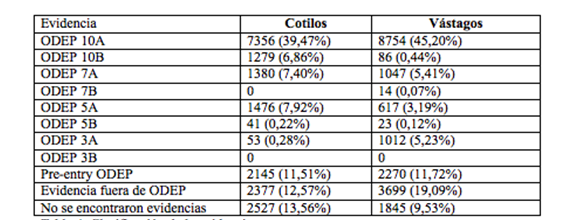
The results of the analysis, either recently published or not yet published, now at a pre-publication stage, show that less than 50% of components used had the highest level of scientific evidence in accordance with the ODEP. This top level is achieved when there are studies having 10 years at least of monitoring with a number of prostheses evaluated exceeding 500 units.

What also caught our attention was not finding any evidence for 18 hip cups or 16 femoral stems which represented, respectively, 13.56% and 9.53% of all implants carried out during this period.

Artroplàsties -taula

All scientific studies show limitations and it is not always possible to offer exhaustive results. Aware of this, and of the fact that the data in our study are the results of a research project which might not be able to reflect what the reality of public hospitals in Catalonia is in absolute terms.

We do want to stress that the task of the orthopaedic surgeon needs to be more and more regulated by evidence based medicine and this is, precisely, one of main purposes of arthroplasty registers: to carry out studies like the one we have been able to do at Hospital Sant Rafael with the aim of improving the health care of people.

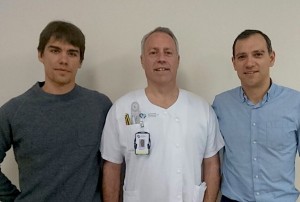
Post written by Miquel Pons, Danieol Chaverri and Luis Lobo, Hospital Sant Rafael, Barcelona.

The main challenge in mHealth is understanding each other

3 març
Toni Dedéu - DECIPHER final event 2017
Toni Dedéu

In recent years, the debate about what we should do with health apps has centred around accreditation, certification or assessment. At the same time, multiple lists of health apps recommended by a range of known and recognised initiatives have been drawn up.

An example of this would be the iSYScore2017 ranking of the Fundació iSYS which was presented in the context of the CAMFiC a few weeks ago.

rànquing apps salut

In this context, and with the Mobile World Congress 2017 in Barcelona in full swing, we can ask ourselves what role a Health Technology Assessment (HTA) agency has when considering mHealth.

There is a reality which we cannot evade. Any health intervention needs to be based on evidence, on knowledge of the highest quality at hand, and must be evaluated.

This cannot be done by turning our backs on the real world or innovation. A health app is a tool to carry out a health intervention and so health apps need to be seen as just another intervention, but of course, with some characteristics of their own which will mean there is an extra demand placed on one and all.

Technologists, HTA experts, professionals and citizens have the opportunity to understand each other if we want to be facilitators of recommending safe apps in health. We are not talking about initiatives that can be developed from one sector only and it is not only about apps.

Now more than ever, we need to be flexible and work from a multidisciplinary position. We already talk about co-creation and co-design; quite simply, of co-produced mHealth initiatives based on the expertise of multiple agents including, obviously, citizens.

AQuAS is participating in the assessment of several mHealth projects financed by the European Commission. The PEGASO project stands out, centred on promoting healthy lifestyles among adolescents, and DECIPHER, as an integral solution to facilitate the geographical mobility of patients with chronic diseases such as diabetes type 2 and m-resist, centred on schizophrenia and patients resistant to treatment.

We are faced with the challenge of integrating totally different fields such as the language of technologists and developers; the speed of innovation and the culture of assessment. In addition, this needs to be done without losing sight of the key role of scientific societies and the different points of view of health professionals and end users.

We know there is a lot of work to be done. Technologists and experts in health technology assessment, respectively, have the opportunity to learn a lot from each other. It is about sharing knowledge and expertise to facilitate, ultimately, health tools for citizens and professionals, which have been assessed, are based on evidence, are safe and reliable and have a strong collaborative component.

MWC17
Digital Health and Wellness Summit – MWC17


Post written by Toni Dedéu (@Toni_Dedéu) and Elisa Puigdomènech.

mHealth & user experience: the user decides

23 febr.
Marta Millaret - Elisa Puigdomènech - MWC2017
Marta Millaret and Elisa Puigdomènech

The Economist recently published an article in which they reported that the number of mobile health applications, or apps, was in the region of 165.000, a very high figure that poses many questions.

A large part of these apps are related to well-being and promoting healthy lifestyles, but what makes us choose one over another?

The first thing that comes to mind is that mobile health apps, being a health technology, could and should be assessed based on their impact on health and this is where we are faced with our first problem.

While there is a gold standard when assessing this impact in the area of medication and static interventions in randomized clinical trials, how is this impact assessed in a highly dynamic world? In a world that can include a range of components that users can use depending on their needs? Where pressure is added due to the fact that advances in technology are being made in leaps and bounds and we cannot wait for years before getting results? It is not that simple.

If we venture into the area of mHealth, the first thing we find is great diversity. The design, requirements and assessment of an app developed to help manage diabetes in older people is very different to an app aimed at providing a dose for some medication where improving its adherence is sought, or an app to promote not drinking alcohol among young people before sitting in the driver’s seat, or an app to manage depression and anxiety.

What are we trying to say with all this? Easy and complex at the same time: the intervention that one wants to do via a health app and the target users will determine their use and their adherence.

And we are only just beginning. Apart from aspects related to health and the suitability of content or other more technological factors such as interoperability and security -by no means simple-, other factors come onto the scene such as acceptability, usability and satisfaction, factors related to User Experience (UX).

User Experience in mHealth is essential given that the main aim of it all is to make the tools which are being developed viable, accepted and used by the population who they are meant for, and also that the aim for which they were designed be respected.

After all, the end user who has the last word in deciding whether a health app is used or not, and this is why their participation in all phases of developing these mHealth tools is crucial.

Pursuing these aims of feasibility, acceptability and usability can make us reflect on, for example, the difficulty some old-age people may have when learning to use a smartphone for the first time. However, these obstacles related to the generational factor also exist among young people with new languages.

We suggest let yourself surprised by this video that shows how some adolescents react and interact when using Windows 95 for the first time.

The Mobile World Congress 2017 will be taking place in Barcelona next week. Monday will be one of the days circled into the diary of many professionals interested in subjects on mobiles and health with the Digital Health & Welness Summit 2017 programme.

DWHW 2017

But not everything will be happening at the Mobile. Another important mHealth event will take place on March 1st at the Palau Robert in Barcelona with the DECIPHER project final event.

logo decipherTo be continued

Post written by Elisa Puigdomènech and Marta Millaret (@martamillaret).


What are the SISCAT atlas of variations all about?

19 gen.
atles-variacions-siscat
Laura Muñoz (Atlas of variations SISCAT), Laia Domingo (RaCat), Olga Martínez (RaCat)

At present, if you live in the region of Terres de l’Ebre and need to be operated on to have a knee replacement, it is quite probable that the type of technique used is one which preserves the posterior cruciate ligament. On the other hand, if you go and live in Girona, the chances of having the same kind of knee replacement will be a lot less, but in contrast, the type of technique chosen will be that of stabilising the posterior.


If you live in Girona and have respiratory difficulties susceptible for home-based CPAP treatment (continuous positive airway pressure), you will more likely be prescribed this therapy than if you live in Lleida or the Terres de l’Ebre. If you live in Lleida, in contrast, there is more probability of you being prescribed oxygen therapy at home than if you live in the Terres de l’Ebre region and suffer from some kind of respiratory disease that could benefit from this treatment. And if you live in the coastal neighbourhoods of Barcelona you will more likely be prescribed mechanical ventilation at home than if you live in a neighbourhood situated further inland for those respiratory ventilation disorders that might need this technique.

Why does this happen? There is no evidence to suggest which type of intervention is most suitable and it is simply the fact that the health professionals of one region are more inclined than those of another to choose one technique over another. This variability reveals the existence of schools linked to certain hospital centres that condition the choice of the type of intervention or technique used.

This is the type of information that the Atlas of variations in clinical practice of the Catalan Healthcare System (SISCAT) make available to health professionals and the entire population, and which has been led and developed by AQuAS since 2011.

The aim of these atlases is to identify, describe and reduce the variability that can lead to increased well-being, quality and an improvement in the use of available resources. Up to the present, 7 atlases have been developed in which the variations in hip and knee arthroplasty operations have been analysed, as well as the variability in home-based respiratory therapies (oxygen therapy, mechanical ventilation and continuous positive airway pressure), the variation in intravenous thrombolysis in patients with ischemic stroke and the variability and in renal replacement therapy in patients with chronic kidney failure (haemodialysis, peritoneal dialysis and kidney transplant).

One of the sources of data for this study, in fact, the most widely used, is the basic minimum group of data obtained at the time of a hospital discharge (CMBD-AH, the Catalan acronym) where the results are presented as activity rates, reasons for standardised uses and variability statistics. The methodology that lies behind this initiative can be seen here. The basic strategy of all the analyses is to compare the rates of use (numerator: for example, hospital admittances) of the inhabitants in a region (denominator: for example, basic area of health), regardless of the centre where patients have been treated or admitted. In addition, both the rates and the reasons for use are reflected in maps to better visualise the data which is another interesting point nowadays.

Apart from all this, it is important to stress that all the atlases include actions and recommendations for planners (Health Department), insurer (CatSalut), providers and professionals, and which have been developed by a unique team of experts with whom the results of the atlases are discussed.

This year, we have decided to take another step forward and convert the publications we have had till now in a static format (PDF), into dynamic publications that facilitate greater interaction with the data and, therefore, a more global view of the clinical practice analysed.

This is an example of the visualisation of the interactive hip and knee arthroplasty atlas which feeds off the data in the Catalan Arthroplasty Registry (RaCat):

atles-digital-siscat-berga

Next year, you will be able to know whether there are variations in the Catalan territory regarding hospitalisations for back surgery, in the repair of abdominal aortic aneurysms and in gastrointestinal cancer surgery (esophagus, pancreatic, liver, stomach and rectal cancer).

We cannot end this post without thanking all the speakers that made the presentations seminar of the Atlas of variations in clinical practice of SISCAT possible last 21 November, and especially to Enrique Bernal-Delgado, the key professional in the analysis initiative and in mapping the variations of clinical practice in the Spanish National Health System.

As far as AQuAS is concerned, it is one of our work lines which was begun some time ago now which has recently generated publications such as this article on respiratory diseases and this article on kidney disease.

And I ask myself, …. now that we have the tools to identify and describe the variability in clinical practices which are carried out in Catalonia, why don’t we try and explain them? The atlases of variations in clinical practice of SISCAT are a key tool to ask ourselves questions.

Post written by Laura Muñoz, statistician.

Let’s begin the new year…

5 gen.

We begin the year by saying a big thank you.

Frederic Llordachs, Veva Barba, Gemma Bruna, Elena Torrente, Cari Almazan, Emili Vela, Montse Mias, Lluís Bohígas, Cristian Tebé Cordomí, Neus Solé Peñalver, Montse Moharra, Aline Noizet, Mercè Piqueras, Josep Maria Monguet, Gabi Barbaglia, Joan Escarrabill, Cristina Ribas, Carme Carrion, Verónica Vélez, Astrid Batlle, Andrea Aldemira, Sílvia Ricart, Esther Lasheras, Olga Valsells, Joaquín Gascón, Angela Coulter, Arantxa Catalán, Anna Càrol Pérez Segarra, Núria Prat, Roser Vallès, Dilmeza Osorio, Johanna Caro, Iris Lumillo, Oscar Garcia, Luis Rajmil, Andrea Molina, Diego Mena, Jose Expósito, Vicky Serra-Sutton, Dolors Rodríguez Arjona, Joan MV Pons, Esther Vizcaino Garcia, Mireia Espallargues, Laia Domingo, Noemí Robles, Sandra García-Armesto, Enrique Bernal-Delgado, Hortènsia Aguado, Anna García-Altés, Dolores Ruiz Muñoz, Santi Gómez, Laura Mónica Pérez, Marco Inzitari, Liliana Arroyo, Maite Solans, Toni Dedéu, Marta Millaret
2016 AQuAS blog contributors


In 2016, those who collaborated in the AQuAS blog were: Frederic Llordachs, Veva Barba, Gemma Bruna, Elena Torrente, Cari Almazan, Emili Vela, Montse Mias, Lluís Bohígas, Cristian Tebé Cordomí, Neus Solé Peñalver, Montse Moharra, Aline Noizet, Mercè Piqueras, Josep Maria Monguet, Gabi Barbaglia, Joan Escarrabill, Cristina Ribas, Carme Carrion, Verónica Vélez, Astrid Batlle, Andrea Aldemira, Sílvia Ricart, Esther Lasheras, Olga Valsells, Joaquín Gascón, Angela Coulter, Arantxa Catalán, Anna Càrol Pérez Segarra, Núria Prat, Roser Vallès, Dilmeza Osorio, Johanna Caro, Iris Lumillo, Oscar Garcia, Luis Rajmil, Andrea Molina, Diego Mena, Jose Expósito, Vicky Serra-Sutton, Dolors Rodríguez Arjona, Joan MV Pons, Esther Vizcaino Garcia, Mireia Espallargues, Laia Domingo, Noemí Robles, Sandra García-Armesto, Enrique Bernal-Delgado, Hortènsia Aguado, Anna García-Altés, Dolores Ruiz Muñoz, Santi Gómez, Laura Mónica Pérez, Marco Inzitari, Liliana Arroyo, Maite Solans, Toni Dedéu and Marta Millaret.

Thank you very much!

Blog AQuAS in Catalan Blog AQuAS in SpanishBlog AQuAS in English

Wishing you all a Joyous Festive Season from the AQuAS blog

29 des.
nadal-2016-marta-millaret
Marta Millaret

From the blog AQUAS we hope you are having a good festive season and would like to thank you for reading and following us.

We publish weekly in Catalan, Spanish and English on subjects related to the projects that are being carried out at AQuAS and we also publish contributions from guest authors. The editorial line of the blog includes a focus on assessment from different points of view and areas of the health system.

Along these lines, we have dealt with healthcare and quality results presented by the different agents who make up the healthcare system, the whole range of observatories of the Catalan Health System (including that which deals with the effects of the economic crisis on the health of the population and innovation), qualitative research, integrated care, the assessment of mHealth, inequalities in health, patient involvement, doctor-patient communication, shared decisions, patient and citizen preferences, variations in medical practice, the prevention of low-value clinical practices, the impact of research, information and communications technology, data analysis in research, tools for the visualisation of data, innovation and health management, the gender perspective in science, statistical issues, clinical safety with electronic prescriptions, chronicity (not forgetting chronicity in children), the effects of air pollution in health and current topics.

blog-aquas

The most read articles in 2016 have been:

However, we have published many more texts, 51 posts to be precise, without counting this one, with the aim of sharing knowledge and generating a space for reflection, open and useful for everyone.

Thank you very much, a joyous festive season and see you in the new year!

Post written by Marta Millaret (@MartaMillaret), blog AQuAS editor.

nadal-2016-aquas-bicicleta


Is it possible to combine active and healthy ageing with innovation?

22 des.
toni-dedeu
Toni Dedéu

The European Innovation Partnership on Active & Healthy Ageing (EIPonAHA) is an initiative of the European Commission to deal strategically with the social challenges associated to active and healthy ageing, to make good practices in innovation more visible and to facilitate exchanges between regions, all of which promote interregional cooperation and the value of excellence.

What is its aim? To improve the health and quality of life of Europeans, especially of people older than 65, and to give support to the sustainability and efficiency of health and social care systems in the long term as well as to enhance the competitiveness of EU industry through expansion in new markets.

The reflection on how health systems interact with an ageing population and care in chronicity has been been one of the main lines followed in the AQuAS blog during 2016; they are subjects that affect our society and, precisely because of this, are part of the Health agenda.

In this context, having links to European projects is fundamental, where networking, collaborative projects and assessment are absolutely essential.

eiponaha

This is the underlying idea of the Reference Sites awards which assess regional European health ecosystems based on four axes:

  1. Political, organisational, technological and financial willingness for an innovative approach to active and healthy ageing
  2. The capacity to share knowledge and resources for innovation
  3. Contributiing to European cooperation and transferability of own practices
  4. Providing evidence of positive impact

The status of “Reference Site” is awarded to systems, alliances and ecosystems in health which comprise different players at a regional European level (government authorities, hospitals and care organisations, the health industry, SMEs and start-ups, research and innovation organisations and civil society) which have invested in developing and implementing innovative-based approaches to active and healthy ageing. These practices must be carried out with a comprehensive approach and vision and proof of the impact of their results must be provided.

Four stars is the highest distinction awarded by EIP on AHA and this is the score obtained by Catalonia as a leading health ecosystem and a reference for institutions and European organisations in the area of innovation in active and healthy ageing. These factors encourage the internationalisation and visibility of the Catalan health system and at the same time increase the possibilities for creating initiatives and forming consortiums for collaborative work with other European regions.

Being self-critical of the  different health systems is as important as the knowledge and recognition of one’s own strengths and values. Sharing this is a way of acknowledging the involvement and work done by many professionals. We do not work in isolation; as a whole, this work has involved and involves AQuAS, the Fundació TicSalut, the HUBc (Health University of the Barcelona Campus), the ICS  (Catalan Health Institut),  the IDIAP Jordi Gol (Institute for Research in Primary Care), the Pere Mata Institute, the IRB Lleida (Biomedical Research Institution of Lleida), the VHIR (Vall d’Hebron Institut de Recerca), the Consorci Sanitari del Garraf  and the Institut Guttmann.

Last 7 December in Brussels, on behalf of the Department of Health, I received the award for the Catalonia Reference Site group given by the European Commission. It is relevant because this fact defines Catalonia as one of the most dynamic and leading European regions in number and quality of initiatives, investment and results in generating and implementing innovative solutions to resolving problems in care and health to elderly people, chronic patients and other groups of risk patients.

The fact that Catalonia has obtained this distinction from the European Commission has a very clear meaning: Catalonia is recognised as one of the leading European regions regarding active and healthy ageing and innovation.

On we go.

Post written by Toni Dedéu (@Toni_Dedeu), Managing Director of AQuAS.

Extra motivational bonus and… Let them have fun! Key elements for qualitative research with adolescents

1 des.
Santi Gómez

There is no doubt that a qualitative methodology considerably enriches the development and assessment of public health interventions. It is often the ingredient which gives a dish that very special flavour or sometimes is even its main ingredient which, if of quality, makes the dish a real winner.

When both quantitative and qualitative methodologies are applied respectively to the same project, the necessary nutrients are provided to make the project work and can even produce compound molecules of a high nutritional value if applied in combination. The flavours of qualitative methodology acquire specially relevance in the dish when an innovative intervention  is being cooked up using new channels of communication to reach the target population. We are talking of the PEGASO Fit for future.

The chefs at the the Agency for Health Quality and Assessment of Catalonia (AQuAS) and those at the Catalan Agency of Public Health (ASPCAT), together with other European chefs, have the PEGASO platform brewing on the stove. Centred around the smartphone, it aims to be a new creative recipe for the promotion of healthy lifestyles among adolescents. Eating habits, physical activity and hours of sleep are the real protagonists of the signature dish which has begun to be served in different secondary education schools in Catalonia, Scotland, England and Italy in the way of different health apps, games and movement sensors.

The PEGASO project is using qualitative methodology in all phases to ensure that the “food” gets to the table successfully and that it be a well-received recipe which spreads out cheerfully and quickly to all kitchens. Thus, the focus groups held with adults and adolescents before the start of pre-pilot phase allowed us to draw up a clear shopping list to get the necessary ingredients before we donned our aprons. Subsequently, and during the 3 stages of the pre-pilot phase, adolescents in several focus groups carved up the different prototypes of the platform’s components after having appraised their quality to decide whether they should be included in the recipe or not.

But what are the key elements for qualitative research with adolescents? A focus group with adolescents is an intense activity which is worth doing. In fact, in the pre-pilot phase of the PEGASO project, we had the opportunity to lead teams in different schools; Nou Patufet school in Barcelona, Verge de la Salut de Sant Feliu de Llobregat and IES Ramón de la Torre in Torredembarra. These teams were made up of wonderful players that converted each match into a real show. To be able to see thrilling sporting events, we used the extra motivational bonus before each match. This is the first key element for qualitative research with adolescents.

The setting up of a group is essential for its later development and just like a pep talk in the locker room, the tactics of the game were explained in a simple way and the importance of each individual’s contribution to working as a team was highlighted. Additionally, and also prior to setting up groups, the importance given by the PEGASO project that participants choose their best skills while also enjoying the match was highlighted. In this way, the players gave their best at all times leaving the supporters dumbstruck from minute 1.

When dealing with highly motivated groups, the coach has no need to scream and shout from the sideline but rather just guide the team with a simple gesture so that it can progressively achieve the pre-established objectives. In this way, spectacular goals are scored which surprise everyone, including the coach and technical staff. This is pretty much what happened to the PEGASO team where good communication and the initial extra motivational bonus helped great sporting events of two or more hours to take place.

In the focus groups of the PEGASO project, the dribbling and passing between participants has been constant and at an individual level, enjoyment was apparent. This is the second key element in qualitative research with adolescents: that they enjoy themselves. If this is achieved, a group of adolescents can get to wherever they want with endless energy. In this way, attributes which collective imagination often assigns to the adolescent population such as passiveness or a lack of interest have been totally ousted and annulled by freshness, creativity and the urge to participate. Undoubtedly, as Jaume Funes would say, the adolescents who have participated in the PEGASO project have been unbearably charming; and I would add, extremely funny and insatiable players.

And after a hard workout, to bed ….! All the information provided by adolescent genius must be given the chance to rest. Rest after an activity is also a nutritious element. A calm demeanour after the adequate hours of sleep enables one to carry out a qualitative in-depth analysis. It is under these conditions that an outcomes report can be written which gives value to the development of the intervention that, as we have already commented, aims to  promote a healthy diet, physical activity and rest. The PEGASO project aspires to be a useful tool in promoting these healthy habits among adolescents. Have a good day, a good match and good night!

Post written by Santi Gómez, AQuAS-APSCAT.

This text are part of a series of posts about qualitative research started at the Ibero-American Congress of Qualitative Health Research which was held in Barcelona several months ago. The other posts in the series are: Utilities and challenges of applying qualitative methodology in community health projects written by Dolors Rodríguez-Arjona and Broadening perspectives in health service assessment written by Vicky Serra-Sutton.