Joan MV Pons has published an opinion article in the Diari de la Sanitat where he gives his report on the congress of Preventing Overdiagnosis which was held in Barcelona last September.
Some of the subjects of the congress have been repeated and expanded on year after year such as that of polypharmacy this time round, centering on the need for sensible deprescription, selections made and the overdiagnosis resulting from early diagnosis interventions.
The article highlights the as yet incipient nature of this international initiative but which is becoming more and more of interest: in Barcelona, there was an increase of 30% in the number of presentations given comparing to the year before and more than 500 people registered and, needles to say, English speakers predominating. The role of AQuAS in this current which aims to appease the medical hyperbole in which we find ourselves immersed is also highlighted.
Mark Britnell is an international expert in health systems having held several senior positions in the NHS and currently provides consulting services for several countries. With this wealth of experience, Britnell wrote a book in 2015 with the inspiring title of, In search of the perfect health care system (1). In it, Britnell examines the dilemmas facing governments, the global challenges such as demographic, epidemiological, technological and economic transitions, as well as the more specific cases facing each country.
A significant portion of the book, more than half, is dedicated to examining individual countries grouped by continent: the Asian region including Australia (with large countries from Japan, China and India, to small densely populated enclaves such as Singapore and Hong Kong) Africa and the Middle East (just three very different examples such as Qatar, Israel and South Africa), Europe (from Portugal to Russia via the Nordic countries, Germany, Italy, France and the English) and the Americas (from the north; Canada, USA and Mexico and the south, such as Brazil). Too bad that the section on the Iberian Peninsula only speaks of our western neighbours (the eastern side but a general walk through).
There is no questioning that Britnells’ knowledge has been acquired first hand, given his worldwide expertise in conferences and consultancy. As the author mentions, he is often asked which country has the best health care system? Since the WHO report, Health systems: Improving performance (2), published in 2000, several country rankings have been published according to the assessment of their health systems using a variety of methodologies and outcomes. The table below serves as an example.
Nowadays, rankings proliferate as can be seen in universities and research institutions/centres. The indicators may be different, but it seems that one may always end up finding the most favourable ranking for them. Catalan public universities are a good example, given that centre advertises their position – besides that of excellence in comparison to other universities which are not necessarily British – in the ranking system which makes it stand out to a greater degree that other Catalan universities.
Britnell, getting back to our point, after so many rankings, lectures and consulting, make a proposal on what the best health system might be by taking the best areas from the different countries. If the world could have a perfect health system, it would have to possess the following characteristics:
– Universal healthcare values (UK)
– Primary health care (Israel)
– Community services (Brazil)
– Mental health and welfare (Australia)
– Promoting health (Scandinavian countries)
– Empowerment of patients and communities (certain African nations)
– Research and development (USA)
– Innovation and new ways of doing things (India)
– IT and Communication technologies (Singapore)
– The capacity of choice (France)
– Funding (Switzerland)
– Care for the elderly (Japan)
This is a follow up of the previous post regarding health-applied qualitative methodology. It is linked to the VII Ibero-American Congress of Qualitative Health Research but today’s approach is focused on the application of this methodology in community health projects.
During the process of construction and implementation of community health programs, dynamics of participation and networking are promoted in all its phases: from the analysis and identification of needs, to prioritizing initiatives and subsequent implementation. Such processes involve the corresponding allocation of actions, according to technical areas, which should enable for planning the specific programs required for each population centre, and the initiatives proposed to tackle health inequalities.
In this sense, the Catalan Agency of Public Health (ASPCAT) is making a significant commitment to community health. PINSAP (Interdepartmental Public Health Plan) is concrete evidence of this fact and a government instrument which collects and promotes health actions from a global approach (health in all policies). The aim is to improve the health of the Catalan population by involving the entire community (from Primary Care, Public Health and municipal agents from all areas, to the community – cultural, social, sports, neighbourhood, youth, school associations, etc.).
One aspect which justifies this networking and cross-sector collaboration is one of the premises of PINSAP, that of determinants of health and the fight against social inequalities. As we all know, the health of the population depends not only on factors directly related to this element, but multiple factors in the immediate environment and the daily lives of people. For this reason, the objective is to develop a multidisciplinary type of project at a community level including health in all policies.
Within the context of PINSAP, community health projects called COMSalut (Health and Community) are being implemented in different municipalities throughout Catalonia. The community itself can, and does assist in providing health. The starting point for these community projects is the creation of a local steering committee or team (EML, as per the Catalan acronym) which includes members of the different areas mentioned above (primary care, public health, municipal services and members of the community fabric). The second step is the diagnosis of health, to be followed by the prioritization and proposals for action phases. The health diagnostic process begins with a quantitative diagnosis, in which different indicators of health and lifestyles and determinants of health are identified. This phase is then followed by a qualitative diagnosis.
One of the objectives of health diagnosis in a community process is to identify needs and resources/assets which influence the health of the population in a specific neighbourhood, district or town, by drawing on the opinion of the community, both from members of the public as well as professionals, within the framework of the community process. In order to do this, a qualitative diagnosis must be carried out using the specific techniques which this methodology entails given that the aim is to identify the individual opinions of informants resulting from shared experience in that particular environment, placing the health diagnosis in a specific socioeconomic and political context. It was decided to conduct two nominal groups in each local process, one professional and one made up of members of the public, during which participants were invited to discuss positive aspects of the community, areas for improvement and potential proposals for improvement, both in general terms, as well as issues that might directly affect health. The issues are presented from a general perspective so that informants take the broadest possible approach in the area of health, expanding their viewpoint to include all community resources which might contribute to or subtract from health.
This is precisely one of the challenges involved in these community processes, since during the course of these sessions, especially in the case of groups comprising members of the public, attendees tend to focus the discussion on issues regarding urban infrastructure and local organization, as well as airing political demands and discarding for example, aspects of habits and individual and shared group lifestyles (family, neighbours, close friends, etc.).
The experience of using qualitative tools adds value to the research process carried out by the Catalan Department of Health and this is exactly what we brought to the VII Ibero-American Congress of Qualitative Health Research, which took place in Barcelona from 5 to 7 September.
It is very interesting to see how the same qualitative process is weaving a network of collaboration and participation at the professional as well as community level. Networking is a successful tool in the process, but at the same time is a result that remains within the community and becomes an asset. The first phase of the process requires the setting up of a Local Committee to carry out a community diagnosis and subsequent follow-up. The succession of meetings and interdisciplinary teamwork leads to networking.
At this point we encounter one of the greatest challenges, and that is to raise awareness within the community, through joint reflection, of the assets and resources of their immediate environment that affect their individual and collective health. This is presented as a driving force for change to achieve increased health.
On the other hand, these community processes present a number of challenges to be faced:
In the first place, appropriate sampling strategies should be used to ensure the participation of key members and those who are knowledgeable of the community to be researched. The latter can be achieved by involving the local team or committee in the process in order to reach vulnerable population groups or those with special needs, as would be the case for youth, elderly people living alone, women, long-term unemployed, immigrants, etc. The individuals who should contact potential informants must be those who know the community well and are appreciated by the community.
Secondly, this type of community process involves another challenge which is, how to translate the results into a credible technical report and one that is beneficial to local team members and the community at large.
As a reflection within the context of this conference and the development of local community processes, we can see that qualitative tools can provide opportunities for active participation. This leads to networking and motivation and the implication of the team and the community. The process itself achieves the ultimate goal of raising awareness within the community about the factors present in the immediate environment and this represents a potential driving force for change.
This result is achieved through interdisciplinary activities and motivation, values which are ever-present and very current. However, I believe that we should carefully rethink what is really involved in a multidisciplinary project. Is it simply the sum of forces or does it involve something else? I think we should undertake the task to put into practice networking operationally, through incorporating all those in the community and shouldering responsibility together. Interdisciplinary work implies cooperation between different agents, combining efforts towards a common goal and establishing synergies and talent-sharing.
Post written by Dolors Rodríguez Arjona, sociologist specializing in qualitative health research.
The Latin expression “Primum non nocere” attributed to Hippocrates roughly translates as “first, do no harm”. The aim of the expression is to remind physicians to consider the damage that their practice might entail. In industrialized countries, drug consummption has experienced a significant increase in the lasts decades resulting in greater exposure of patients to these and their possible side effects. In this context, the development of tools to improve patient safety is of particular importance.
The rational use of medicine aims to obtain the greatest possible therapeutic benefit with the maximum efficiency, preventing the appearance of risks that drug treatment might cause. This rational use is intended to reduce drug-related problems (DRPs). For example, if a patient is taking two blood-thinning drugs simultaneously, this may produce haemorrhaging, which in turn can have serious consequences. Correct prescription is one of the best ways to prevent DRPs. Some of the most common DRPs associated with prescription include therapeutic duplications, administration of a higher dosage than the maximum recommended, or inadequate dosing schedule or prescription duration, drug interactions, administration of teratogenic drugs to pregnant women and drugs which are not recommended in geriatric patients.
Thus, the increased consumption of drugs offers us new challenges as well as new opportunities.
In the field of clinical safety in electronic prescription, the Program for Innovation and Support in the field of Medication (PISAM, as per the Catalan acronym), part of the Agency for Health Quality and Assessment of Catalonia (AQuAS) works together with Pharmaceutical and Medication Management division of the Catalan Health Service in developing clinical content for an integrated model in the Integrated Electronic Prescription System (SIRE, as per the Catalan acronym) to improve the safety of pharmaceutical services for each patient according to their characteristics and the concomitant medication prescribed.
Currently this system integrates five security dimensions:
Pharmaceutical interactions. These may occur when two drugs administered at the same time cause or have the potential to cause an undesirable effect and as such, should not be administered together.
Therapeutic duplication. This refers to the simultaneous prescription of two or more drugs with the same active substance or the same pharmacological action.
Drugs not advisable for use among geriatric patients. Drugs in which the risk-benefit ratio is not favourable in geriatric patients.
Teratogenic drugs. Drugs with proven negative side effects on the embryo or foetus in women of childbearing age.
Maximum dosage. Prescribing a higher dosage of a drug than can be tolerated without causing toxic side effects.
This system is being implemented gradually, firstly taking into consideration the drugs dispensed in community pharmacy, whether or not these are financed by CatSalut. Currently, the system is beginning to include drugs dispensed by hospital pharmacy services to outpatients, which will enable us to obtain a more comprehensive patient medication plan.
The data is updated with the commercialization of new drugs and the incorporation of the new evidence available. In addition, there are regular operations carried out on the data used in order to identify which alerts are systematically rejected by doctors and to review whether there is any clinical justification for the withdrawal or modification of these alerts.
In the future, plans are underway to provide SIRE with a system to facilitate the conciliation and systematic review of medication.
We continue drawing inspiration from the Preventing Overdiagnosis Congress (in Twitter: #PODC2016), which is due to take place this coming week. There are many issues in play that we must take into consideration and we will try to demonstrate just some of those here. Joan MV Pons in this post reflects on the public health measures implemented over the past centuries which have had a role in the history of overcoming poverty and increasing life expectancy after reading the book by Nobel Prize winning Economist Angus Deaton.
Without detracting from developments made over time, in this post Andreu Segura comments on the futility of medicine and of procedures with unrealistic expectations regarding the benefits. Segura mentions the report “To err is human” and the estimation made by Barbara Starfield concerning mortality caused by adverse side effects of medicine. At the same time, the author mentions the very specific case of prescribing preventive measures and how these have evolved over the years.
It is not a straightforward task, but thanks to this post by Cari Almazan, it is easy to understand exactly what is being referred to when we talk about overdiagnosis. Almazan takes us on a journey from the origins of the concept itself through to some current examples and discusses the challenges we face in the future in this area, which begins with a good communications strategy.
No es fácil pero gracias a este post de Cari Almazan resulta fácil entender qué significa y qué no significa sobrediagnóstico. Almazan propone un recorrido por los orígenes de este concepto pasando por algunos ejemplos actuales y planteando algunos retos de futuro en este ámbito, empezando por una buena estrategia de comunicación.
The concept of overdiagnosis is equivalent to diagnosing a disease that does not present symptoms throughout a person’s life and, meanwhile, the treatment and monitoring the patient is subject to in order to treat the disease can be more harmful and fail to produce any benefits.
The interest of working along the lines of diagnosing less can be seen on an individual and population-wide level. On an individual level, overdiagnosis is associated with the negative effects of unnecessary labels, such as the effects of radiation and false positives and false negatives as a result of unnecessary diagnostic tests and therapies (surgery or medication). On a population-wide level we are talking about the opportunity cost derived from wasting resources that might have been allocated to preventing and treating diseases.
That said, we can ask ourselves what the primary care professionals think. In this regard we find some interesting pointers in this post by Johanna Caro where we can see the principal results of a survey of GPs and paediatricians post by Johanna Caro Mendivelso where we can see the principal results of a survey of GPs and paediatricians. One of the most striking results of the survey is the fact that around 80% of physicians surveyed find themselves in the position of making a decision whether to request an unnecessary test or prescribe unnecessary treatment at least once the week.
The interest in the impact that this issue can have is growing significantly. For this reason, Preventig Overdiagnosis will be a brainstorming session which will enable us to design strategies and make decisions to address the fallout from overdiagnosis and overtreatment. We think that this new topic for debate is increasingly present in both our professional and personal lives.
Johanna Caro Mendivelso and Cari Almazan, members of the Essencial Project team, participating in the Preventing Overdiagnosis.
What lies behind a significant volume of hospital readmissions? What makes a service present a good healthcare praxis? What obstacles are there when changing to a healthcare model such as in major out-patient surgery which encourages patients to go home on the same day as their operation? Do managers and nursing staff have the same opinion about what efficiency is in an operating theatre? What is the perception of professionals of the possible benefits of people-centred attention?
Do we all see a dragon?
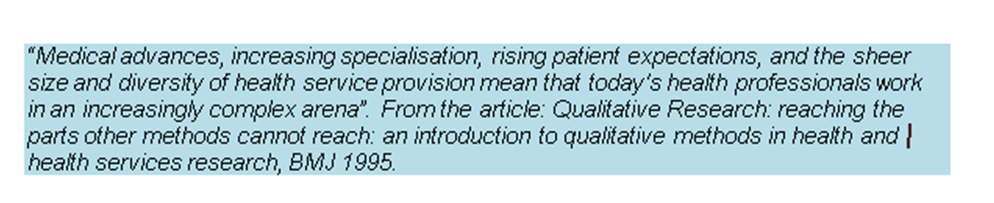
Reality is complex and therefore approaches are needed which facilitate the interpretation and understanding of that reality. With qualitative research, places can be reached otherwise unattainable when using other methodological aproximations. When answering questions like those we asked ourselves previously, a truly qualitative approach is required. We need to make the approach using an adequate and credible technique to validate the process of all those involved and to ensure precision in results as is done in quantitative research but not forgetting that we need to be critical and independent in the analysis made.
We will briefly outline the evolution of the qualitative approaches in the context of the assessment of health services. A reflection on the usefulness of qualitative techniques in the assessment of health services or medical technologies is not a new one and you can find a series on this subject in the British Medical Journal of 1995 and in the Health Technology Assessment report of 1998.
Health assessment agencies have given great importance to questions about the scientific evidence available when talking about the efficiency and safety of treatments and biomedical interventions of a clinical nature. Randomized controlled trials and systematic reviews are considered to be the reference standards for causal atributions of the benefits of an intervention for the improvement in the health status of patients.
Society has evolved and the needs of the system adapt to this. We formulate new questions related to the preferences and expectations of users facing treatment and how different professionals contribute to providing better results in patient health care. One must bear in mind that when assessing the benefits and results of attention given, many factors come into play.
In this context, the paradigm of evidence based medicine and the supposed superiority of quantitative approaches and of some study designs above others, have created obstacles in the application of qualitative research. In this sense, the letter to the editors of the British Medical Journal signed by more than 70 researchers of reference for giving their support to qualitative research is clear proof of this remaining obstacle.
Questioning the efficacy of a medical drug cannot be answered using a qualitative approach but we can broaden the scope of questions that we pose ourselves.
For example, we can consider asking ourselves questions, among others, about the preferences of patients, the perception of the benefits of a medical drug, the expectations or opinion of professionals that prescribe it or the possible reasons for a low adherence of the medical drug.
Another scenario could be that of a patient with osteoarthritis who has undergone a knee replacement (arthroplasty) and who is being attended by several professionals such as the primary care doctor, the traumatologist surgeon, the anaesthetist, the nurse, the physiotherapist and other professionals if the patient has other comorbidities. That patient has certain preferences and expectations which need to be understood and then give the health care to cover those needs, which can go beyond the mere surgical procedure.
With qualitative research we develop a discourse, texts, opinions and perceptions of people, communities, with images, perspectives, ideologies and complexities. We must guarantee rigour and that the photograph and interpretation of reality that we make remain valid and coherent for the research group and the populaton or group of people that we are assessing.
The application of qualitative techniques has been on the rise using interviews, semi-structured questionnaires, field notes, focus or discussion groups to gather the opinion of different groups of professionals and users.
From my point of view, there are three examples which can be of great use to know the approach and the process in carrying out an assessment of services with a qualitative approach:
Avoiding the classic metrics means being able to measure in an alternative or complementary way by combining different approaches be they qualitative or quantitative. I find the introduction to qualitative research we find in René Brown’s TED talk the power of vulnerability. This qualitative researcher recommends we measure that which is apparently unmeasurable and go more in depth into the complex phenomenon of vulnerabilty.
We broaden perspectives by understanding the reality from within, by bearing in mind the multiple existing points of view to improve that which is disfunctional or by identifying better practices to spread them. We can measure what we want to measure. It will be necessary to adapt the approach to the context and audiences and to continue progressing to show with rigour and practice the usefulness of qualitative approaches.
We continue learning. This time, it has been at the Congrés Iberoamericà de Recerca Qualitativa en Salut (in Twitter #IICS2016) held in Barcelona, 5-7 September. The Agència de Qualitat i Avaluació Sanitàries de Catalunya (AQuAS) and the Agència de Salut Pública de Catalunya (ASPCAT) shared the stand to explain their experiences.
The effort of following all the available information sources on any given topic by oneself may involve a large waste of time and energy. The electronic prescription group in Catalonia has developed a project of strategic surveillance and content curation focused on drug safety alerts. By way of definition, strategic surveillance is information filtering to help decision-making, which is an early alert tool, while content curation is a continuous diffusion system on the most relevant contents on a topic, addressed to specific target groups.
¿How did we do it? To develop this project we used the tool scoop®, an automatic news aggregator that allows to filter the news items, personalise them and present them within a web page and a bulletin.
The project started with de definition of a set of surveillance lines. In our case, it included drug regulatory agencies, assessment agencies, new drugs, new therapeutic indications, the technological evolution of prescription and electronic prescription symptoms, as well as the opinions and appraisal of professionals.
These surveillance days are set on a daily basis by following up multiple information sources, including contents from grey literature, pharmacotherapy bulletins, and experts blogs.
A key element of this pro is the contents selection. This is usually carried out with the collaboration of experts in pharmacotherapy. Once a set of contents is selected, we give it a sense. In this project we do it organising them in an essentially visual way: with a synthetic headline (drug, associated potential risk, and information source) and a link to the original piece of news.
¿What do we offer? We offer a drug safety alert monograph, specialised information that is updated at the same time as the primary sources. We optimise multiple bibliographic searches to avoid information fragmentation and infoxication.
¿For whom are we useful? Our project is useful for the updating of information systems on drug safety alerts, and for any healthcare professional who wishes to stay up-to-date in this field. Having the latest news at real time is important, and our objective is to be useful, getting the professionals closer to this information in a convenient way: through a open access web site, and through a monthly bulletin.
¿What is beyond this project?
This project is an example of collaboration between healthcare professionals and information and documentation professionals. The methodology used in this project may be applicable to other objectives, defining other surveillance lines, other information sources and other target groups. Thus the project gives more visibility to existing resources, which are numerous, well known, and of good quality.
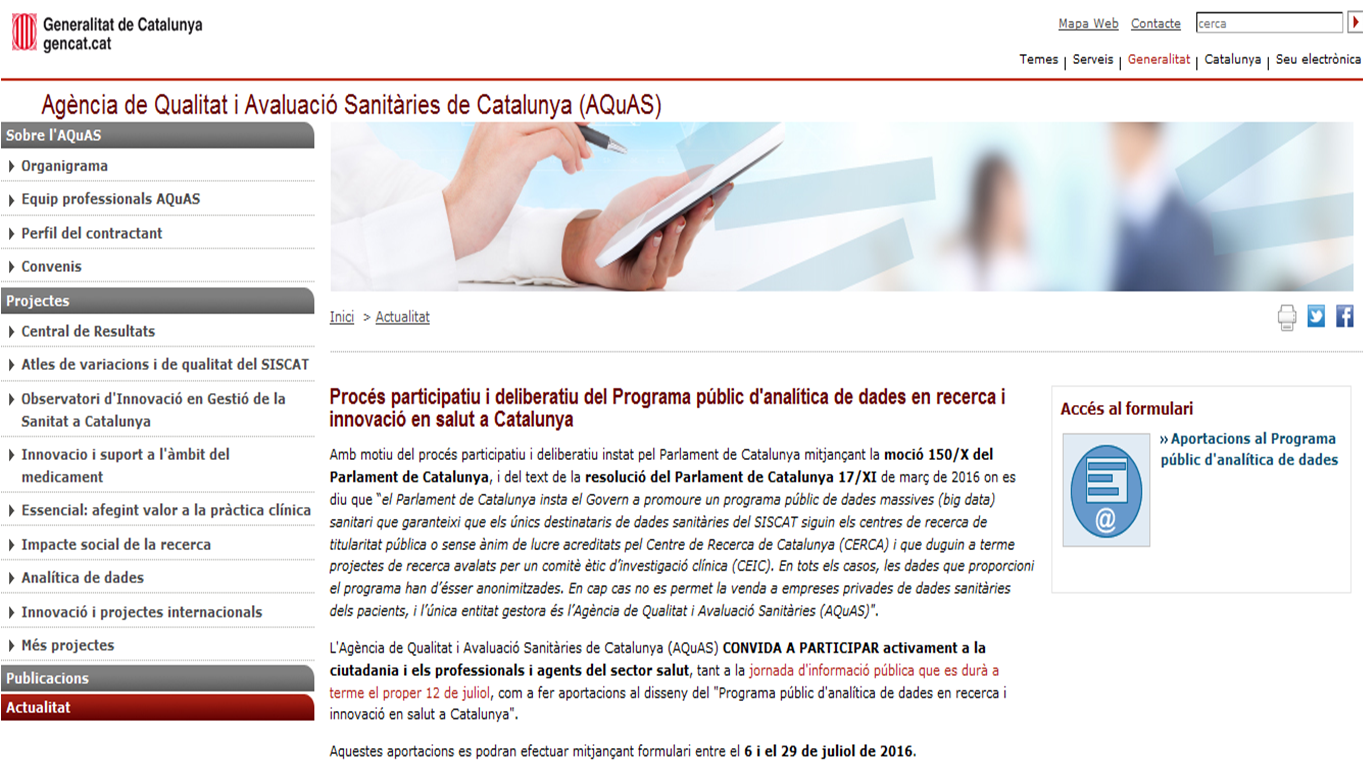
The participatory and deliberative process has been articulated in three large distinct actions: a conference of structured discussions with experts, a conference of public information and a participatory process by means of contributions from all citizens. We see everything with a little more detail.
On July 5 a conference of structural discussions with 80 experts was held. The discussions focused on four major areas: public research; ethical principles; governance, transparency and sustainability; and safety and regulations. With the aim of making the ideas and reflections resulting from these different discussions available to all citizens, the contributions of the different discussions were collected and are public. We invite you to read the contributions that were made from here:
A week later, on July 12, a conference of public information was held, in which the main contributions from the discussions on July 5 were presented. Among other aspects, those emphasized are the need for transparency and the issuing of accounts to be the basic principles throughout the process, along with the need to promote citizen participation. A video of the day can be seen here.
A participatory process through contributions that can be made from July 6- July 29 is now open. These contributions will be studied for their integration into the final program which will be presented this autumn.
The data analysis program in research and innovation will be permanently participatory. There is the understanding that scientific progress cannot be built without citizen participation. Establishing a triangle between scientists, politicians, and citizens is one of the great challenges of our society. Toni Dedéu, director of the AQuAS, is confident that the participatory and deliberative process will serve to build the best public program that we can do together.
The Catalan Health Department deserves many congratulations on the launch of the website Shared decisions to help patients make decisions about their care. Nowadays the internet makes it possible to find vast quantities of information about health and healthcare, but this can be confusing and some of it is misleading and unreliable. So it is especially important to ensure that people are given access to trustworthy information to help them make decisions about their health.
We all want healthcare to be responsive to our needs and wishes. We want to be listened to, to be given clear explanations and to have our values and preferences taken seriously. Many of us want to be able to influence any decisions that affect us, including treatment decisions.
The key questions that we want answers to are as follows:
What are my options?
What are the benefits and possible harms?
How likely are these benefits and harms?
How can you help me make a decision that’s right for me?
Shared decision making is central to a patient-centred approach. It involves clinicians and patients working together to select tests, treatments, management or support packages, based on clinical evidence and the patient’s informed preferences. It requires the provision of evidence-based information about options, outcomes and uncertainties, together with decision support counselling and a systematic approach to recording and implementing patients’ preferences.
Shared decision making is recommended in many common situations – for people facing major treatment decisions where there is more than one feasible option, for decisions about screening tests and preventive strategies, for maternity care choices, for choosing care and support packages for long-term conditions, for advance care planning for mental health problems and for end-of-life care.
Provision of reliable, balanced evidence-based information has been shown to improve people’s knowledge and ability to participate in decisions about their care, improving the quality and appropriateness of clinical decision making. And as part of a collaborative approach to care planning for long-term conditions it can lead to improved health outcomes.
Information provision is only the first step. As well as providing facts and figures to help people consider their options, doctors, nurses, and other clinicians must engage patients in a process of deliberation to determine their preferred course of action. This demands good conversations where both parties communicate well and share information. Effective risk communication, preference elicitation and decision support are essential skills for clinicians. And then of course there must be a commitment from both clinician and patient to act on the mutually agreed decisions.
Implementing shared decision making is challenging. It is very different from the traditional approach in which clinicians view themselves as experts and sole decision makers and patients’ knowledge, expertise and preferences are unacknowledged or undervalued.
Patients used to be expected to play a passive role and follow doctors’ orders, but this old-fashioned view is beginning to give way to demands for a more collaborative approach. This is very good news! Patients have grown up and health systems must now adapt to meet their expectations, helping them to become knowledgeable, skilled and confident co-producers of health.
Post written by Angela Coulter, PhD, (@acpatient), Informed Medical Decisions Foundation.
The project PRINCEP offers comprehensive care to hundreds of boys and girls and since its establishment has received several awards. The latest has been the award for the best social and health integration experience, which the International Foundation for Integrated Care (IFIC) awarded during the 16th International Conference of Integrated Care (ICIC16).
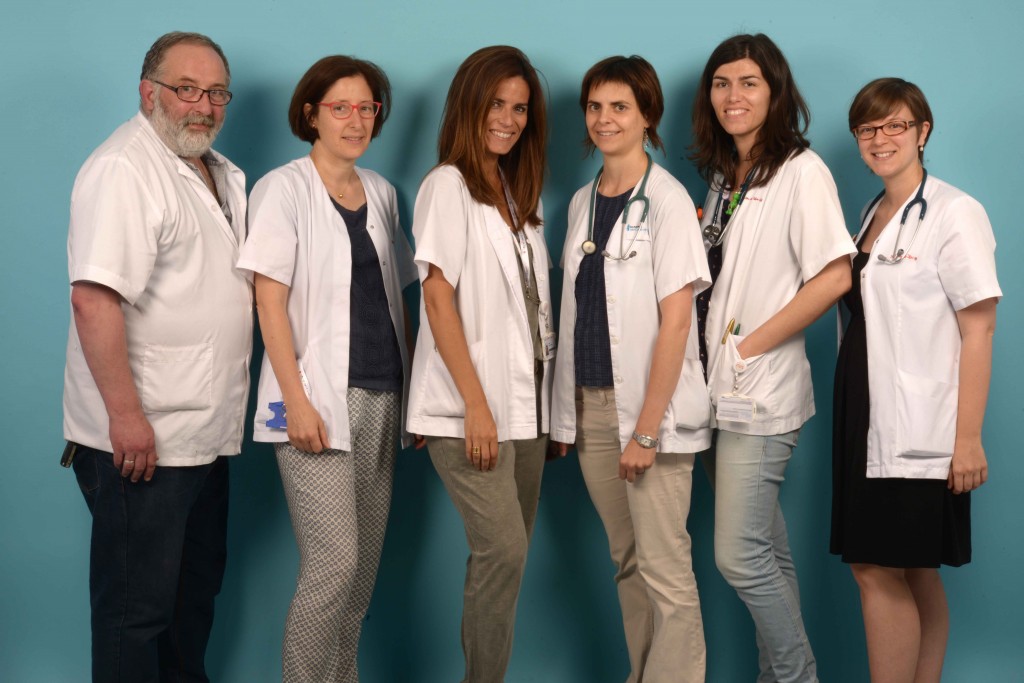
Project PRINCEP team in Sant Joan de Déu Children’s Hospital in Barcelona – Joaquín Gascón (nurse), Olga Valsells (agent of spiritual care), Esther Lasheras (social worker), Sílvia Ricart (pediatrician), Andrea Aldemira (pediatrician), Astrid Batlle (pediatrician). She is not in the picture but she is in the team Verónica Vélez (nurse).
Chronic disease and pediatrics?
When we speak of chronic disease, we usually think of adults and the elderly, but chronic disease is also a reality in the pediatric world. The scientific advances of the last decades have increased the survival of formerly lethal diseases and that has led to the appearance of a new phenomenon: children’s chronic disease.
Increasingly health systems allocate more of their efforts to chronic disease care, mainly because of the great economic impact this generates. Although various studies estimate that only 15% of pediatric patients have special health care needs and that less than 1% suffers from chronic diseases of high complexity, the estimated health expenditures for this small percentage are between 30% and 40%.
When you think of chronic disease patients it is not only thinking about the managing of their health. All chronic diseases represent a major impact on the patient’s surroundings. The families must come to terms with significant changes in their lives: how to relate within and outside of the family, the problems of family and work conciliation, the difficulties for a social life or the economic problems, all of this causing major emotional changes and a questioning of values.
In managing everything for the pediatric complex chronic patient, it is essential to understand that the social and family situation will have an inevitable influence on their clinical situation and therefore that it must be taken into account in the daily work.
How can we respond to the specific needs of a complex, pediatric chronic patient?
In 2012 the Sant Joan de Déu Children’s Hospital in Barcelona created the PRINCEP program, a multidisciplinary unit oriented to offering comprehensive bio-psycho-social care to pediatric patients with complex chronic diseases. Made up of pediatricians, nurses, a social worker and an agent of spiritual care, the unit seeks to optimize health resources and improve the quality of life of the patients and their families, fostering their participation in the therapeutic process, their responsibility and self-care.
Since its Constitution giving service to 20 patients, it currently serves more than 100 boys and girls with chronic diseases of high complexity that require frequent use of hospital resources, tracking for multiple specialties, and a need for technological support for their daily care or a high social vulnerability.
What does this innovative experience offer?
Our patients have a medical team and nursing reference, which knows and manages the case on a global basis, carries out scheduled or urgent check-ups according to the patient’s needs and which also serves as a reference during hospital stays. In addition, they have telematics care via telephone, accessible 24 hours a day in case of clinical emergencies, or by email.
Thus, a quick and effective response to questions or clinical decompensations can be given, unnecessary visits are avoided and the family’s trust, autonomy and self-care are favored. Since the beginning of the unit, we have found a decrease in the number and duration of our patients´ hospital admissions, as well as the number of visits to the emergency room. Since the beginning of the unit, we have reported a decrease in the number and duration of the our patients admissions, as well as in the number of emergency room visits. In the last four years, the number of admissions per patient and per year has been reduced from more than 5 to 1, the average time of admission from 13 to 4 days, and the average number of visits to the emergency room per patient and per year from 8 to 1.
What does the integrated care in the context of this particular project consist of?
The project PRINCEP works on external coordination, trying to encourage collaborative models of health and social care, so that families can receive the support of the health or social services closest to them that then will be integrated into the patient’s treatment plan.
Social and spiritual support is also essential. Evaluating the social and family situation from the outset allows us to identify factors of vulnerability and to accompany and to prevent situations of social risk. More than 50% of the patients and families included in the program have needed a moderate or intensive intervention by our social worker. In addition, accompanying patients and their families in the different phases of the disease facilitates adherence to the treatment as well as the adaptation to the changes, and helps to strengthen the family structure and social support network.
The social and emotional situation influences the health conditions and the empowerment and confidence of the families improves the clinical management of the pediatric, complex chronic patients who benefit from a comprehensive and global care. The integrated approach to children’s chronic disease favors the optimization of resources and improves the quality of life of patients and families.
Post written by Andrea Aldemira Liz, pediatrician of the Complex Chronic Disease Unit of the Sant Joan de Déu Hospital (@HSJDbarcelona_es).