Let’s begin the new year…

5 gen.

We begin the year by saying a big thank you.

Frederic Llordachs, Veva Barba, Gemma Bruna, Elena Torrente, Cari Almazan, Emili Vela, Montse Mias, Lluís Bohígas, Cristian Tebé Cordomí, Neus Solé Peñalver, Montse Moharra, Aline Noizet, Mercè Piqueras, Josep Maria Monguet, Gabi Barbaglia, Joan Escarrabill, Cristina Ribas, Carme Carrion, Verónica Vélez, Astrid Batlle, Andrea Aldemira, Sílvia Ricart, Esther Lasheras, Olga Valsells, Joaquín Gascón, Angela Coulter, Arantxa Catalán, Anna Càrol Pérez Segarra, Núria Prat, Roser Vallès, Dilmeza Osorio, Johanna Caro, Iris Lumillo, Oscar Garcia, Luis Rajmil, Andrea Molina, Diego Mena, Jose Expósito, Vicky Serra-Sutton, Dolors Rodríguez Arjona, Joan MV Pons, Esther Vizcaino Garcia, Mireia Espallargues, Laia Domingo, Noemí Robles, Sandra García-Armesto, Enrique Bernal-Delgado, Hortènsia Aguado, Anna García-Altés, Dolores Ruiz Muñoz, Santi Gómez, Laura Mónica Pérez, Marco Inzitari, Liliana Arroyo, Maite Solans, Toni Dedéu, Marta Millaret
2016 AQuAS blog contributors


In 2016, those who collaborated in the AQuAS blog were: Frederic Llordachs, Veva Barba, Gemma Bruna, Elena Torrente, Cari Almazan, Emili Vela, Montse Mias, Lluís Bohígas, Cristian Tebé Cordomí, Neus Solé Peñalver, Montse Moharra, Aline Noizet, Mercè Piqueras, Josep Maria Monguet, Gabi Barbaglia, Joan Escarrabill, Cristina Ribas, Carme Carrion, Verónica Vélez, Astrid Batlle, Andrea Aldemira, Sílvia Ricart, Esther Lasheras, Olga Valsells, Joaquín Gascón, Angela Coulter, Arantxa Catalán, Anna Càrol Pérez Segarra, Núria Prat, Roser Vallès, Dilmeza Osorio, Johanna Caro, Iris Lumillo, Oscar Garcia, Luis Rajmil, Andrea Molina, Diego Mena, Jose Expósito, Vicky Serra-Sutton, Dolors Rodríguez Arjona, Joan MV Pons, Esther Vizcaino Garcia, Mireia Espallargues, Laia Domingo, Noemí Robles, Sandra García-Armesto, Enrique Bernal-Delgado, Hortènsia Aguado, Anna García-Altés, Dolores Ruiz Muñoz, Santi Gómez, Laura Mónica Pérez, Marco Inzitari, Liliana Arroyo, Maite Solans, Toni Dedéu and Marta Millaret.

Thank you very much!

Blog AQuAS in Catalan Blog AQuAS in SpanishBlog AQuAS in English

Wishing you all a Joyous Festive Season from the AQuAS blog

29 des.
nadal-2016-marta-millaret
Marta Millaret

From the blog AQUAS we hope you are having a good festive season and would like to thank you for reading and following us.

We publish weekly in Catalan, Spanish and English on subjects related to the projects that are being carried out at AQuAS and we also publish contributions from guest authors. The editorial line of the blog includes a focus on assessment from different points of view and areas of the health system.

Along these lines, we have dealt with healthcare and quality results presented by the different agents who make up the healthcare system, the whole range of observatories of the Catalan Health System (including that which deals with the effects of the economic crisis on the health of the population and innovation), qualitative research, integrated care, the assessment of mHealth, inequalities in health, patient involvement, doctor-patient communication, shared decisions, patient and citizen preferences, variations in medical practice, the prevention of low-value clinical practices, the impact of research, information and communications technology, data analysis in research, tools for the visualisation of data, innovation and health management, the gender perspective in science, statistical issues, clinical safety with electronic prescriptions, chronicity (not forgetting chronicity in children), the effects of air pollution in health and current topics.

blog-aquas

The most read articles in 2016 have been:

However, we have published many more texts, 51 posts to be precise, without counting this one, with the aim of sharing knowledge and generating a space for reflection, open and useful for everyone.

Thank you very much, a joyous festive season and see you in the new year!

Post written by Marta Millaret (@MartaMillaret), blog AQuAS editor.

nadal-2016-aquas-bicicleta


Is it possible to combine active and healthy ageing with innovation?

22 des.
toni-dedeu
Toni Dedéu

The European Innovation Partnership on Active & Healthy Ageing (EIPonAHA) is an initiative of the European Commission to deal strategically with the social challenges associated to active and healthy ageing, to make good practices in innovation more visible and to facilitate exchanges between regions, all of which promote interregional cooperation and the value of excellence.

What is its aim? To improve the health and quality of life of Europeans, especially of people older than 65, and to give support to the sustainability and efficiency of health and social care systems in the long term as well as to enhance the competitiveness of EU industry through expansion in new markets.

The reflection on how health systems interact with an ageing population and care in chronicity has been been one of the main lines followed in the AQuAS blog during 2016; they are subjects that affect our society and, precisely because of this, are part of the Health agenda.

In this context, having links to European projects is fundamental, where networking, collaborative projects and assessment are absolutely essential.

eiponaha

This is the underlying idea of the Reference Sites awards which assess regional European health ecosystems based on four axes:

  1. Political, organisational, technological and financial willingness for an innovative approach to active and healthy ageing
  2. The capacity to share knowledge and resources for innovation
  3. Contributiing to European cooperation and transferability of own practices
  4. Providing evidence of positive impact

The status of “Reference Site” is awarded to systems, alliances and ecosystems in health which comprise different players at a regional European level (government authorities, hospitals and care organisations, the health industry, SMEs and start-ups, research and innovation organisations and civil society) which have invested in developing and implementing innovative-based approaches to active and healthy ageing. These practices must be carried out with a comprehensive approach and vision and proof of the impact of their results must be provided.

Four stars is the highest distinction awarded by EIP on AHA and this is the score obtained by Catalonia as a leading health ecosystem and a reference for institutions and European organisations in the area of innovation in active and healthy ageing. These factors encourage the internationalisation and visibility of the Catalan health system and at the same time increase the possibilities for creating initiatives and forming consortiums for collaborative work with other European regions.

Being self-critical of the  different health systems is as important as the knowledge and recognition of one’s own strengths and values. Sharing this is a way of acknowledging the involvement and work done by many professionals. We do not work in isolation; as a whole, this work has involved and involves AQuAS, the Fundació TicSalut, the HUBc (Health University of the Barcelona Campus), the ICS  (Catalan Health Institut),  the IDIAP Jordi Gol (Institute for Research in Primary Care), the Pere Mata Institute, the IRB Lleida (Biomedical Research Institution of Lleida), the VHIR (Vall d’Hebron Institut de Recerca), the Consorci Sanitari del Garraf  and the Institut Guttmann.

Last 7 December in Brussels, on behalf of the Department of Health, I received the award for the Catalonia Reference Site group given by the European Commission. It is relevant because this fact defines Catalonia as one of the most dynamic and leading European regions in number and quality of initiatives, investment and results in generating and implementing innovative solutions to resolving problems in care and health to elderly people, chronic patients and other groups of risk patients.

The fact that Catalonia has obtained this distinction from the European Commission has a very clear meaning: Catalonia is recognised as one of the leading European regions regarding active and healthy ageing and innovation.

On we go.

Post written by Toni Dedéu (@Toni_Dedeu), Managing Director of AQuAS.

Why is difficult to reduce low value clinical practices in a Hospital?

15 des.
MaiteSolans
Maite Solans

Within the framework of the Programa de Millora de la Pràctica Clínica (Programme for improvement in Clinical Practice) of the Vall d’Hebron University Hospital – VHIR Institut de Recerca (VHIR Research Institute) and in collaboration with the Essencial project, work has been done to explore what barriers health professionals (hospital doctors and nurses) come up against in order to implement clinical recommendations aimed at reducing inadequate practices or those of low clinical value. A group of 15 health professionals (with medical or surgical specialities) collaborated in two discussion sessions to identify these barriers. The work done by Dimelza Osorio of the Vall d’Hebron University Hospital and by Liliana Arroyo of the University of Barcelona has been really outstanding.

When talking about inadequate practices or those of low clinical value, we are referring to inappropriate health interventions in certain circumstances, whether it be because the risks involved outweigh the benefits, because their efficiency is not proven or because there is not a clear cost-benefit correlation. These low value practices are present in everyday clinical practice and can lead to an over-diagnosis and/or over-treatment, meaning diagnosing or treating a clinical condition in which there are no notable health benefits for patients.

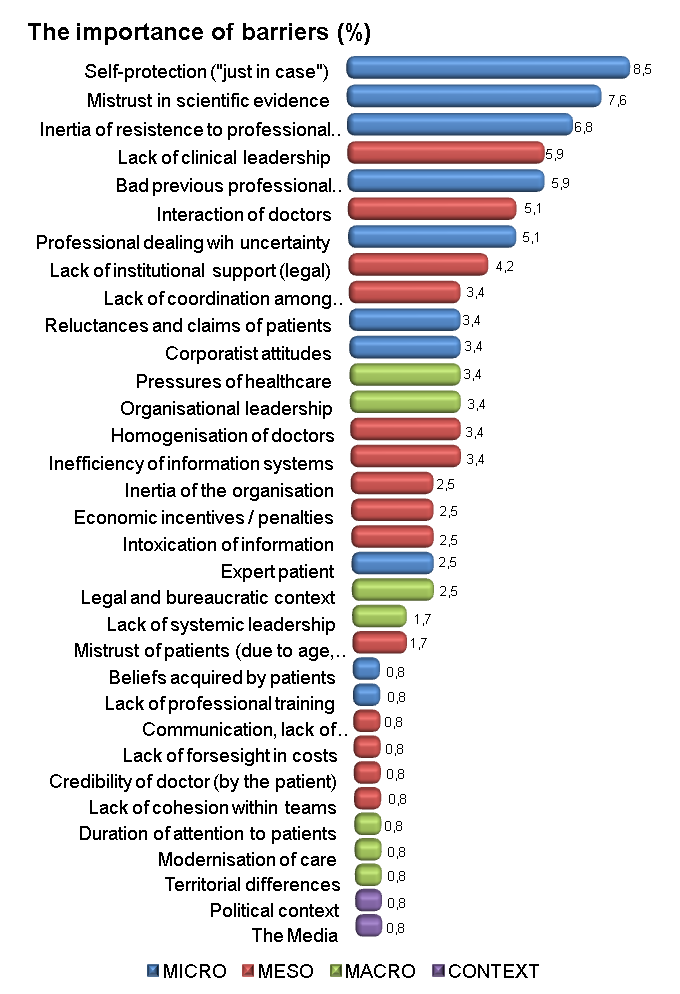
The barriers identified can be classified into four levels: micro, meso, macro and those of the context. At a first level (micro), those deriving from the characteristics of professionals themselves were identified, such as the tendency for self-protection in the face of claims or legal problems (defensive medicine), dealing with uncertainty or having had bad experiences previously; scepticism towards scientific evidence as a result of out-dated or contradictory information; other attitudes of professionals such as inertia or resistance to change; and the lack of training. All these constitute barriers. Patients’ characteristics were also identified, such as their reluctances and demands; the figure of the expert patient or beliefs acquired in the past.

At a second level (meso), barriers as a result of the interaction between professionals and patients were identified. Some barriers have to do with the relationship between professionals; that is to say, difficulties related to clinical leadership, the coordination between different professionals (or specialists), or the cohesion within teams. There are also barriers of organisational leadership such as a lack of institutional support in legal issues, the inertia of the organisation itself, economic incentives, wrongly applied penalties or the lack of foresight of certain costs. And then barriers of information flow, namely, the inefficiency of information systems such as the lack of operating capacity of e-mailing, or intoxication due to an excess of corporate information.

At a third level (macro), barriers are influenced by the structure and management characteristics of a hospital and the Catalan health system. The healthcare conditions stand out, such as the burden of healthcare, the duration of the attention given to patients, or how much technology is used in care, that is, greater access to facilities and tests. But also the design of the health system, such as in the lack of systemic leadership, or the lack of coordination between different levels of healthcare (primary care, hospital care, social healthcare, ….) . And then also the characteristics of the health system like territorial differences and the legal and bureaucratic context.

Lastly, certain external factors to the health system (the context) can also lead to low value clinical practices persisting. Although a lot less present in this case, the political context and the influence from the media are included.

The importance of each barrier is shown in the following graph:

barreres-en

Potential solutions were explored or proposed in the same session so as to eliminate these barriers; a series of solutions have been proposed mainly related to the creation of a leadership strategy and a series of clear options, which require rationlising processes and using available information properly.

Post written by Maite Solans (@SolansMaite).

Elderly person with stroke: integrated care from the acute phase to the return home

9 des.
marco-inzitari
Marco Inzitari

Stroke has a high incidence, a growing prevalence and is the pathology with the second highest impact in the world in terms of disability among adults. Despite important advances in acute stroke management, which have led to a progressive decrease in acute stroke deaths, in terms of residual disability, stroke continues to have an extremely high impact on survivors, their families, their caregivers and on society in general.

Evidence shows that the approach to patients throughout the process of care in stroke, from the acute phase to the rehabilitation phase, needs to be multidisciplinary since patients have multiple health care and social needs which require a strong coordination between the different levels of healthcare. However, the tendency is still to organise conferences and congresses focused on only one speciality or level of healthcare.

On the other hand, and in self-criticism, even though stroke is one of the main reasons for using intermediate or long-term healthcare services, this sector almost never takes part in the decision making process of stroke care organisation. Neither does it do much research in stroke and in general, tends to put little thought into improving knowledge in treatments or in innovating the organisation of services compared to, for example, other conditions such as thighbone fractures.

This is why the Parc Sanitari Pere Virgili organised a monothematic symposium on 27 October, two days before the World Stroke Day. It focused on the treatment and management of stroke in elderly people from a different perspective: we traced the trajectory from the “needle” of the thrombolysis in the acute phase, passing through rehabilitative care and “reablement” in the post-acute phase, to the transition back to home life, describing the care given to patients especially, but not forgetting the attention caregivers need.

jornada-ictus-pere-virgili

The presentations reflected and reinforced the need for a multidisciplinary approach in all phases of stroke. As an added value, in all cases the speakers not only combined recommendations derived from literature with their own practical healthcare experience but also provided data from their own research or innovation projects, in many cases with data published recently.

Among the speakers there was a varied representation from very different disciplines which included neurologists, geriatricians, physiotherapists, occupational therapists, speech therapists, social workers, a health economist and the representative of the stroke patients association who chaired a roundtable.

Some of the items that were highlighted most strongly during the symposium were:

  1. The large amount of increasingly more accurate data available on all phases of stroke management. In Catalonia, this data is being provided by the Results Centre, which encourages transparency and allows for benchmarking thereby facilitating a reduction in variability and the sharing of best practices.
  2. Despite improvements in the treatment of acute stroke patients using mechanical thrombectomy together with systemic thrombolysis, 40% of patients are left with a considerable disability as a consequence of stroke. This “glass half-full” should therefore encourage more to be done in terms of acute stroke management, and also in post-acute care which is still vital.
  3. In acute care, age should not be a discriminating factor. This is in line with the concept that chronological age does not correspond necessarily to biological age and that two elderly people of the same age can have a totally different “functional potential” (a concept which in practice in the field of geriatrics is understood as meaning more or less “frail”).
  4. Advances have not only been made in acute care but also in the field of primary and secondary preventive care. Accordingly, the development, the approval of and the use of NOACs (new oral anticoagulants) have been a determining factor since they offer an alternative for those patients where traditional anticoagulants are not a therapeutic option.
  5. The rehabilitation prognosis is multifactorial. A recent proposal stemming from a multi-centre Catalan study led by our hospital and published recently, is based on a simple algorithm which incorporates the social factor (presence of the caregiver) together with the severity of the stroke (using the NIHSS score), functional status (according to the Barthel index) and cognitive function (a result of the Rancho Los Amigos scale). This allows patients to be classified in three levels of rehabilitation complexity, but who might evolve differently, with different needs for intervention, both in the rehabilitation process and regarding their return home.
  6. Integrated interventions in geriatric rehabilitation can be home-based for certain patients as an alternative to a hospital admission. This model, deeply rooted in England and which has proven to be beneficial, is producing good results in our context in different pathologies including stroke. Innovative formulas such as “Comprehensive Home-based Hospitalisation” have, in our context, come about from the alliance between home-based geriatric care teams (doctor, nurse and social worker) and those of home-based rehabilitation (rehabilitation doctor, physiotherapist, occupational therapist and speech therapist).
  7. In terms of physiotherapy, treatments should be more standardised and their efficacy demonstrated. During the symposium, interesting evidence was presented on the control of the trunk and its importance throughout the rehabilitation process in stroke.
  8. Dysphagia is a very prevalent risk condition in patients who have suffered a stroke. Different proposals of scales for assessment at the bedside were shown which can be applied by nurses, reserving the speech therapist’s intervention for the most complex cases which require a more specialised assessment.
  9. In rehabilitation, the support from the ICT (“telerehabilitation” which patients can receive following the instructions and programme configuration of the physiotherapist) allows treatments to be extended in time and intensity along with face-to-face treatment.
  10. Working with caregivers is important. Apart from guiding them within the system, the availability of support groups for exchanging personal experiences, for a social worker, for example, could have an impact on the adaptation of the caregiver to the new situation. To this effect, an innovative experience was developed in our centre with a high degree of acceptance by patients and their families.
  11. Continuity in the recovery process is key and the integration of health and social services guarantees an added value. The pilot “Return Programme” in the city of Barcelona, the result of the alliance between the Catalan Health Service and the City Council of Barcelona was presented. It allows for the direct activation of social services, from acute care and long-term care hospitals so that patients can receive the necessary aid when they return home and thus avoid unnecessary and dangerous delays.

In summary, much progress has been made in the treatment of stroke, especially in the acute phase, but innovation is also being carried out in the successive phases and the symposium showcased different experiences which have been implemented in our context. Drawing conclusions from the symposium, the take home messages are that a comprehensive view of the entire process is key, as well as an integrated and coordinated approach between the different levels of healthcare and social services. On the other hand, more research needs to be carried out especially in the post-acute and chronic phases resulting from the disease and this poses a challenge because of the difficulty in designing and implementing complex interventions where designs such as standard clinical trials are not the solution.

Post written by Marco Inzitari (@marcoinzi) and Laura Mónica Pérez, Parc Sanitari Pere Virgili, Barcelona.

Extra motivational bonus and… Let them have fun! Key elements for qualitative research with adolescents

1 des.
Santi Gómez

There is no doubt that a qualitative methodology considerably enriches the development and assessment of public health interventions. It is often the ingredient which gives a dish that very special flavour or sometimes is even its main ingredient which, if of quality, makes the dish a real winner.

When both quantitative and qualitative methodologies are applied respectively to the same project, the necessary nutrients are provided to make the project work and can even produce compound molecules of a high nutritional value if applied in combination. The flavours of qualitative methodology acquire specially relevance in the dish when an innovative intervention  is being cooked up using new channels of communication to reach the target population. We are talking of the PEGASO Fit for future.

The chefs at the the Agency for Health Quality and Assessment of Catalonia (AQuAS) and those at the Catalan Agency of Public Health (ASPCAT), together with other European chefs, have the PEGASO platform brewing on the stove. Centred around the smartphone, it aims to be a new creative recipe for the promotion of healthy lifestyles among adolescents. Eating habits, physical activity and hours of sleep are the real protagonists of the signature dish which has begun to be served in different secondary education schools in Catalonia, Scotland, England and Italy in the way of different health apps, games and movement sensors.

The PEGASO project is using qualitative methodology in all phases to ensure that the “food” gets to the table successfully and that it be a well-received recipe which spreads out cheerfully and quickly to all kitchens. Thus, the focus groups held with adults and adolescents before the start of pre-pilot phase allowed us to draw up a clear shopping list to get the necessary ingredients before we donned our aprons. Subsequently, and during the 3 stages of the pre-pilot phase, adolescents in several focus groups carved up the different prototypes of the platform’s components after having appraised their quality to decide whether they should be included in the recipe or not.

But what are the key elements for qualitative research with adolescents? A focus group with adolescents is an intense activity which is worth doing. In fact, in the pre-pilot phase of the PEGASO project, we had the opportunity to lead teams in different schools; Nou Patufet school in Barcelona, Verge de la Salut de Sant Feliu de Llobregat and IES Ramón de la Torre in Torredembarra. These teams were made up of wonderful players that converted each match into a real show. To be able to see thrilling sporting events, we used the extra motivational bonus before each match. This is the first key element for qualitative research with adolescents.

The setting up of a group is essential for its later development and just like a pep talk in the locker room, the tactics of the game were explained in a simple way and the importance of each individual’s contribution to working as a team was highlighted. Additionally, and also prior to setting up groups, the importance given by the PEGASO project that participants choose their best skills while also enjoying the match was highlighted. In this way, the players gave their best at all times leaving the supporters dumbstruck from minute 1.

When dealing with highly motivated groups, the coach has no need to scream and shout from the sideline but rather just guide the team with a simple gesture so that it can progressively achieve the pre-established objectives. In this way, spectacular goals are scored which surprise everyone, including the coach and technical staff. This is pretty much what happened to the PEGASO team where good communication and the initial extra motivational bonus helped great sporting events of two or more hours to take place.

In the focus groups of the PEGASO project, the dribbling and passing between participants has been constant and at an individual level, enjoyment was apparent. This is the second key element in qualitative research with adolescents: that they enjoy themselves. If this is achieved, a group of adolescents can get to wherever they want with endless energy. In this way, attributes which collective imagination often assigns to the adolescent population such as passiveness or a lack of interest have been totally ousted and annulled by freshness, creativity and the urge to participate. Undoubtedly, as Jaume Funes would say, the adolescents who have participated in the PEGASO project have been unbearably charming; and I would add, extremely funny and insatiable players.

And after a hard workout, to bed ….! All the information provided by adolescent genius must be given the chance to rest. Rest after an activity is also a nutritious element. A calm demeanour after the adequate hours of sleep enables one to carry out a qualitative in-depth analysis. It is under these conditions that an outcomes report can be written which gives value to the development of the intervention that, as we have already commented, aims to  promote a healthy diet, physical activity and rest. The PEGASO project aspires to be a useful tool in promoting these healthy habits among adolescents. Have a good day, a good match and good night!

Post written by Santi Gómez, AQuAS-APSCAT.

This text are part of a series of posts about qualitative research started at the Ibero-American Congress of Qualitative Health Research which was held in Barcelona several months ago. The other posts in the series are: Utilities and challenges of applying qualitative methodology in community health projects written by Dolors Rodríguez-Arjona and Broadening perspectives in health service assessment written by Vicky Serra-Sutton.

Health data: Do we give citizens what they want?

24 nov.
central-de-resultats-qualitatiu
Dolores Ruiz-Muñoz, Anna García-Altés and Hortènsia Aguado

The right to receive advice with regards to the information available on the network is reflected in the Carta de drets i deures de la ciutadania en relació a la salut i l’atenció sanitària (Citizens Bill of Rights and Duties relating to health and healthcare), updated in 2015. In particular, it specifies that a person has the right to obtain accurate and reliable recommendations from health professionals in terms of the available health information on the network (web pages, applications, etc…).

It is a fact that, from different professional sectors, we are more and more frequently identifying citizens as a key group to take into consideration when communicating the outcomes of our work, including the health sector. The different actors involved in disseminating health information resulting from the Catalan health system activity are no exception. When we publish our data we do it more and more in a way that is not only aimed at informing health professionals on the one hand but also at being accountable to citizens as end users.

But have we really asked citizens what information they want to obtain from us?

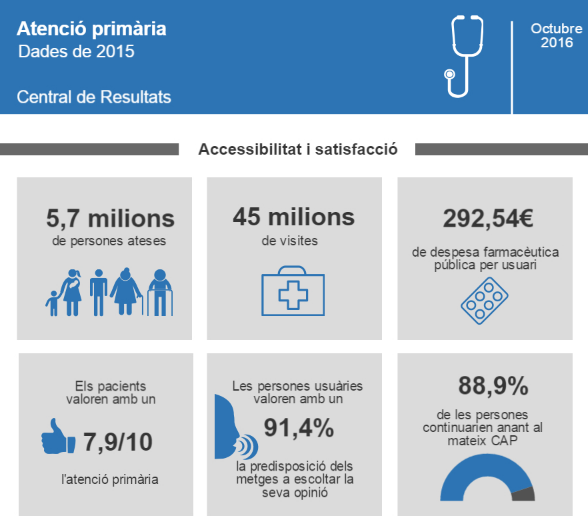
From the Results Centre of the Catalan Health System Observatory we publish a series of reports annually with quantitative indicators that aim to measure, assess and disseminate the results obtained in the different areas of the public health system. Up to the present, to disseminate this information beyond the comfort zone of the health sector, we have published a series of infographics with the information that we have considered to be most relevant for citizens, making the effort to create a user friendly format.

infografia-atencio-primaria


During the first semester of 2016, we spent time reflecting on our labour and we realised that we did not in fact know whether what we were publishing for citizens really reached or interested them. We did not even know what it was that citizens wanted to receive from us. To answer these questions we carried out a qualitative study of Catalan citizens to find out what their needs for health information were, but not limiting ourselves to that produced by the Results Centre.

We created three discussion groups and invited citizens randomly selected from Registre Central d’Assegurats del CatSalut (CatSalut’s Central Registry of the Insured) to freely express what they felt their necessities for health information were. What we discovered was that the population is not interested in receiving health information in a general or systematic way but rather only wants health information when they have a specific personal need and which is directly related to what is affecting them at a given time. They are not interested, therefore, in receiving health information about the population as a whole nor of how the health system works. They state that this information is necessary but feel it is health professionals who need to have it and know how to manage it. In this way, they place their trust in the health system by dissociating themselves from this type of information.

Furthermore, they consider it of interest that the information be made available on the networks but state that, whether they actively search for it on the internet or not, what they need is to be able to contrast the information at a later stage with their primary care physician or specialist, and that it be this professional who discerns what the best information available is for each occasion. What is more, they clearly identify this professional as being the person who needs to know the health information produced systematically by the Catalan health system.

We presented the results of this study at a recent congress, to be exact, the XXXIV Congress of the Spanish Society for the Quality of Healthcare and the XXI Congress of the Andalusian Society for the Quality of Healthcare, generating a very interesting posterior debate regarding these results. One of the attendees at the congress stated their concern for the fact that citizens were not interested in receiving general health information. The debate centred on how we could educate the population into showing an interest in this information and on how to make it reach them. We believe that the key underlying question here is whether this need be done at all.

The public at large have an overwhelming amount of information at their disposal on an infinite number of different subjects on a daily basis. It seems clear that when a person has a specific need regarding their state of health they consult a professional in whom they trust. It is obvious that to us, as healthcare professionals, we will always feel that the information we produce is of such interest as to make others want to know about it, but it is also probable that our enthusiasm makes us biased when interpreting reality. We should perhaps ask ourselves whether we need to make the effort to provide the public with information they say they do not need nor interests them, and whether we are prepared to accept their decision and respect it.

Post written by Dolores Ruiz-Muñoz, Anna García-Altés and Hortènsia Aguado.

Atlas of Variations in Medical Practice in the National Health System

17 nov.

atlas-vpmOver the last decade, an increase of international initiatives aimed at analysing the variability in practice or the variability in the performance of health systems in a more or less systematic way has been confirmed. The most significant experiences have been carried out in contexts having a deep-rooted culture in assessment and in systems in which the choice of insurers and the competition among providers are one of their most characteristic features. (This table shows some of these experiences). The calling of these initiatives has been, and is, to facilitate public debate on the importance and impact of unjustified variability in healthcare. However, it has been in the last few years, a time spurred on by the economic crisis, that the term value for money has gained greatest significance. It is in this same period that the representation of variations in practice has acquired new interest and its usage has begun to guide decisions on financing or disinvestment among other things.

In Spain, the Atlas of Variations in Medical Practice in the National Health System, also known as Atlas VPM, is a pioneering initiative in Europe which was developed somewhere between research in healthcare services (1) and the support given to public decisions. For the last fifteen years, Atlas VPM has been systematically analysing the performance of the 17 health systems that make up the Spanish Healthcare System. The variations in diverse surgical procedures have in this way come under scrutiny as have those in oncology and orthopaedics, in the variability of hospitalisations in risk populations (chronic patients or mental health patients), in the variation in the treatment of certain pathologies such as coronary heart disease or cerebrovascular ischaemic disease, or in hospital care received by population subgroups such as children or the aged.

Atlas of variations of procedures of questionable value

The “Atlas of unjustified variations in procedures of questionable value”  is the latest Atlas of the series and provides a local context for the aforementioned value for money. This project was created in 2013 as a combined initiative between the Atlas VPM and the National Network of Health Technology Assessment Agencies, with the goal of supporting a national strategy aimed at reducing the use of questionable value procedures by encouraging the use of better alternatives or by redirecting resources to other more cost-effective activities.

Ideally, this Atlas establishes an empirical and dynamic performance target by using real terms of comparison obtained in similar health environments and by highlighting margins for improvement for each provider as well as making learning among peers possible when designing strategies for corrective adjustments.

***

After almost fifteen years since the project was launched, ten Atlases have been generated (in different formats) as well as innumerable thematic and methodological articles. Nevertheless, the impact of these research efforts goes beyond merely having created an awareness of the existence of a serious problem difficult to resolve; 1) the provision of services in Spain does not seem to follow a pattern related to the health needs of the population so that the access to effective healthcare and insurance seems to depend on one’s place of residence; 2) the marginal cost incurred when providing services often exceeds the marginal benefits of these; 3) the place where a service is provided is decisive in the health results a patient obtains as well as in the associated cost.

On the contrary, the Atlas VPM has also fostered the translation of these results into the arena of healthcare policies. We congratulate ourselves that AQuAS, with whom we have maintained a close collaboration over the years, is leading the creation of an Atlas for Catalonia. This is the first initiative that has, within the context of the National Health System in Spain, institutionalised the study of unjustified variability in healthcare.

(1) Atlas VPM originated and gained momentum within the much missed Network of Research in Results and Healthcare Services (RED IRYSS), coordinated at the time by AATRM under the guidance of Salvador Peiró finding inspiration in an epistemological and methodological approach known as The Dartmouth Atlas of Healthcare Quality.

Post written by Enrique Bernal-Delgado and Sandra García-Armesto for the Atlas VPM group. Unidad de Investigación en Servicios y Políticas de Salud. Instituto Aragonés de Ciencias de la Salud.

If this subject is of interest to you, a related event, Jornada de presentació dels Atles de variacions de la pràctica clínica del SISCAT, will take place in Barcelona next Monday 21 November. The aim of this event is to present publicly SISCAT’s Atlas  of variations in medical practice and to promote its value for professionals as a tool in the management and assessment of the healthcare system.

Indicators for assessing care for chronicity

10 nov.

In a previous post we discussed the advantages of using indicators in the assessment of health services. At AQuAS we have been applying indicators to assess different care processes and areas, with care for patients suffering from chronic conditions being one of the principal areas of interest in terms of new care models and programs assessment. Interventions in the field of care for chronicity are extremely complex given that by their very nature, they tend to involve multiple actors and many different levels of care concurrently, as well as different elements utilising therapeutic instruments and technology with very variable intensity. Moreover, their effectiveness is often linked to contextual factors, making it difficult to attribute an outcome to a particular component of the program. So, given this level of complexity, the question remains, why should we be using indicators in this area? The answer is that these indicators may provide us with several benefits compared to other assessment approaches, such as:

  • Incorporating professional opinion and consensus
  • The possibility of including structural and procedural indicators allows us to obtain an understanding of the environment and the reality in which the initiative is being implemented
  • Providing a type of assessment that is more accessible and understandable for professionals
  • Greater simplicity and speed in evaluation and obtaining results
  • Possibility of defining standards
  • Allowing comparisons to be established and objectifying trends
  • Identifying successful characteristics and factors that can define which models are most effective, for which groups of chronic patients, in what context and at what cost

The first project in which AQuAS began using quality of care indicators for assessing chronicity got underway in 2012 with the commission by the Program for Prevention and Care for Chronicity (PPAC) to define a set of indicators to assess the quality of integrated care programs for chronicity within the health sector, where an ‘integrated program’ is understood as those programs involving the coordinated participation of different levels of care. Following the methodology described in the previous post (review of literature, establishing a theoretical framework and expert opinions) a total of 18 indicators were obtained, mainly from intermediate and final results, which experts considered relevant and feasible for assess these types of programs and which are currently being implemented (see table 1 and web).

Table 1: Indicators assessed as relevant and feasible for evaluating integrated care programs for chronicity

indicadors-2-en-1

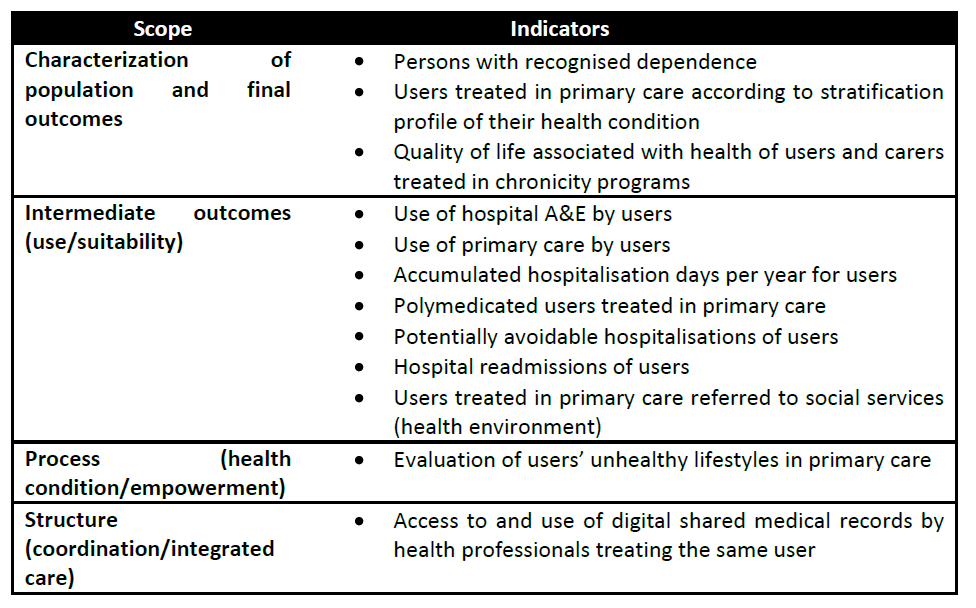
From this experience, AQuAS developed a proposal for indicators, published recently to, assess chronic care as part of the strategy for tackling chronicity within the National Health System. As a result of this work, a set of indicators considered to be crucial for evaluation emerged, which included several previously prioritized indicators which are repeated such as polymedication, avoidable readmissions and hospitalisations, but which incorporates new factors which are more closely associated with the patients’ experience, such as the assessment of the patients’ and carers’ quality of life, or patients’ lifestyles (see Table 2).

Table 2: Proposal for prioritized indicators for promoting more uniform measurement of the entire National Health System for evaluating of chronicity care strategies
indicadors-2-en-2

Later, from 2014 onwards, the Catalan Institute of Healthcare and Social Services (ICASS – Dpt. Social Welfare and Family) and the PPAC (Health Dept.), commissioned extensive work to be carried out in evaluating collaborative social and health care models in Catalonia. These models not only consider the different levels of care in the health system but also include social services, a crucial aspect in caring for patients in this category. The objectives of the project were to outline the organization and operations of these collaborative experiences, identify barriers and facilitators, propose a conceptual framework for assessment and define a set of well-founded indicators based on feedback from participants and the expertise acquired from previous assessment studies. The proposed indicators continue to take into account traditional indicators while consolidating assessment that includes the views of those involved, not just the patient, but also the caregivers and professionals, and placing special emphasis on the evaluation of the coordinated actions of healthcare and social services, for example considering the avoidance of duplicate processes or carrying out joint social and healthcare initiatives.

We must also highlight in this line of work the efforts undertaken by the ITES FORUM (Forum of innovation, transformation and excellence in health and social services) to define a joint health and social services evaluation framework with a proposal of indicators (line L6) and in which AQuAS is also involved jointly with professionals from different fields. The Forum is a tool to facilitate the necessary conceptual debate required for transforming existing social services and healthcare in favour of a new model of integrated care.

Finally, and to continue discussing the area of assessing the integration of health and social services, since 2015 AQuAS has been involved in the Horizon2020 SUSTAIN (Sustainable tailored integrated care for older people in Europe) project. This European project aims to compare, assess and implement strategies to improve integrated care experiences aimed at non-institutionalized elderly individuals, in other words, those living in their own homes. The project has an additional goal, which is to seek to ensure that the best integrated care initiatives in this area are applicable and adaptable to other European health systems and regions. The project involves seven European countries working simultaneously on the basis of the definition and implementation of a set of indicators pending definition, tailored to this type of population and integrative approach.

Indicators, therefore, are useful tools for assessing an area as large and as complex as chronicity and they can be applied from a broader or narrower perspective, in other words, taking into account not only the different levels of care in the health system, but also including social services. The results obtained from the implementation of these indicators will provide professionals with objective criteria regarding the quality of their interventions, by facilitating the identification of the strengths of chronic care programs, as well as areas with scope for improvement.

Post written by Noemí Robles, Laia Domingo i Mireia Espallargues. Àrea d’Avaluació, AQuAS.

Gender equality in research, we all benefit

3 nov.
esther-vizcaino
Esther Vizcaino

Several month ago, we spoke about the publication of the article A global call for action to include gender in research impact assessment, in which the team of impact of research at AQuAS participated.

Investment in biomedical research has grown exponentially over recent years and consequently, governments, the industry, research centres and citizens expect to see a return on this investment translated into an increase in health benefits. Investing in research inappropriately can lead to economic and health losses. What’s more, this investment can also be wasted if it is not distributed equally in terms of gender.

That women are poorly represented in the field of health research is nothing new. By poorly represented we are referring to them as researchers as well as participants in research studies. Women receive less funding, appear less frequently than men as authors of publications in scientific journals and are awarded fewer scientific prizes. For example, of the 210 Nobel Prizes of physiology and medicine, there are only 12 women (5,7%).

Moreover, there is evidence that the differences in sex (biological) and of gender (sociocultural) are not included in a routine way in the design of research studies. This can mean that women find themselves at a disadvantage with regards to men as beneficiaries of research in terms of the health, economic and social impact associated with research. It has been demonstrated that incorporating the gender perspective stimulates innovation and excellence in research and technology.

Given the global and fragmented nature of research, we are faced with the inescapable need for all administrations, research institutions and assessment agencies to promote scientific policies that maximise the impact of research by means of gender equality.

article-pavel

Taking this necessity into account, researchers from 15 countries from 6 continents have made a “call for action” in the article to include the gender perspective in the assessment of the impact of research done with the aim of maximising its scientific, economic and social impact. Different recommendations are made in the article to all actors involved in research on how to include and reinforce gender analysis within the assessment of the impact of research.

In 2014, the United Nations launched a campaign, HeForShe, to fight against gender bias at a global level. This campaign wants to involve everyone, including men and boys, as defenders and agents of change to obtain gender equality and the rights of women.

Historically, gender equality has perhaps been mainly adopted as a subject of interest by women but including gender equality in all spheres is a subject for all.

Post written by Esther Vizcaino Garcia, AQuAS.