Pediatrics in the Pyrinees, an innovative experience in the Alt Urgell (Catalonia)

16 març

Today we interview Jordi Fàbrega (@jorfabrega), director of Pediatria en els Pirineus (Pediatrics in the Pyrenees), a cooperative of pediatricians that already has 7 years of life.

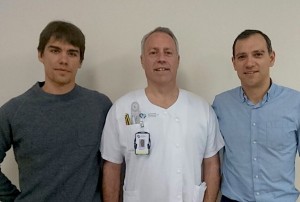
Glòria Ruiz, Neus Méndez, Toñi Parra, Jordi Fàbrega

The existence of rural areas hard to reach, remoteness with respect to large urban centres, an extensive area of land, a low population density and something of a shortfall of paediatricians in the area are the characteristics of the Alt Urgell that have given rise to the Pediatrics initiative in the Pyrenees., an innovative initiative from the Observatori d’Innovació en Gestió de la Sanitat a Catalunya (OIGS).

Observatori d’Innovació en Gestió de la Sanitat a Catalunya (OIGS)

With the experience acquired during these seven years, what improvements has the project provided in your opinion?

I think the most important has been stability and in ensuring a health care continuum for our boys and girls. We have been able to give 100% cover from the start in primary and hospital paediatric care and in on-going medical care including localised standby calls. This has meant excellent access for the population, with a 100% success rate of pre-arranged appointments for the same day, and, in addition, with a high success rate at primary level, with an increase in standards in the quality of care.

This has led to a drastic decrease in emergency visits to hospitals as well as in admissions and transfers beyond the borders of the territory. Although there are fewer admissions, a fact that brings with it an increase in the complexity of child admissions, the average hospital stays for these admissions have been reduced.

In keeping the umbilical cord tied to the Hospital Sant Joan de Déu for training paediatricians and in the referral our patients, it has meant that this rate of success has in fact increased in our territory.

In this way, children and their parents are always attended by the same paediatrician, or team of paediatricians, where all know the problem at hand and provide solutions following the same protocols that would be followed in the Hospital Sant Joan de Déu.

Another noteworthy element is that by integrating ourselves within the Maternal and Child Unit of the Alt Urgell, with obstetricians and midwives, we have widened the homogeneity of interventions to include the whole mother-baby area and this has allowed us to begin projects such as early postpartum discharges with follow ups by paediatricians/midwives together and postpartum support groups which have been very well received by the population.

The web set up in 2011 has also brought us closer to the population enabling us to spread information on paediatric subjects. In particular, the virtual doctor’s consulting room is a frequently used tool by parents to clarify doubts with great flexibility and without having to travel to the doctor’s rooms.

Good results and awards endorse the entity’s task that you began which has been able to guarantee efficient paediatric, primary and hospital care. What are the keys of this success?

I think having the autonomy to manage ourselves is fundamental. Being able to manage our own agendas, timetables and cover for each other, among other things, has allowed us to adapt the task of caring to the reality of the territory and also to the realities of each professional by trying to reconcile our work and family life. What is more, it allows for on-going training.

The other key point is the relationship with a top-level centre like the Hospital Sant Joan de Déu which ensures we get on-going training and it solves problems of professional isolation that we might experience in zones a long way from the metropolis.

In a way, we feel we have a ‘big brother’ that helps us when there are difficulties and who accompanies along our journey.

Do you think this innovative model of self-management could be applied to other medical specialities and extrapolated to other regions?

I am absolutely convinced that it is a model which can be reproduced in almost all areas of care and in all regions. The important thing is to find professionals who are willing to accept the challenge and that the administration believes in it and is willing to back it.

Information and communication technologies (ICT) have played a key role from the beginning. Of all the innovative actions you have fostered, which one has worked the best?

The web page and virtual consulting room without a shadow of a doubt.

The web page, with its internal part, gives us access to all professionals and it is where all protocols are hung and this means we all work in the same way, including family doctors that are on call in different doctor’s rooms in the Alt Urgell and who have access to it.

The virtual doctor’s consulting room, likewise, means parents’ doubts can be clarified in a relaxed way and without interrupting visits (as always happens with untimely phone calls). On-site visits that require time investment by parents and, above all, discomfort are thus avoided.

You opened a virtual doctor’s consulting room on your web page five years ago, addressed to parents and tutors. Do you receive a lot of consultations via this channel?

As a matter of fact, no. We get 12 consultations a day on average, shared between the four paediatricians on duty in the region (paediatrician and paediatric nurse).

It must be stressed that we have very good accessibility to on-site visits and we attend a total of 3400 children meaning that numbers are logically not very high. The family’s and professional’s satisfaction, respectively, is very high.

Innovation has been the motor of your initiative. Do you have plans for implementing a new project this year?

In December last year, we incorporated the obstetricians from La Seu d’Urgell into the cooperative society. In practical terms, they were already working in close collaboration since 2012 and now form part of the cooperative; this fact consolidates the project a lot.

We would like to have the midwives from the Alt Urgell in the cooperative because with a few small changes, this would allow us to improve care, especially in community health which is lacking at the moment in our region.

This year, CatSalut has asked us to implement the model in other areas of the Pyrenees where there are problems of cover and it is now one of the issues we are looking into.

Interview prepared by Neus Solé Peñalver (@neussolep).
Scientific evidence and clinical practice: the case of hip prostheses in Catalonia

9 març
Daniel Chaverri, Miquel Pons, Luis Lobo

A total hip replacement is one of the surgical procedures which provide greatest satisfaction among patients due to the significant improvement in the quality of life they experience.

So much so, that it has been defined by some authors as the surgery of the 20th Century. It is a procedure which consists in substituting the hip joint with an artificial joint or prosthesis.

The most common reason for surgical intervention is arthrosis, a disease caused by the wear-and-tear of the cartilage which leads to a malfunction of the joint. It is especially common in older people, older than 65, who live with pain and which can limit their day-to-day activities considerably.

In today’s context of continuous technological innovations and advances and facing the enormous pressure from manufacturers, the range of prosthesis available to orthopaedic surgeons is wider than ever. This situation demands that the prostheses used have supporting scientific evidence based on clinical studies or on data from arthroplasty registries.

The legislation which regulates the commercialisation of medical devices, such as prostheses, is more lax than that which regulates drugs which means that not the same type of studies are required for their approval and in consequence, neither is the scientific evidence. In fact, this precise legislation is undergoing a review at present and a new one on this matter will soon be made available.

Several years ago, the prestigious journal BMJ (British Medical Journal) published an article in which it was highlighted that in the UK, 24% of hip prostheses used had no scientific evidence to demonstrate their clinical effectiveness.

As a consequence of that publication and applying the same methodology, at the Hospital Sant Rafael and in collaboration with the Catalan Arthroplasty Registry (RACat) of the Agency for Health Quality and Assessment of Catalonia (AQuAS), we embarked on the task of analysing what the scientific evidence was on hip prostheses used in public hospitals in Catalonia which had sent their data in to the RACat during the period 2005-2013.

We did this via a search on different platforms putting the spotlight on Orthopaedic Data Evaluation Panel (ODEP), as well as Tripdatabase, PubMed and Google acadèmic.

Following the analysis of the 18,816 acetabular or hip cups and 19,546 femoral stems (the main components of the hip prosthesis) collected in the registry, our first surprise was to observe that 123 different models of cups had been used and 138 different models of stems. In the group of participating hospitals in the RACat during the period of the study, it was seen that with many of these models less than 10 units in number of each had been used.

As these models only represent 1% of implants used, they were excluded from the study and in the end 74 models of hip cups and 75 models of femoral stems were studied.

Artroplàsties PTM

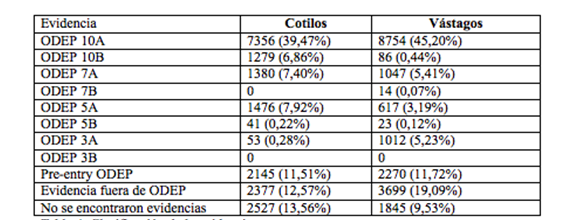
The results of the analysis, either recently published or not yet published, now at a pre-publication stage, show that less than 50% of components used had the highest level of scientific evidence in accordance with the ODEP. This top level is achieved when there are studies having 10 years at least of monitoring with a number of prostheses evaluated exceeding 500 units.

What also caught our attention was not finding any evidence for 18 hip cups or 16 femoral stems which represented, respectively, 13.56% and 9.53% of all implants carried out during this period.

Artroplàsties -taula

All scientific studies show limitations and it is not always possible to offer exhaustive results. Aware of this, and of the fact that the data in our study are the results of a research project which might not be able to reflect what the reality of public hospitals in Catalonia is in absolute terms.

We do want to stress that the task of the orthopaedic surgeon needs to be more and more regulated by evidence based medicine and this is, precisely, one of main purposes of arthroplasty registers: to carry out studies like the one we have been able to do at Hospital Sant Rafael with the aim of improving the health care of people.

Post written by Miquel Pons, Danieol Chaverri and Luis Lobo, Hospital Sant Rafael, Barcelona.

The main challenge in mHealth is understanding each other

3 març
Toni Dedéu - DECIPHER final event 2017
Toni Dedéu

In recent years, the debate about what we should do with health apps has centred around accreditation, certification or assessment. At the same time, multiple lists of health apps recommended by a range of known and recognised initiatives have been drawn up.

An example of this would be the iSYScore2017 ranking of the Fundació iSYS which was presented in the context of the CAMFiC a few weeks ago.

rànquing apps salut

In this context, and with the Mobile World Congress 2017 in Barcelona in full swing, we can ask ourselves what role a Health Technology Assessment (HTA) agency has when considering mHealth.

There is a reality which we cannot evade. Any health intervention needs to be based on evidence, on knowledge of the highest quality at hand, and must be evaluated.

This cannot be done by turning our backs on the real world or innovation. A health app is a tool to carry out a health intervention and so health apps need to be seen as just another intervention, but of course, with some characteristics of their own which will mean there is an extra demand placed on one and all.

Technologists, HTA experts, professionals and citizens have the opportunity to understand each other if we want to be facilitators of recommending safe apps in health. We are not talking about initiatives that can be developed from one sector only and it is not only about apps.

Now more than ever, we need to be flexible and work from a multidisciplinary position. We already talk about co-creation and co-design; quite simply, of co-produced mHealth initiatives based on the expertise of multiple agents including, obviously, citizens.

AQuAS is participating in the assessment of several mHealth projects financed by the European Commission. The PEGASO project stands out, centred on promoting healthy lifestyles among adolescents, and DECIPHER, as an integral solution to facilitate the geographical mobility of patients with chronic diseases such as diabetes type 2 and m-resist, centred on schizophrenia and patients resistant to treatment.

We are faced with the challenge of integrating totally different fields such as the language of technologists and developers; the speed of innovation and the culture of assessment. In addition, this needs to be done without losing sight of the key role of scientific societies and the different points of view of health professionals and end users.

We know there is a lot of work to be done. Technologists and experts in health technology assessment, respectively, have the opportunity to learn a lot from each other. It is about sharing knowledge and expertise to facilitate, ultimately, health tools for citizens and professionals, which have been assessed, are based on evidence, are safe and reliable and have a strong collaborative component.

MWC17
Digital Health and Wellness Summit – MWC17


Post written by Toni Dedéu (@Toni_Dedéu) and Elisa Puigdomènech.

mHealth & user experience: the user decides

23 febr.
Marta Millaret - Elisa Puigdomènech - MWC2017
Marta Millaret and Elisa Puigdomènech

The Economist recently published an article in which they reported that the number of mobile health applications, or apps, was in the region of 165.000, a very high figure that poses many questions.

A large part of these apps are related to well-being and promoting healthy lifestyles, but what makes us choose one over another?

The first thing that comes to mind is that mobile health apps, being a health technology, could and should be assessed based on their impact on health and this is where we are faced with our first problem.

While there is a gold standard when assessing this impact in the area of medication and static interventions in randomized clinical trials, how is this impact assessed in a highly dynamic world? In a world that can include a range of components that users can use depending on their needs? Where pressure is added due to the fact that advances in technology are being made in leaps and bounds and we cannot wait for years before getting results? It is not that simple.

If we venture into the area of mHealth, the first thing we find is great diversity. The design, requirements and assessment of an app developed to help manage diabetes in older people is very different to an app aimed at providing a dose for some medication where improving its adherence is sought, or an app to promote not drinking alcohol among young people before sitting in the driver’s seat, or an app to manage depression and anxiety.

What are we trying to say with all this? Easy and complex at the same time: the intervention that one wants to do via a health app and the target users will determine their use and their adherence.

And we are only just beginning. Apart from aspects related to health and the suitability of content or other more technological factors such as interoperability and security -by no means simple-, other factors come onto the scene such as acceptability, usability and satisfaction, factors related to User Experience (UX).

User Experience in mHealth is essential given that the main aim of it all is to make the tools which are being developed viable, accepted and used by the population who they are meant for, and also that the aim for which they were designed be respected.

After all, the end user who has the last word in deciding whether a health app is used or not, and this is why their participation in all phases of developing these mHealth tools is crucial.

Pursuing these aims of feasibility, acceptability and usability can make us reflect on, for example, the difficulty some old-age people may have when learning to use a smartphone for the first time. However, these obstacles related to the generational factor also exist among young people with new languages.

We suggest let yourself surprised by this video that shows how some adolescents react and interact when using Windows 95 for the first time.

The Mobile World Congress 2017 will be taking place in Barcelona next week. Monday will be one of the days circled into the diary of many professionals interested in subjects on mobiles and health with the Digital Health & Welness Summit 2017 programme.

DWHW 2017

But not everything will be happening at the Mobile. Another important mHealth event will take place on March 1st at the Palau Robert in Barcelona with the DECIPHER project final event.

logo decipherTo be continued

Post written by Elisa Puigdomènech and Marta Millaret (@martamillaret).


Crisis and health: the opinion of some experts

16 febr.

In the next few weeks, a new report will be published by the Observatory on the effecs of the crisis in the health of the population, drafted at the Observatory of the Catalan Health System. Based on experience and with the aim of providing some things to reflect on at an individual and community level, we would like to share some words by Xavier Trabado, Angelina González Viana and Andreu Segura about the initiative that was begun three years ago (you can consult the 2014 and 2015 reports).

Crisi i salut

Xavier Trabado
Xavier Trabado

“Precarious employment, changes in the labor system, unemployment, evictions, debt, household instability and poverty directly affect the mental health of people. The latest Health Survey of Catalonia shows the percentage of people have some kind of risk for of mental health problems. To prevent this number from increasing and working for itstowards decrease reducing it we need programs supporting prevention, to better detect cases that could go unnoticed. It is essential to act in the initial stagesearly to prevent worsening situations  from getting worse, by providing support and appropriate tools. There are programs such as the one supporting primary care, which has been evaluated with very positive results, but not yet deployed on in the whole territory. The training of the primary care professionals allows for a quick and preventive approach, and an intervention  to provide solutions. Finally, the coordination between specialized and primary care resources is key to make making an initial diagnosis and to continue monitoring the  cases detected.  We need a change in the way healthcare services are provided, enabling and integrating the efforts of different work areas and professionals, providing tools to the affected person, seizing it , informing the family and accompanying them during the process through psycho-educational groups and support groups”. (Xavier Trabado is spokesperson for the Federation of Mental Health in Catalonia)

Angelina González Viana

“The report by the Observatory on the effects of the crisis on health highlights the communities which have borne the brunt of the crisis and how it has affected their health. It is urgent to initiate community health actions: actions in which the community is the protagonist and which are the transition from the attention given to an illness to a bio-psycho-social approach where these actions promote inter-sectorial work and that done in networks with local agents who share the aim of improving the welfare of the community. Based on the needs detected and then prioritised, with all involved participating, and having identified the local assets, these agents initiate interventions supported by evidence which are later assessed. Ultimately, community health is the application of all these policies at a local level.” (Angelina González Viana coordinates community projects such as COMSalut, at the general Sub-directorate for the Promotion of Health of the catalan Public Health Agency)

Andreu Segura
Andreu Segura

“The ongoing crisis has increased income inequality, income poverty and the risk of social exclusion. All this generates anxiety, distress and despair, mood disorders which are not unhealthy, at least initially , and healthcare services not cure . The health of the population has a lot to do with the living conditions of people and their ability to cope with the  ups and downs. Hence the importance of the level of education level and purchasing power – work, and pensions and subsidies, if needed – and other social support measures that make us feel part of a healthy community. The Interdepartmental Public Health of Catalonia wants to contribute to that purpose through via intersectoral actions to increase the efficiency of coordinated government and civil society initiatives of the government and civil society in all fields that have a significant influence on the health of individuals and the population as a whole.” (Andreu Segura was Secretary of the Interdepartmental Commission  for Public Health and coordinator of the COMSalut project. At present he is retired, is Spokesperson for the Public Health Advisory Board and for the Bioethical Committee of Catalonia)

If the you are interested in this subject, you can read more in this post which was published last year in connection with the previous report: Les polítiques públiques en temps de crisi.

Analysis of research data in health: opportunities within reach

9 febr.
Xavier Serra-Picamal

The generation and storage of data is omnipresent nowadays. The costs have fallen drastically and the health sector is not alien to this. To illustrate this, it is worth having a look at the following graph created by the National Institutes of Health about the human genome, which shows the evolution of the cost of sequencing a genome:Cost per genome

As can be seen, since 2007, the cost of sequencing a genome has fallen dramatically. Having one’s own genome sequenced is now possible and in the future it may become commonplace. Bearing in mind that a copy of the human genome is made up of aproximately 3 million base pairs (3 million adeninines, thymines, citosines or guanines arranged sequentially in 23 chromosomes ) it is easy to infer that, also within this field, the quantity of data generated in the coming years will be massive.

This tendency is repeated in other areas of health care: among other, clinical history data in electronic format, medical imaging, primary care data or that of drug consumption are obtained and stored in registries, in general, structured and interlinked. The potential of this data for carrying out research in order to provide better health care is notable, in the way of faster and more accurate diagnoses, improved therapeutic approaches and a better management of the system.

To analyse the challenges and opportunities at a European level, a work session organised by the Directorate-General for Research and Innovation of the European Commission was held in Luxembourg with representatives from AQuAS. The points discussed have been gathered in the article Making sense of big data in health research: Towards an EU action plan, published in the Genome Medicine magazine and of open access. As explained in the article, using this information to provide better healthcare is a challenge but a great opportunity at the same time.

Making sense of big data in health research

Nevertheless, a big effort is required to transform this data into knowledge and specific actions. However much the costs of generating and storing data may drop, the management of information, its interpretation, and the generation of knowledge needs considerable investment and resources. This means having adequate information systems as well as the economic and human resources so that the data can be treated efficiently and the protection of individual rights guaranteed. In addition, the participation, commitment and effective communication of all the agents of the system is needed (including the scientific community, patients, citizens, the administration, and so on) to guarantee that this data is used efficiently, responsibly and that it promotes research which is efficient and of quality.

Catalonia, because of the size of its population, the fact that it has an integrated health system and the work done over many years, is well positioned to be able promote the reuse of health data for research. At an international level, some comparable projects exist and new projects exist with the goal of integrating and consolidating data from different sources, with some very ambitious and attractive programmes. The  PADRIS Programme, presented last 12 January, aims to centralise and make the data generated in health available to researchers in research centres in Catalonia and universities so as to provide better healthcare with a maximum guarantee in security and privacy. The work to be done is considerable. The resources needed too. The opportunities to provide better research and better healthcare are within reach.

Post written by Xavier Serra-Picamal, researcher at the Karolinska Institutet (Sweden).

* TERMCAT (the centre for terminology in the Catalan language) has recently dealt with the question of how to say data scientist in Catalan. The subject is very much a current issue!

Adjusted morbidity groups: a new population morbidity classifier

2 febr.
Foto Emili Vela
Emili Vela

At present, chronic pathologies have become a challenge for health systems in developed countries. The majority of sick people that use health services have multiple morbidity and this increases with age. The presence of multiple morbidity is associated with a greater use of resources for care (both health and social) and a lower quality of life.

In this context, it is necessary to measure multiple morbidity to be able to determine its impact. There are two large sets of measurements of multiple morbidity: on the one hand, a simple count of the diseases (usually chronic) of each person and, on the other, indexes which indicate the burden of an individual’s diseases based on the ranking of pathologies giving each one a differential weighting drawn from clinical criteria provided by groups of experts and/or statistical analysis based on mortality or the utilisation of health services.

The Adjusted Morbidity Groups (AMG) are encompassed in this last group, the only one of these tools developed in Europe on the basis of a public health system, universal in nature and eminently free.

Los grupos de morbilidad ajustados

The characteristics and functioning of the AMG can be found in this article. In a nutshell, we can say that the AMG have been validated statistically, by analysing their explanatory and predictive capacity. In this validation, the AMG have shown better results than other tools in the majority of indicators studied, including those relative to social and health care.

Concordancia y utilidad sistema estratificación

They have also been validated clinically by primary care doctors, both in Catalonia and in the Community of Madrid. The main results of these validations are that the AMG show a good classification of the patient in terms of risk, that this good classification increases with the complexity of the patient, the preference of clinicians for this tool with respect to other tools to classify morbidity and finally, that it is a useful tool for assigning a level of intervention in accordance with the needs of patients.

From 2012, the AMG were developed in the framework of an agreement of collaboration between CatSalut and Catalan Health Institute. Subsequently, they have been implemented at a national level in 13 autonomous communities thanks to an agreement reached between CatSalut and the Ministry of Health, Social and Equality Services. As a result of the implementations done during 2015, 38 million people of the Spanish population have been classified. The final goal of this agreement is to jointly develop a tool to stratify the population and which could be applicable to the entire National Health System by means of adapting the AMG.

Proposals enhanced health risk

Similarly, the AMG are being used in several European projects concerning the stratification and integration of health and social care.

In summary, we can assert that the AMG are a new classifier of morbidity which shows comparable results -at the very least- to those provided by other classifiers on the market. On the other hand, having been developed using the information from our health system (universal and eminently free), it can not only be adapted to new requirements or strategies of our organisations, but also to other health systems as well as to specific areas or populations. Evidence of this last point is that at the moment, together with the Master Plan of Mental Health and Addictions of the Health Department, a specific classifier is being developed for patients with mental health and addiction problems.

Post written by David Monterde (Oficina d’Estadística. Sistemes d’Informació. Institut Català de la Salut), Emili Vela (Àrea d’Atenció Sanitària. Servei Català de la Salut) and Montse Clèries (Àrea d’Atenció Sanitària. Servei Català de la Salut).

Health literacy, a need

26 gen.
Mercè Piqueras 2016
Mercè Piqueras

Traditionally, knowledge in medicine was considered an exclusive domain of medical professionals. Patients were passive subjects that listened to a diagnosis while hardly understanding it and followed, or not, the instructions they were given by the doctor. Nowadays, an attempt is made to provide patients with enough basic medical knowledge to allow them to interact with the doctor, take decisions about their health and avoid making mistakes that could have serious repercussions.

One of the subjects discussed at the 2016 European Health Forum Gastein (this Forum is an annual gathering organised by the European Commission in Bad Hofgastein, Austria, to discuss subjects related to health which affect European countries) was health literacy or, otherwise known as, the ability to access the relevant information for one’s own health or that of society and to be able to understand and assess it. It refers to the understanding of what the doctor tells the patient and the information contained in the patient information leaflets that accompany drugs. It also refers to the ability of identifying whether the information on health in the media is reliable, understanding the information on food labels and also participating in activities which improve health and well-being.

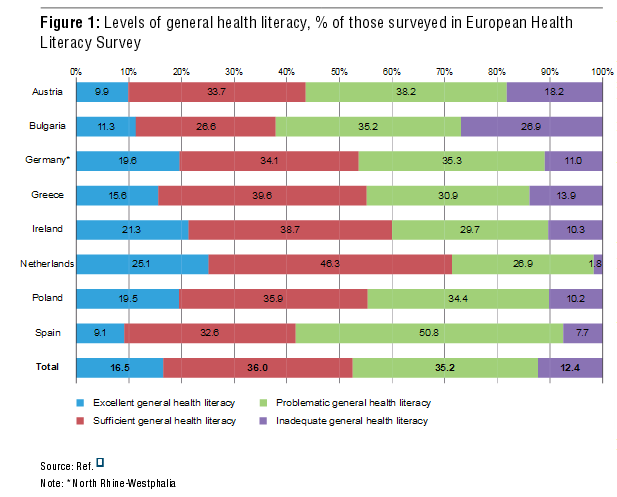
The first European Health Literacy Survey (HLS-EU) was carried out in the summer of 2011. Eight states from the EU took part and the questionnaire centred around three aspects (health care, disease prevention and health promotion) and in four of the phases in processing and informing (access, understanding, assessment and application).


Health Literacy

While in the Netherlands 70% of the population have sufficient or excellent knowledge, in Spain, this percentage is 41,7% and it is the area with the highest percentage of problematic situations (50,08%).

Similar studies done in the United States indicate that a lack of health literacy carries risks, puts the breaks on the self-management of an illness and increases medical visits and hospital admissions and therefore, the expenditure on health.

Health literacy is not parallel to the degree of literacy in general. For example, the consumption of homeopathic products, the resistance to vaccination, or the belief that transgenic products are harmful for one’s health are widespread attitudes in some well-educated sectors with a high cultural baggage but which have a mistaken or biased knowledge of certain subjects on health. Unfortunately, these people believe they are well informed and are probably the population group where it will be most difficult to eradicate this type of illiteracy.

Post written by Mercè Piqueras (@lectoracorrent), biologist, science writer, science editor and translator, president of the Catalan Association for Science Communication in the period 2006-2011.

What are the SISCAT atlas of variations all about?

19 gen.
atles-variacions-siscat
Laura Muñoz (Atlas of variations SISCAT), Laia Domingo (RaCat), Olga Martínez (RaCat)

At present, if you live in the region of Terres de l’Ebre and need to be operated on to have a knee replacement, it is quite probable that the type of technique used is one which preserves the posterior cruciate ligament. On the other hand, if you go and live in Girona, the chances of having the same kind of knee replacement will be a lot less, but in contrast, the type of technique chosen will be that of stabilising the posterior.


If you live in Girona and have respiratory difficulties susceptible for home-based CPAP treatment (continuous positive airway pressure), you will more likely be prescribed this therapy than if you live in Lleida or the Terres de l’Ebre. If you live in Lleida, in contrast, there is more probability of you being prescribed oxygen therapy at home than if you live in the Terres de l’Ebre region and suffer from some kind of respiratory disease that could benefit from this treatment. And if you live in the coastal neighbourhoods of Barcelona you will more likely be prescribed mechanical ventilation at home than if you live in a neighbourhood situated further inland for those respiratory ventilation disorders that might need this technique.

Why does this happen? There is no evidence to suggest which type of intervention is most suitable and it is simply the fact that the health professionals of one region are more inclined than those of another to choose one technique over another. This variability reveals the existence of schools linked to certain hospital centres that condition the choice of the type of intervention or technique used.

This is the type of information that the Atlas of variations in clinical practice of the Catalan Healthcare System (SISCAT) make available to health professionals and the entire population, and which has been led and developed by AQuAS since 2011.

The aim of these atlases is to identify, describe and reduce the variability that can lead to increased well-being, quality and an improvement in the use of available resources. Up to the present, 7 atlases have been developed in which the variations in hip and knee arthroplasty operations have been analysed, as well as the variability in home-based respiratory therapies (oxygen therapy, mechanical ventilation and continuous positive airway pressure), the variation in intravenous thrombolysis in patients with ischemic stroke and the variability and in renal replacement therapy in patients with chronic kidney failure (haemodialysis, peritoneal dialysis and kidney transplant).

One of the sources of data for this study, in fact, the most widely used, is the basic minimum group of data obtained at the time of a hospital discharge (CMBD-AH, the Catalan acronym) where the results are presented as activity rates, reasons for standardised uses and variability statistics. The methodology that lies behind this initiative can be seen here. The basic strategy of all the analyses is to compare the rates of use (numerator: for example, hospital admittances) of the inhabitants in a region (denominator: for example, basic area of health), regardless of the centre where patients have been treated or admitted. In addition, both the rates and the reasons for use are reflected in maps to better visualise the data which is another interesting point nowadays.

Apart from all this, it is important to stress that all the atlases include actions and recommendations for planners (Health Department), insurer (CatSalut), providers and professionals, and which have been developed by a unique team of experts with whom the results of the atlases are discussed.

This year, we have decided to take another step forward and convert the publications we have had till now in a static format (PDF), into dynamic publications that facilitate greater interaction with the data and, therefore, a more global view of the clinical practice analysed.

This is an example of the visualisation of the interactive hip and knee arthroplasty atlas which feeds off the data in the Catalan Arthroplasty Registry (RaCat):

atles-digital-siscat-berga

Next year, you will be able to know whether there are variations in the Catalan territory regarding hospitalisations for back surgery, in the repair of abdominal aortic aneurysms and in gastrointestinal cancer surgery (esophagus, pancreatic, liver, stomach and rectal cancer).

We cannot end this post without thanking all the speakers that made the presentations seminar of the Atlas of variations in clinical practice of SISCAT possible last 21 November, and especially to Enrique Bernal-Delgado, the key professional in the analysis initiative and in mapping the variations of clinical practice in the Spanish National Health System.

As far as AQuAS is concerned, it is one of our work lines which was begun some time ago now which has recently generated publications such as this article on respiratory diseases and this article on kidney disease.

And I ask myself, …. now that we have the tools to identify and describe the variability in clinical practices which are carried out in Catalonia, why don’t we try and explain them? The atlases of variations in clinical practice of SISCAT are a key tool to ask ourselves questions.

Post written by Laura Muñoz, statistician.

In memory of professor Joan Rodés

12 gen.
Joan MV Pons
Joan MV Pons

With his passing away, Dr Joan Rodés (1938-2017) will be remembered by many people in person, and in many fields, for those who had the good fortune to know him as a doctor, researcher, manager and assessor (of politicians), as his was a life full to the brim. No matter which professional activity he took part in, and with the responsibilities he took on throughout his life, he left his mark and the accolades expressed these days are a clear demonstration of this.

To AQuAS (originally AATM), Joan Rodés has been an exceptional figure and I say this without any rhetoric whatsoever. When the Agency was created in 1994, he presided its scientific board of assessors and at the end of 1999, when the institution became known as Catalan Agency for Health Tecnology Assessment and Research (CAHTA), in Catalan Agència d’Avaluació de Tecnologia i Recerca Mèdiques (AATRM), he presided its Administrative Board, a position that he held till 2010. It was in that period (2000-2006) that, due to my responsabilities within the Agency as Managing Director, I was able to get to know this great personality more closely, very much a big strong fellow (in Catalan, a homenot) was Joan, as Josep Pla would say. At that time, we saw each other often, and I had frequent exchanges with him, aside from the more or less termly meetings of the Administrative Board. I did this in that minute office of the haematology services and later in that of the General Manager at the Hospital Clinic.

No matter what the position he occupied, he was always watchful -very much so- of events at the Agency, being a great facilitator of its duties. It was like this, without a doubt, because with Joan Rodés there was no need to convince him of the importance of informing well about decisions taken in the health services, using the most updated and precise knowledge that was available, not only that regarding the benefits and risks to health of medical interventions, but also in terms of its economic, ethical and social impact. For him and I quote his words literally from the AATRM Newsletter, 10 years of the Agency, of November 2004:

“critical assessment and continued learning are basic tools that need to be maintained and improved, not only by the Agency, in its everyday activity, but also by all the multiple actors and stakeholders in the health system (professionals, managers, politicians and citizens) that wish to continue sustaining this element of such importance for our social well-being”

I said this because of his role of facilitator as highest representative of the Agency giving constant support to the activities it carried out, but also because of his extensive experience and network of relationships that contributed to giving strength to many initiatives that were then being undertaken, especially in the field of research and its assessment. I was able to discuss this with him on many occasions at a later date, and I never once perceived an interventionist or managerial attitude; quite the opposite, always with a laissez-faire approach where each one had to do their assigned task (the technicians and managing director of the Agency, the scientific board and the administrative board) while facilitating that of others.

It has always been a great pleasure for me -a privilege better said- to have maintained contact at dinners and get-togethers, even during the last period in which his respiratory illness worsened, but he would still go to IDIBAPS from time to time despite this. I cannot end without saying that during those times when we would talk about any and everything (medicine, science, politics, society, the past, present and future) we had a really good laugh. Then as now that you have left us, you are and will very much be in my thoughts.

Post written by Joan MV Pons

agencia-2004-ca
Joan Rodés presiding an Administrative Board of AATRM in 2004