We take shared decisions here

1 juny
Víctor Montori

I was recently in Barcelona talking to a group of people interested in the taking of shared decisions (#decisionescompartidas) at a seminar organised by the Catalan Society for Health Management (SCGS) and the Agency for Health Quality and Assessment of Catalonia (AQuAS). My visit was the third stop on a trip which first took me to Poland and later The Netherlands. There is a very strong interest in the subject of shared decisions in all three countries and in all three there are efforts at different levels to promote this practice.

What motivates this interest is also something shared: the feeling that the involvement of patients in important decisions must inevitably reduce costs and improve clinical outcomes. It is also a general phenomenon that doctors feel cornered by this new expectation adding to their already existing agendas that compete for the meagre 7 minutes per patient.

In light of this reality, the promises to take shared decisions that better reflect the situation of a patient and how to deal with it, based on the informed participation of the patient, end up putting the onus on the patient of taking decisions by means of tools in web pages or on printed forms. But what about sharing the process of taking decisions? Corporate poetry, an academic dream.

Taking shared decisions requires patients and clinicians to work together so as to mutually agree on the best way to proceed in order to improve the patient’s situation. The outcome of this effort is a plan of care. To establish this plan it is important to understand what the situation of the patient is and what action is needed, as well as the options available to respond to the demands that the situation dictates in the best way.

The conclusion reached must make sense, intellectually, emotionally and practically. That is, the plan must reflect the best medical science, it has to be agreeable within the biological and biographical circumstances of the patient and be able to be implemented with the least possible inconvenience in the life of the patient. This work is not for the patient to do, nor the clinician, but for both. It is challenging and is based on a clinician-patient relationship, and it takes time.

Many clinicians tell me that they already take decisions together with their patients. This is not evident when we watch videos of clinical encounters in North America (15-30 minutes in length). In these, we see clinicians interrupting patients after less than 11 seconds from the time a patient begins talking, using humour to avoid emotional situations and offering recommendations before listening to the patient’s point of view.

Victor M.Montori in the Shared Decisions Conference (SCGS and AQuAS). Barcelona, 19 May 2017

The fact that patients want to participate or that they do in fact participate actively in the taking of decisions is not evident either and yet, patients report high levels of satisfaction in the way that decisions are taken. However, a critical look reveals that many decisions are taken without patients realising it, given that these decisions are disguised as the logical steps to follow in managing a problem rather than being opportunities for the patient to contribute in the process with their opinion, point of view, experience and knowledge.

The effort of converting the taking of shared decisions from what it is (a unicorn) to what it should be (something routine in the care of patients) is enormous and full of uncertainty. There is no country, in my opinion, nor any health system which is at the forefront on this subject. At the tail end, there are of course countless systems that are still hugely in debt with their populations for not yet having been able to guarantee universal access to health with minimum levels of quality and safety.

What those at the forefront need to do, in my opinion, has more to do with attitude and opportunity than with tools or incentive and training programmes. The latter must be there when attitude and opportunity appear.

In my visit to Barcelona I saw great willingness, but with noticeable limitations in attitude and opportunity. In attitude, as health professionals we need to value what patients know about their context, about their biology and biography and about the way in which they want to lead their lives.

We must acknowledge how essential it is that treatment plans make sense and that it is possible to implement them in the lives of patients, especially in the case of chronic patients. And we must be aware that practical guides and other management tools for management are useful to guide our treatment of “patients like these” but are not enough to determine the treatment for “this patient”.

But attitude is not enough. In addition, we need to work at creating opportunities for conversation between clinicians and patients and that these become therapeutic relationships. I believe that our intellect has evolved in the taking of decisions with others. In the same way that I believe in deliberative democracy for social problems, I believe in taking shared decisions for clinical problems.

Clinical problems are not simple (such as in the problem of baking biscuits, with a known recipe and ingredients and an expected result), they are not complicated problems (like flying a 747, with algorithms and feedback that lets one be confident of achieving the desired result) but they are complex problems (like raising a child, with known ingredients, without a recipe or algorithms and with sometimes unexpected results).

Complex problems cannot be solved by technical investments only. These are solved within human relations. Specific results cannot be expected, but one can respond to adverse situations with resilience. Without the fuel of opportunity for this, the flame of a favourable attitude in the taking of shared decisions will be extinguished in the end.

The taking of shared decisions needs human relations between clinician and patient to resolve the human problems of the patient with resilience. In turn, the solution of these problems requires decisions to be shared for the solution to make intellectual, emotional and practical sense in the life of the patient.

Besides attitude and opportunity, it is important to have interpersonal skills (or train up to acquire whatever is possible) so as to communicate with a patient with empathy, to understand their situation and to assess each reasonable option in the context of a conversation.

In this context, tools based on evidence designed specifically to support these conversations can be useful and can facilitate the efficient taking of shared decisions in any context, from emergencies to specialised care.

I am aware that many have found the motivation to participate in taking shared decisions thanks to training or the use of tools for taking shared decisions. This makes it important to understand what is necessary and where so that taking shared decisions becomes routine practice in the care of patients.

But what does all this effort achieve? Many colleagues say that the taking of shared decisions can improve clinical outcomes, the adherence to treatments, the use of services and the costs of care. Taking shared decisions might also help in preventing global warming.

My critical appraisal of the evidence available does not allow me to discern any of these benefits with a sufficient level of certainty. This forces us to consider why we must thus make the effort to create the conditions to be able to take shared decisions and to implement this as routine practice.

For me, as a clinician, the answer comes by means of understanding the aim of a treatment, of clinical care as well as by allowing each patient to fulfil their dreams with the least pathological interruption and the least therapeutic inconvenience possible. To achieve this, we need to design treatments that respond to a patient’s situation – seen in high definition – treatments that make sense for the patient, and a clinician cannot do this without the patient.

Post written by Victor M. Montori (@vmontori), Professor of Medicine at the Clínica Mayo (United States), KER Unit, http://shareddecisions.mayoclinic.org

Mendeley, from reference manager to discovery tool and scientific visibility

25 maig
Paula Traver

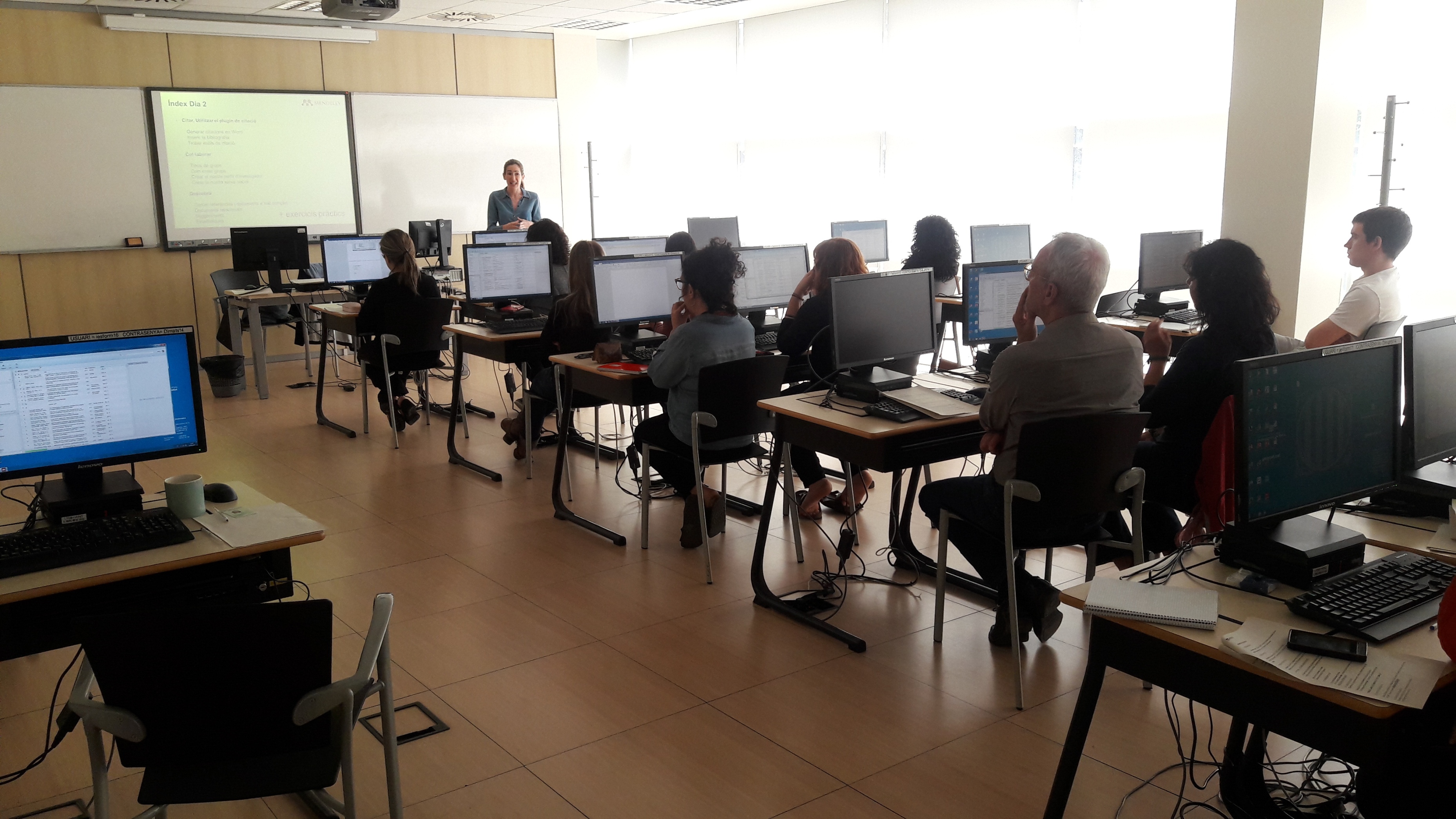
Last week, I had the pleasure of being in Barcelona leading a workshop about Mendeley to the staff at AQuAS. It took place on the 16 and 17 May and a total of 20 people attended among which there were researchers, librarians and administrative staff.

In this workshop, I talked about the features of Mendeley, which is basically a reference manager that allows us to manage a bibliography in an automated way, with the advantage of it being free multiplatform software which operates on the cloud. Thanks to the Web Importer plugin, we can automatically import references from the browser that we habitually use in a very simple way. Thus, together with other ways of adding information, we build up our library, which is not only able to contain references but also pdf documents that we can read directly thanks to the PDF Viewer. What is more, Mendeley extracts metadata from these documents so that we have all this data automatically available as a bibliographic reference.

We had a look at all the possibilities there are of organising our library and recovering information in an intuitive manner. Following that, I explained the features of the quotation plugin, which works both for Word as well as for LibreOffice and serves to facilitate the insertion of quotations in the text processor when we are writing up a project, an article, a book, a report, etc … It also allows us to generate a bibliography automatically, choosing the style of quote we want to use (Vancouver, APA, Harvard, or the specific style of a magazine with specific requirements for the bibliography).

Mendeley desktop

Beyond all these features which are characteristic of many management tools (each with their own peculiarities), I wanted to explore the 2.0 philosophy that surrounds this tool in more depth because the truth is that Mendeley is more than a manager of bibliographic references. Firstly, because its mere existence is the result of collective intelligence as the Mendeley catalogue is made up of references provided by users and it is built by everyone together. Secondly, because it encourages collaboration and teamwork, and thirdly, because Mendeley  also has a social network where we can create our researcher profile and connect with other people.

Mendeley Workshop at AQuAS – May 2017

We thus saw the possibilities of creating groups to share references and documents, which can even contain annotations and highlighted text. This is without doubt a very interesting feature for research groups, although in the free version, this is limited to three users and to private groups.

Regarding the functionality of Mendeley as a social network, we saw the possibility of creating our profile as researchers, adding one’s own publications, which immediately become part of the Mendeley catalogue. This is a fantastic opportunity to improve online reputation by disseminating one’s papers or sharing them with groups to who they might be of interest. From here on, we can connect with other people having similar interests to ours, and see all their activity and news on the ‘feed’.

Lastly, we also saw the possibilities we have of discovering academic information on  Mendeley. Using the references stored in our library, the tool gives us suggestions of other references that could be of interest. It also suggests people to follow and allows us to search for similar documents that we already have.

Apart from giving a detailed explanation of these features of  Mendeley, we practised with exercises on the computer so as to take in all these concepts and the response of the attendees was very positive. In general, the tool seemed to be very intuitive and useful, especially in terms of working on the cloud from any place or device, having a repository of documents available and the ease of creating groups and networking.

Following is the presentation I used in case it can serve as a guide to readers:

Finally, this is to thank the AQuAS, the attendees for their interest and the Communications and Documentations Unit for organising this workshop .

From left to right and top to bottom: Maite Solans, Marta Millaret, Dolores Ruiz Muñoz, Bea Ortega, Emmanuel Giménez, Olga Martínez, Mercè Salvat, Paula Traver, Adela Zambrano, Maria José Tome, Laura Vivó

Post written by Paula Traver (@paulatraver), health sciences information specialist and social media manager.

La Meva Salut (My Health) and eConsulta (eConsultation): deploying the model of remote care in Catalonia

18 maig
Òscar Solans

The management of information is key to the health system from the perspective of a greater integration between patients and professionals of different levels. Shared information, transparency, evaluation and the readjustment of healthcare processes need to be primary lines of action so as to situate the patient at the centre of the different interactions with professionals of different fields.

The expansion of information technologies has created new opportunities which enable people to participate actively in the monitoring of care processes offering a unique opportunity to facilitate communication and improve a patient’s commitment. The new model of care which the Health Plan Catalonia 2016-2020 proposes is aimed at putting more focus on patients and to that effect, tools have been developed that improve the relationship between citizens and the health system making it all easier.

In Catalonia, we have a personal health folder available since 2009, Cat@Salut La Meva Salut (LMS), accessed by using a digital certificate or using a user name and password which are provided by a citizen’s primary healthcare reference centre.

You can read this article published in the magazine Annals de Medicina.

La Meva Salut is a personal digital space for consultation and interaction, which puts relevant health information generated by public healthcare centres in Catalonia at the disposal of citizens, in a safe and confidential way. This information includes such things as the current medication plan, vaccines administered, diagnoses, clinical information, results of tests and complementary examinations

When considering La Meva Salut, we can say that it is a strategic project which promotes the participation and co-responsibility of citizens in prevention and the care of their health, fostering awareness and knowledge related to their pathologies and making it possible for them to participate in the clinical process of care.

La Meva Salut offers cross-cutting and strategic services of the Catalan Department of Health and it also allows different health providers to incorporate more personalised services according to the more specific needs of patients in each entity, which are standardised in La Meva Salut.

In this way, La Meva Salut offers a unique gateway to the virtual health system allowing citizens, who identify themselves only once, to use services of different centres in an integrated and personalised way. Some of these services already in use, are, among others: changing primary care doctors, requesting appointments to see a primary care doctor and for international vaccination services, service of patient communities (allows groups of patients to be created for sharing opinions and dealing with different pathologies with the help of an administrator that is usually a health professional), and the monitoring of patients with chronic pathologies.

This article has recently been published in the magazine New Perspectives in Medical Records.

The most noteworthy cross-cutting services that the Department of Health has made available are:
• Consultation of waiting lists for surgery
• Consultation of pending appointments and tests of any health provider in an integrated way
• Obtainment of organ donor’s card
• Consultation of the Advance Directives document
• Inclusion by the patient of clinical variables in their clinical history
• Secure mail service, eConsulta

The goals of La Meva Salut and the eConsulta service are in line with the Non-Face-to-Face Model of Care of the Catalan Health Department, which aims to guarantee, improve and facilitate the access to the Catalan Health System and to offer options for non-face-to-face care by providing added comfort both to professionals and citizens in the process of care.

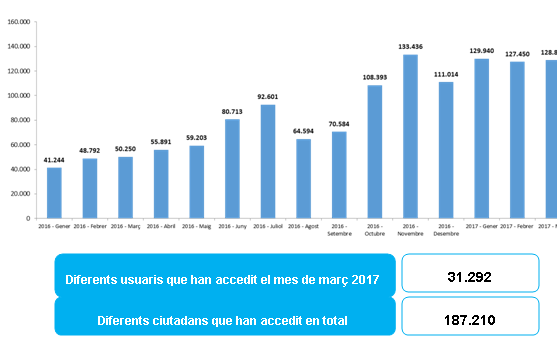
Data for access to La Meva Salut

eConsulta is an asynchronous and bidirectional remote communications tool between a citizen and health professional that complements face-to-face care. The access by citizens is only possible via La Meva Salut, in a safe environment which guarantees confidentiality in communication. Citizens are authenticated each time they enter and the professional can only consult or respond from their work station; in this way, the information is stored in the repositories of the Health Dept. incorporating them into the electronic clinical history of each citizen.

This is a new channel of agile communication to resolve a citizen’s consultations in a virtual manner. Either the professional or the patient can begin a dialogue. The access of citizens to the health system is thus made easier and a solution is provided to a part of healthcare needs without needing to programme face-to-face visits, with the corresponding saving of paperwork and time this means for citizens and professionals.

Data used in eConsultation in Primary Care in Catalonia*

What do these two tools, La Meva Consulta and eConsulta, offer the professional?

We can answer this question briefly and clearly:

  • These tools represent a new model in the relationship with citizens where they are invited to participate in the care process and, moreover, have the possibility of adding information (via La Meva Salut)
  • The new channel of communication generated by these tools allows notifications and documents to be sent in a safe way and, ultimately, to establish a non-face-to-face type of relationship with patients. In models such as Kaiser Permanente in the United States, the number of face-to-face visits has been reduced considerably
  • Tele•    Substitution of face-to-face visits with virtual visits such as the updating of the online medication plan, results of normal tests and the monitoring of some types of pathologies

As happens with any change, the inclusion of technologies in processes requires users to adapt to new uses despite these having clear benefits.

This new way of interaction between patients and the health system has come to stay as happened in other sectors, such as in banking, for example, where processes have been changed significantly.

On the other hand, technologies increase the levels of security of access to information, enabling alerts of pathological results to be generated, providing support tools to clinical decision making, improving the self-management of agendas with the use of eConsulta, substituting low added value tasks with others that require a clinical interpretation and dedication to patients that need more time and knowledge.

The challenge in Catalonia is the deployment of a new model of care that promotes the use of online services, with the objective – once implemented – of fundamentally changing the care process in health centres by empowering patients and achieving a safer medical practice.

With careful development and the joint effort of professionals and citizens, each one in their role, these services can be incorporated  successfully into the organisation of healthcare.

Post written by Òscar Solans (@osolans), functionally in charge of eSalut (eHealth) in the Catalan Health Department.

Socioeconomic inequalities in health: some thoughts on the results of the first analysis done with individual data from the entire Catalan population

11 maig
Guillem López Casasnovas, Anna García-Altés

The  Catalan Health System Observatory has recently published a report on the effects of the crisis on the health of the population. Together with this one, the Observatory has now published three reports and a monographic.

The real novelty about this year’s report is that it is the first time that the socioeconomic inequalities in the state of health and the use of public health services have been analysed according to the socioeconomic level of the population using information of individuals of the entire population of Catalonia. To this end, a classification has been designed which takes both the employment situation and income of the person into consideration, based on the information of the social security benefits provided by the Social Security system and the information of the level of co-payment of medicines of people.

What reflections can we make?

The economic crisis of recent years has had a considerable impact on the social determinants of health, limiting the available income of citizens and affecting their conditions of life, work and housing. However, understanding the mechanisms of how social inequalities impact on the health of the population, so as to know how to combat and neutralise them in the most effective way, in every place and moment in time, is still an unresolved issue of our social policies.

Merely acknowledging the effects of the crisis on inequalities in income on the one hand, and on health on the other, gives no clear clues as to how elements arise and interact. Who could possibly think that the main cause of inequalities in health is a consequence of the effects of cuts in health expenditure in order to balance the drop in tax revenue? Or that the increase inequality would be eliminated by simply restoring financial levels to those of before the crisis?

It is true that some European health systems resisted better than others to the crisis and among the factors that could explain this better response is, according to some authors, public policies in health expenditure. Nevertheless, are we talking about the resilience in levels of expenditure or of systems that have been able to respond better to the crisis by refocusing available resources in each case, having accepted that a higher expenditure in health is not always better and that now, more than ever, it has been necessary to prioritise?

Are we then saying that it is inertia, or the incapacity of adapting to changing economic circumstances which is the decisive element? Is it perhaps not more likely that spending “a fixed amount” when facing a reduction in healthcare resources not only worsens the health of the population but makes it less equal? Are factors of demand decisive if higher unemployment rates, lower expectations of consumption, unpaid commitments made senselessly in the past and anxiety and the loss of self-esteem the important vectors?

To prevent more inequality, and not only a greater loss of health, we need to take on board some hypotheses about the behaviour of demand, resulting from of the elasticities between price and income to be able to identify an increase in inequalities in health as a result of the economic crisis.

This might not occur, however, if the system lost universality, were more selective and better prioritised the new and greater relative needs of certain social groups. Or if in the case where elasticity of income existed, groups with medium/high incomes abandoned the complementary insurances which would in turn affect their health.

We can see that these cannot be unusual assumptions for some, because they would follow the same logic as that of many analysts that link health results to healthcare use (but not to appropriately standardised needs), attributing higher levels of health to the users of the services that combine access to both public and private healthcare services.

Other forms of social protection, such as those that would ensure adequate levels of public health expenditure, avoiding loopholes in health coverage, both legal and of cost of opportunity of access to free services, should be considered in a much more specific way. This can affect freelance and self-employed workers, illegal immigrants and regular employees who avoid absenteeism for fear of losing their jobs, and also those citizens that have lower levels of direct payment to cover the costs of alternative private healthcare services

In fact, in general, a change in inequality of income due to an additional increase in unemployment (in the case of Spain) is not the same reaction mechanism as that of an increase in the incomes of the richest with respect to the poorest (as in the case of Nordic countries), or in contexts in which the loss of employment reduces stress and facilitates “jogging” as some American literature points out.

Admittedly, all this must be put within the context of each situation, given the lifestyles, and not assessing income but wealth (the composition of assets here is important considering the huge drop in the prices of assets, with greater effects in large estates), be it by individual, salary earner or head of family.

What is more, even if the mechanisms that interact in health inequalities of socioeconomic origin can be identified, caution obliges one to limit conclusion to a specific country, time and place, with doubts about whether what is known of the past can inform the corrections needed in the future with guarantees.

Reviewing the literature on the impact of the economic crises on the health of populations, prior to the 2008 crisis, and considering all the previous clarifications and nuances, it all points towards an increase in the death rate as a result of all the causes associated with unemployment, of an increase in suicides, albeit with certain nuances, and of an increase in mental health problems. The people most affected by the effects of the crisis are those belonging to the most vulnerable groups (in particular, people of long term unemployment) and children.

In Spain, some global indicators such as life expectancy or the general death rate do not seem to have been affected by the recent economic crisis although there is evidence of the effects of the crisis on health determinants, changes in some lifestyles and in some cases of access to healthcare services.

Beyond the limitations that the data impose, ceteris paribus, in the future it will be very important to monitor the different waves of analysis that the Observatory might offer, so as to understand what vectors provoke variations in the inequalities observed, and inasmuch as these are relevant in the political approach (as the pioneering work of John Roemer reminds us, not all inequalities are in fact precisely that), and how to approach them based on the understanding of how their fundamental mechanisms work.

This emphasises the importance of how an analysis should generate more efforts from scholars and less of a supposed preoccupation of some groups who make political use of the subject of socioeconomic inequalities and health to set their own objectives which do not always correspond to general interests.

Post written by Anna García-Altés (@annagaal) and Guillem López Casasnovas.


The value of collaboration and participation in the Essencial Conference 2017

4 maig

In the world of health, the involvement of professionals is necessary for a project to be successful and for it to reach health centres. On 21 April this year, the Conference for the implementation of the Essencial Project was held with the slogan “More is not always better: let’s avoid low value practices”.

When talking about the Essencial project, an initiative that identifies clinical practices of low value and promotes recommendations to avoid them, the collaboration between professionals becomes fundamental and even more so with reference to primary care, which is the gateway for patients to the health system.

For a conference devoted to this project, we wanted to have the active participation of health professionals and this did not seem easy in a conference where 750 attendees were expected.

How do we get them all to express themselves? How do we listen to their opinions? How do we use new technologies to meet these challenges?

Glyn Elwin, a doctor, researcher, Professor at the Dartmouth Institute for Health Policy and Clinical Practice in the United States and a real authority on the subject of shared decisions attended the conference.

At a later stage, a round table was held with speakers that spoke about the implementation of the Essencial project from the perspective of the project, of organisation, of primary care teams and of patients. Provision had been made for members of the audience to make their first contributions here in a round of questions open to the floor. Thus far, no difference to what happens in other scientific conferences.

But what was special about the approach of the 2017 Essencial conference?

We wanted to innovate and do things somewhat differently. A monologue was presented showing what the day to day of a primary care outpatient consultancy might be like. With the aim of reflecting on the communication between health professionals and patients, we highlighted the importance of communicative skills when explaining to patients why it might NOT be necessary to carry out a test or receive medication.

Using Kahoot (a tool for online voting) the attendees, in real time, were able to decide on the most important recommendations to include in the Essencial project. In this way, it was possible to vote and then make known the chosen recommendations during the conference in a process in which the professionals were the protagonists.

To end it all, the Prize for the most innovative idea to avoid low value practices in primary care was awarded as part of the conference’s programme. The prize consisted of a trip to this year’s Preventing Overdiagnosis Conference to be held in Canada in August. The winner was Mariam de la Poza of the primary care centre CAP Doctor Carles Ribas in Barcelona with a contribution on the recommendation “More antibiotics is not always the best: let’s avoid side effects, unnecessary costs and antimicrobial resistance”. Excitement right to the very end!

It goes without saying that organising a conference is complex and that there are many professionals taking part who do not always appear in the programmes. An expert team in communication and events organisation is crucial for the success of a conference of this type.

Post written by the Communication’s Unit at the AQuAS.

Women and science: from photography 51 to the scissor graph. Have we progressed much at all?

28 abr.
Dolores Ruiz Muñoz

On 15 December 2015, the General Assembly of the United Nations declared 11 February as the day to celebrate the Dia International Day of Women and Girls in Science. With all the world days that we have to celebrate it is inevitable to ask ourselves whether this day was necessary, or not.

Today, from this platform, we would like to invite you to accompany us on this reflection.

When talking about the subject of discrimination against women in science, the typical question that is asked to highlight this discrimination is usually: How many women scientists do you know? Now, Marie Curie is usually one of the female scientists most mentioned here. It would seem we are doing well.

Let’s take this a little further: what happens if we pose the question about present day scientists? We might find ourselves in a context where we ourselves are women scientists, or we are all surrounded but women scientists, and think that finding several names would not be that difficult.

However, what about beyond our place of work? It seems as if we are now starting to have some difficulty. Outside of the circles where these women scientists operate it seems that people do not know much about women who do science and that the icon of Rosalind Franklin and her fotografia 51 remains relevant more than ever today.

Image of the Photograph 51 of the blog Centpeus of Daniel Close (@nielo40)

One reason to explain the invisibility of women in science is the fact that there were considerable barriers impeding women from gaining access to academic education for many years. Women were relegated in society to carrying out the role of reproduction, and it was almost impossible for them to get an academic education in equal terms to men, and it was, therefore, normal that later they did not stand out as scientists or let alone managed to become one.

Of course, even so, there have been women such as Nettie Maria Stevens, who have been able to leave their mark. This said, always from a position in the background of the history of science, and without receiving the clear acknowledgment that men in science have in their lifetimes.

And now what? Is the excuse of there being an academic ‘gap’ still true? This reasoning is no longer valid when we see that there are more women than men studying science degrees. Why are women today still absent in positions of responsibility in science? What is happening along the way? How is it possible that in Catalonia there are more women than men studying science but yet only 2 out of the 42 research centres have women as General Managers?

Image of the web Women in Science of the UNESCO

The situation today is known as the scissor graph. Women are left behind along the way in science. Even though the presence of women and men in recent years has tended to converge a little, the difference is still very visible and huge, especially in positions of greatest responsibility. This is a clear reflection of the glass ceiling which acts as an invisible barrier and which women come up against in the majority of fields in the labour market in their quest to attain positions of responsibility.

The Scissor graph (Mujeres y ciencia, CSIC)

The fact, however, that women have less and less presence in science goes beyond social injustice, unless of course there are some at this stage who still believe this happens because they are less capable, and not because of the social obstacles they encounter along the way which go far beyond the wage gap, a fact that has been more than demonstrated. All this signifies a clear loss of talent for science and for society; in short, for everyone.

Image of the report Women, gender, inequality and development

Source: Carme Poveda, Observatory on Women in Business and Economy, Chamber of Commerce of Barcelona

One could think that this may not be happening in the health sciences. In fact, it is one of the most feminised scientific sectors that we have. But is this so? Just thinking about what jobs are occupied by women in the health sciences makes it clear that this sector is not without this problem of, let’s call it defeminisation of power. In fact, the health sciences is one of the areas where the gap between women and men is very much a reality.

Just yesterday, the Ministry of Health launched a campaign aimed at the public in general to promote vaccination and immediately, a strong controversy was generated in the communications media. In the video it stands out that the only health professional in uniform who does not represent their reality is the nurse that appears with a cap and miniskirt. What happened? A possible explanation might be that the images were obtained from a free photo bank that clearly does not reflect the reality of our present day context.

For now, we will set aside writing about quotas according to sex, a concept that is never without controversy nor leaves anyone indifferent. But for the moment it seems that the International Day of Women and Children in Science may be necessary after all and especially of the Girl in Science as well because they are the scientists of the future who we hope will be able to close the gap in the pair of scissors.

We end this note with a very simple question: is there still someone who believes that we have already achieved parity?

Would you like to read more about the subject? Esther Vizcaino published Gender equality, we all win.

Post written by Dolores Ruiz-Muñoz.

Double health insurance cover

20 abr.
Lluís Bohígas

A double health insurance cover occurs when a person that has the right to public healthcare also has a private health insurance which allows them to receive private health services. Anyone can go to private health services if they pay from their own pocket but it is only defined as a double insurance cover when one has taken out a specific private health insurance. The population has a right to healthcare because they have contributed to social security – or they may find themselves in any one of the contexts that gives them the right to access – and this covers almost the entire population but not all; there is a segment that does not have the right to public healthcare and only has private cover if they purchase an insurance.

In the 80s of last century, the self-employed were not covered by social security and the majority had a private insurance. At that time, in Catalonia the Quinta de Salut l’Aliança was very popular. Ernest Lluch, the Minister of Health, made it compulsory for the social security to offer healthcare to the self-employed and, all of a sudden, many of those insured by l’Aliança found themselves having a double insurance. Some left l’Aliança but others stayed on. The public healthcare system and the majority of insurance companies only cover a basic part of dental healthcare. If you want a wider dental healthcare cover you need to purchase a specific insurance. This insurance is not considered to be double cover because it does not cover the services which are covered by the public insurance.

In 2014, the Generalitat recorded 2.032.911 people with a health insurance in Catalonia but not all had double cover. State civil servants and their families can choose to be attended by the autonomous community or by a private insurance and 80%, 160.815, choose private healthcare and so they do not have double cover. The difference between the total number of insured and the civil servants that have chosen a private insurance are 1.872.096 people; that is, 24,9% of the population has double cover.

Why do one out of every four Catalans buy a private health insurance, despite having the right to public healthcare?

There are several reasons for this. On the one hand, a private insurance gives them access to private health centres and to independent doctors who are sometimes doctors that work in a public centre in the morning and a private centre in the afternoon. In the afternoon, one can choose the doctor that it wasn’t possible to choose in the morning. Another reason is waiting times. Private centres and independent doctors have shorter waiting times than in public centres. And another frequent argument is that private doctors spend more time on each patient and that private centres provide better attention to patients.

These are the reasons that have usually been given to justify a person spending more than 700€ a year on average on a private insurance to benefit from services they in fact have access to in the public system.

But there are also other arguments. One is to see an insurance as a salary paid in kind and another is the response people have to cuts in public health. Some companies give their employees a private insurance as a complement to their salaries, partly for tax reasons but also as an incentive for some employees and for managers. 31,6% of people insured in Catalonia in 2014 were insured by their companies.

During the period 2009-2013, while cuts were being made in public health, health insurance companies grew in Catalonia and in Spain as a whole. During this period the insurance companies raised their rates quite considerably but despite this rise, and despite a decrease in the purchasing power of families, health insurance policies didn´t so much as become cheaper but rather increased in price.

More women than men have a double cover, are between 45 and 64, have a university qualification and belong to the upper social class according to the Generalitat’s health survey. Notwithstanding, 11% are older than 75 and 10% have no higher education qualifications or only have primary education and 11,5% belong to the lower social class.

The Generalitat’s statistics tell us which services are paid for privately in hospitals. Thus, for example, 31% of births are private and a large part of surgery is private: 35% of elective surgery and 25,8% of major outpatient surgery. 26% of hospital admissions and 21% of emergencies are also private.

Some of these private services in hospitals are paid for directly by the user but the greater part is financed by health insurances. Statistics only provide us with information of hospital services but it is probable that the private part is even greater in visits to doctors and other services.

Proposals have been made in the past to offer tax incentives to people purchasing a private insurance who waive their right to have access to public services. The aim would be to reduce waiting lists in the public system. I do not think that this would work because the majority of people that have a double cover do not relinquish access to public services but rather want to be able to choose between receiving private or public care.

Double cover is a stable data in the Catalan health system. It already existed when INSALUD managed public health and continues to exist. The number of insured may vary in time but the phenomenon is constant: an important part of the population, those who can afford it, prefer being able to choose between public or private healthcare.

Nowadays, one needs the other: if there were no private healthcare, the public system would collapse; if there was not a public system, the private sector would be incapable of providing the care it does at the price it does. The usual discourse is an ideological criticism of the other, the public system criticises the private and vice versa. I think it would be better for Catalan health as a whole to reach an agreement.

Post written by Lluís Bohígas (@bohigasl), economist.

An indicator for a more fairly funded primary care

7 abr.
Cristina Colls

The Catalan government has recently expressed its willingness to increase the importance ascribed to the socio-economic level of regions when calculating the budget for each primary care team.

This fact invites us to ask ourselves a question: why is it important to bear in mind the economic inequality in the funding of primary care teams?

The influence of socio-economic inequalities on the health of the population is a fact that has been widely studied since the 60s of last century and of which there is evidence both in the international and national context.

We know that people with a lower socio-economic status have more probability of dying before the age of 65 and that they show more physical and mental health problems during their lives. It is logical, therefore, to conclude that they need to make a more intensive use of health resources.

We also know that social inequality is a recipe for an unbalanced distribution of the population in a territory leading to an accumulation of the most serious social problems in specific municipalities or neighbourhoods that have a greater need for social and healthcare than other regions.

It is in this context that more needs to be done where there is greater necessity if equity in the allocation of resources is to be guaranteed. But where should more resources be provided?

The professionals of primary care teams are those closest to the citizen and therefore, have a comprehensive view of the health needs of the population in their territory.

In addition, the primary environment is the reference in prevention activities, in controlling chronic diseases and from which a large part of community activity is coordinated. For all these reasons, the provision for primary care teams must bear in mind the socio-economic conditions of the population they serve.

How can we find out what the socio-economic situation is of territories in which a primary care primary care team works? Many variables exist which give us indirect information (income, occupation, education, housing conditions, among others) but if we are looking for only one classification we need a unique index that synthesises all these aspects; it is what we call a deprivation index.

Deprivation indexes have been widely used as a tool in social policies because they allow an objective prioritisation to be established in small regions, ranging from a low to high socio-economic status. The concept of “deprivation” refers to unmet needs as a result of a lack of resources, not exclusively economic.

All indexes of deprivation are built by adding up the results of different socio-economic status indicators. The weight given to each indicator could be theoretical, that is, based on what a particular indicator is thought to contribute to the phenomenon of deprivation; or otherwise, the result of a multivariate statistical model.

To be able to classify the basic areas of health (reference territories of a primary care team) according to their socio-economic level, AQuAS has built an index called a composite socio-economic status indicator which synthesises seven indicators: population exempt from drug co-payment, population with incomes lower than 18,000€, population with incomes higher than 100,000€, population with manual jobs, population with insufficient educational attainment, premature deaths or potentially avoidable hospitalisations.

The statistical methodology used for calculating this indicator has been that of principal component analysis. The application of this methodology has allowed us to obtain a socio-economic status map of Catalonia.

The application of the composite socio-economic status indicator has been done within the framework of the redefinition of the model of allocation of resources for primary care and has enabled the identification of those primary care teams which will increase their budgets in coming years.

This new model of allocating resources for primary care is an experience in applying scientific evidence to political action.

Post written by Cristina Colls.

PERIS and people: research assessment by AQuAS

30 març
Núria Radó, Paula Adam

The first call of the Strategic Plan for Research and Innovation in Health 2016-2020 (PERIS in Catalan) for funding research and innovation, still pending resolution, prioritizes programmes which foster talent and employability and programmes of excellence in knowledge.

Accordingly, four actions have been initiated by competitive tendering to finance:

  1. The inclusion of scientists and technicians in national research groups
  2. The increase of nursing professionals in order to free up some of their workday so they can do research work
  3. Research projects aimed at primary care
  4. Major programmes focusing on four different subjects: personalised medicine, regenerative medicine, cooperative independent clinical research and cohort studies.

How are the PERIS calls assessed to determine which applications deserve funding?

The criteria for assessment are defined by the order of the requirements, forgive the repetition, and the requirements of each call. This is the instrument that sets out the rules to determine which projects or people are susceptible to receiving finance. Some will always be discarded and, depending on the specific criteria and resources available, others chosen which are considered worthy of funding.

Deciding which criteria to use and how they are assessed/rated/applied is a powerful science policymaking tool to design the research system it aspires to be: excellence, the subject, the discipline, the age of the applicants, the territoriality of the organisations or foreseeable impact are different variables to bear in mind when deciding who is worthy of being able to develop their research.

The Research Team at AQuAS has been commissioned to manage this process of assessment. This is why we accompanied the General Manager for Research and Innovation of the Health Department, Dr Andreu, in the public presentations he gave in different health research institutions linked to hospitals. We were impressed by the attendance at these informative sessions.

The assessment has been done by a panel of experts involving a total of 42 research professionals throughout Catalonia and Spain. It has required intense activity given that more than 490 applications of a very high level were received.

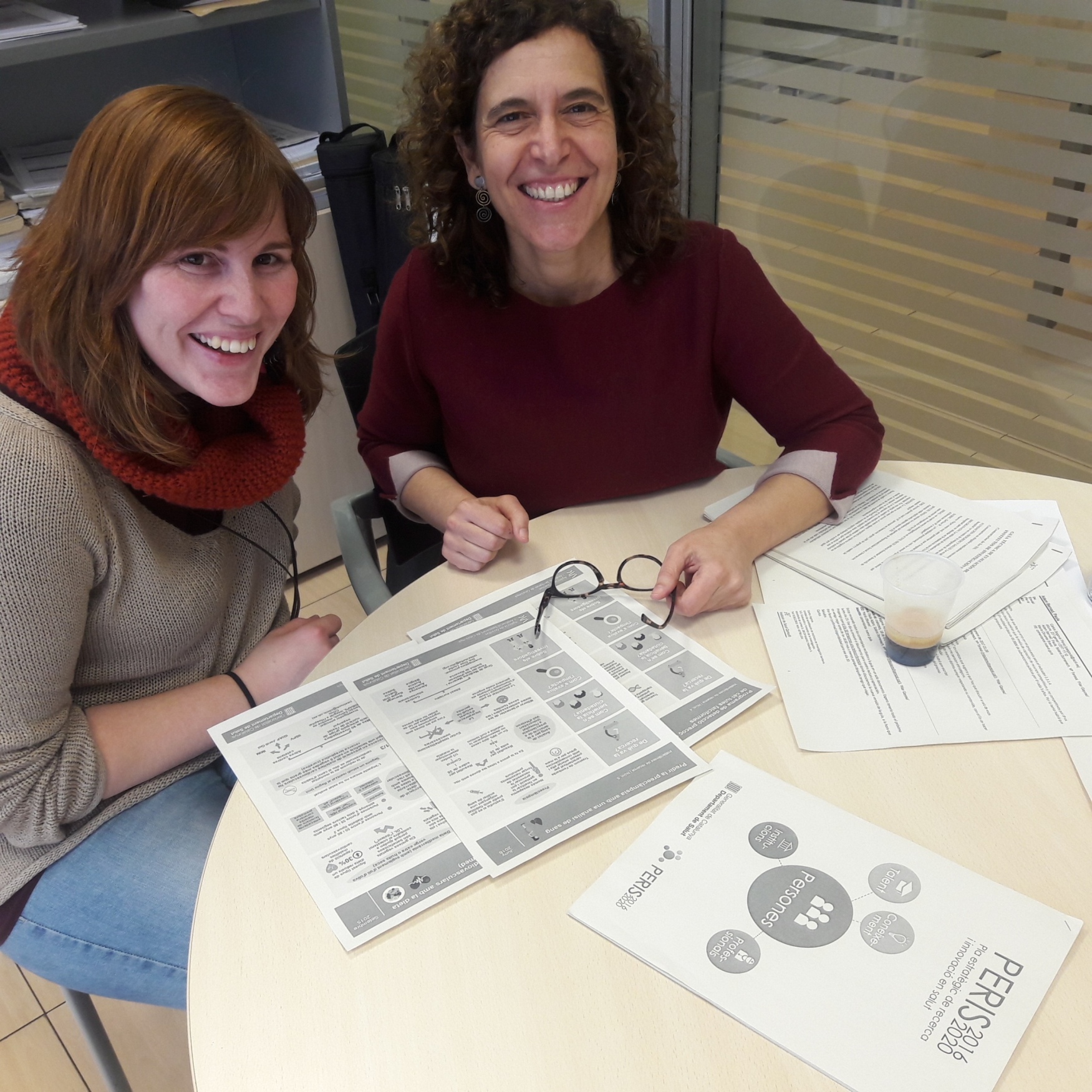
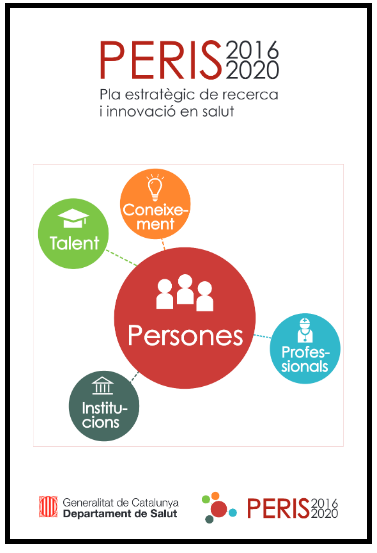
Looking back after having completed the assessment of the this first call, we feel, more than ever, that we made the right decision by putting people in the centre of the PERIS logo, large and circled by a prominent colour.

It is not only the plan itself which has been designed like this, to promote research with people at its centre, involving and motivating a great variety of professional profiles. PERIS has been a catalyst for mobilisation in the health system and in health research, even before the starting gun was fired, as seen in the packed informative presentations and in the involvement of the participants in the assessment panels, working deep into the night.

As can be expected, getting the staff at the Agency for Health Quality and Assessment of Catalonia (AQuAS) involved, has not been difficult either. We are eager to contribute to this strategic project by using a key tool for selection, accountability, continuous analysis and improvement of opportunities which is what assessment is all about.

Long life to PERIS!

Post written by Núria Radó (@nuriarado) and Paula Adam (@PaulaAdam4).

***Full information available here:

How long will I live? About forecasters

23 març
Joan MV Pons

The robustness and solidity of a science (which is why informally we sometimes talk about “hard sciences” and “soft sciences”) depends on its capacity to predict.

A science does not only need to explain what is happening in a very plausible way but also needs to be able to predict what will happen, with as great precision as possible.

In the same way that econometric models (mathematical, full of formulae and equations) want to demonstrate, in numbers, how closely they approximate to reality and therefore how by modifying initial parameters a calculation will produce a result that we would expect, so-called “life expectancy calculators” or “death clocks” also abound these days. You can find quite a few on the internet, some more serious while others more entertaining.

Asking oneself how much longer we have to live is in any case a good question.

We know a lot about the factors that have an influence on disease and which bring death closer to us and we also know how progress (it is not clear in what, as it is not exclusively medical) has increased our life expectancy (which should not be confused with longevity even though this is often the case), at least in developed countries.

We also know that health professionals despite their experience, are not as accurate in predicting as are the predictive statistical models that can include a multiplicity of variables. A comment in the BMJ recently spoke about these prognostic factors and life expectancy calculators. I have included several, of the more serious ones, in the bibliography.

Forgive me for taking the liberty for doing so, but today I will share with you, with irony, a cruise I took on the internet while searching for some of these prognostic tools that want to predict how long we have left to live in this world.

Abaris is one of these mathematical prognostic tools, developed by “professors” at the University of Pennsylvania with the support of The Times and The Wall Street Journal and which seems to be one of the most accurate. It factors in sex (it might be more accurate to refer to “gender” but “sex” is the nomenclature used in the application), weight and height (beware! You need to choose the metric system because if not the information given is in pounds and inches), to get to the body mass index, a well-known prognostic factor with a U-shaped curve in relation to the probability of dying, level of education, marital status (married, widow or widower, divorced, never married, separated – I am unaware of the difference between the third and last), if you are already retired, level of income (in dollars), the amount of exercise you do, what your general health is like, whether you have diabetes and what vices you have in general (alcohol, tobacco).

You choose from all this presented with colourful computer graphics and then, if you press the button, it performs all the calculations for you but if you want the results you have to give them your email address where they will send them. Someone might be inclined to do this but at this stage, I’m not giving anything away (and less on the network; they already take without asking).


Let’s move on to another forecaster sponsored by an insurance company (what more could you ask for?). The nice thing about Lifespan calculator is that as you answer questions it starts showing you your life expectancy and so you can see how it increases or decreases depending on what you answer. However, it does not ask you about your marital status or your level of income or studies but it does ask you about your family history, blood pressure, level of stress, the exercise you do, diet, whether you use a seat belt or not while in the car and toxic habits, among other details. On this one you also have to convert height into feet and inches.

The social security in the United States also offers a calculator but it is a lot more impersonal and does not take risk factors or protective factors into consideration. It only asks you for your sex and date of birth and provides you with your life expectancy according to your current age and your birth cohort. So, as I am 58 and 8 months, I can expect to live 24.4 years longer until I reach 83.1 as estimated for my cohort. It must be said that this calculator also estimates your age of retirement.

Another forecaster, a little less sophisticated created by a physician on his own initiative, Living to 100, includes a lot more elements than the others: nutrition, social relationships, level of anxiety, sleep and common habits but also includes the intake of coffee and tea, air pollution, exercise and family history. Unfortunately, it also sends you the results via email.

There is yet another way of looking for forecasters of this type: typing in ”death clock”, never better said.

There are some very entertaining ones with their humoristic screens (death and its scythe waiting for you at the tomb which is already prepared). The The Death Clock asks you for your date of birth, sex, height and weight (in centimetres and kilos in this case), your country of residence, whether you smoke, how you see yourself (pessimist, optimist, neutral, suicidal) and how much alcohol you drink. This “clock” calculates quickly and accurately and it even goes so far as to tell you the day on which you will die (comically foreseen derived from the fact that the date is engraved on the tombstone). However, it seems too simple.

Finally, whilst I am certain that more can be found, I have found another. This other, called The Death Clock, is very similar to the one before and also contains gloomy images to make it clear that we are entering very dark terrain. This forecaster also asks you for your sex and date of birth and like the others it asks you to work out your body mass index. Instead of alcohol, it asks you about tobacco (smoker or not, outright, no subtleties) and in terms of your state of mind it considers being normal, pessimistic and optimistic (like in the previous one), but it adds sadistic which is very surprising. It also asks you for your weight and height to calculate your body mass index. If all turns out well, it also tells you the day, month and year in which you will die and within seconds shows you the countdown.

It is precisely this calculator which, very elegantly, I having put pessimist (by nature) said: I’m sorry but your time has expired. Have a nice day.

Post written by Joan MV Pons.