Los temas que se comentan en el blog AQuAS a menudo incorporan enlaces a informes, artículos, webs y libros. Tenemos tendencia a citar artículos e informes recientes.
El blog es un espacio desde donde presentar a grandes rasgos ideas y temas que después el lector puede profundizar según sus intereses -profesionales y personales-, tiempo disponible y entusiasmo.
Hoy presentamos una recopilación de los libros que se han comentado en los últimos 12 meses en este blog.
Els temes que es comenten en el blog AQuAS sovint incorporen enllaços a informes, articles, webs i llibres. Tenim tendència a citar articles i informes recents.
El blog és un espai des d’on presentar a grans trets idees i temes que després el lector pot aprofundir segons els seus interessos -professionals i personals-, temps disponible i entusiasme.
Avui presentem un recull dels llibres dels quals n’hem dit alguna cosa en els darrers 12 mesos.
The traditional system in assessing the quality of a scientific publication (a journal article, for example) has fundamentally been based on the calculation of the citations it generates. In an article published in Science (1995), Eugene Garfield (1925 – 2017) proposed a citation index as a system that would help authors find articles on a subject. It was a great innovation without doubt. Later, with the creation of the Institute for Scientific Information (today the Web of Science) and the Journal Citation Reports, this system became very prominent and centred its work on the assessment of journals because it helped authors decide in which journal to publish (based on the impact factor calculated for each one).It is a system that has been criticised from the humanities and social sciences and also because it does not focus on the article itself but instead gives the reference value to the journal in which it is published (and presupposes that an article should “inherit” the journal’s impact factor).
From 2010, people started talking about altmetrics, a set of indicators (for example, how often an article is shared, its re-dissemination, the comments it has generated, mentions (likes), etc…) that measure the presence of a publication in social and academic networks, which complement citation indexes considerably. Altmetrics, therefore, assess the repercussion of an article itself and not that of a journal as a whole (the way impact factors do, for example).
At present, several scientific editors have taken this information into consideration. One of the first examples was the journal PLOS, followed by Nature and others. Its use has also spread to data bases (e.g. Scopus) and to academic networks (e.g. ResearchGate). The altmetric data that accompany an article tend to have the sections that appear in figures 1 and 2, even though there can be small differences depending on the programme used (ImpactStory, PLUM, Article Level Metrics, altimetrics.com, etc…).
Figure 1.
Figure 1. Example of the altmetrics of an article in PLOS
And so we can see that it is not only the statistics of presence in social networks that are included (mentions, blogs, etc…) but also the use of data (visualisations and downloads) as well as the citations of an article (in Scopus, CrossRef, PubMed, GoogleScholar, etc…). We are talking about very complete quantitative information for the reader and also for the author of the article.
Figure 2.Example of the altmetrics of an article in Nature
In the case of Nature (figure 2) there is also a graphic representation in the form of a circle or “ring” in which each colour is a type of channel (twitter, blogs, facebook, wikipedia, etc…), where a contextualised percentage is given in relation to articles which are similar in age and it also indicates its precise presence in the general media (“news articles”) and scientific blogs.
Let us do a quick assessment of altmetrics. Their main strengths lie in the fact that they measure the impact of publications beyond academic circles, strictly speaking, that they can be applied to all types of documents (be it an article, a book or a doctoral thesis), that the results are immediate (there is no need to wait for the annual value of the impactor factor) and that they focus on the article (and not on the journal).
In terms of their weak points, it should be said that the indicators need to be collected very quickly (they are very volatile), that it is difficult to compare the indicators between each other (which is of more value, a retweet or a “like”?), that there is great difficulty in the normalisation and homogeneity when collecting data (which does not occur in the case of citations) and that different measuring tools produce different results (e.g. ImpactStory or Altmetrics).
Altmetrics, therefore, help to measure the impact of a specific publication in social networks. This is why we should define them as complementary metrics rather than alternative metrics. In contrast to the traditional impact factor – which is applied to a journal – altmetrics are centred on the article and this is a significant innovation. Despite them having some weak points they are in a consolidation phase and have long-term potential.
From a researcher’s perspective, it is clear that at present publishing an article in a journal is not enough and one needs to be fully involved in its dissemination in social networks (especially Twitter, blogs, etc…) and also in academic networks (Researchgate, Mendeley, etc…) so as to give visibility to the contents published. In this new scenario, altmetrics are fundamental because they are able to measure this impact in networks and offer authors (and readers) a general view of the dissemination of their publications.
Post by Ernest Abadal, Faculty of Library and Information Science, University of Barcelona.
El sistema tradicional de evaluación de la calidad de una publicación científica (un artículo de revista, por ejemplo) se ha basado, fundamentalmente, en el recuento de las citas que ha generado. Fue Eugene Garfield (1925-2017), en un artículo publicado en Science (1955), quien propuso los índices de citas como un sistema que serviría a los autores para encontrar artículos de una temática. Fue, sin duda, una gran innovación. Posteriormente, con la creación del Institut for Scientific Information (actual Web of Science) y los Journal Citation Reports este sistema cogío mucho relieve y se orientó hacia la evaluación de las revistas ya que servía a los autores para decidir en qué revista publicar (a partir del factor de impacto que se calculaba para cada una de ellas). Ha sido un sistema criticado desde las humanidades y las ciencias sociales, además de por el hecho que no se centra en el artículo sinó que da el valor de referencia a la revista donde se publica (y da por hecho que un artículo tiene que «heredar» el factor de impacto de la revista).
A partir de 2010 se empieza a hablar de las altmétricas, un conjunto de indicadores (como el número de comparticiones, de redifusiones de un artículo, los comentarios que ha generado, las menciones (likes), etc.) que miden la presencia de una publicación en redes sociales y académicas y que complementan de forma notable los índices de citas. Las altmétricas, por otro lado, valoran el eco a nivel del artículo y no de una revista en su conjunto (como hace el factor de impacto, por ejemplo).
Actualmente son varios los editores científicos que han incorporado esta información. Uno de los primeros ejemplos fue la revista PLOS, y luego la siguieron Nature y otras. También se ha extendido su uso en bases de datos (p.e. Scopus) y en redes académicas (p.e. ResearchGate). Los datos altmétricos que acompañan un artículo suelen tener los apartados que aparecen en las figuras 1 y 2, a pesar que pueda haber pequeñas diferencias en función del programa que se haya utilizado (ImpactStory, PLUM, Article Level Metrics, altmetrics.com, etc.).
Figura 1.Ejemplo de altmétricas de un artículo en PLOS
De este modo, vemos que se incluyen no sólo las estadísticas de presencia en redes sociales (menciones, blogs, etc.) sinó que también constan los datos de uso (visualizaciones y descargas) y también las citas que ha tenido el artículo (en Scopus, CrossRef, PubMed, GoogleScholar, etc.). Se trata de una información cuantitativa muy completa tanto para el lector como para el autor de un artículo.
Figura 2.Ejemplo de altmétricas de un artículo en Nature
En el caso de Nature (figura 2) se muestra también una representación gráfica en forma de rosco en la que cada color es un tipo de canal (twitter, blogs, facebook, wikipedia, etc.), se ofrece una contextualización porcentual en relación a artículos de una antigüedad similar y también se indica cuál es la presencia concreta en medios de comunicación generales (“news articles”) y blogs científicos.
Hagamos una valoración rápida de las altmétricas. Como principales puntos fuertes hay que destacar que miden el impacto de las publicaciones más allá de los ámbitos académicos en sentido estricto, que se pueden aplicar a todo tipo de documentos (sea artículo, libro o tesis doctoral), que los resultados son inmediatos (no hace falta esperar el valor anual del factor de impacto) y que se centran en el artículo (y no en la revista).
En cuanto a los puntos débiles, hay que decir que los indicadores deben recogerse de una forma muy rápida (son muy volátiles), que los indicadores son difíciles de comparar entre si (¿qué vale más, un retweet o un “me gusta”?), que hay muchas dificultades en la normalización y homegeneidad en la recogida de datos (hecho que no ocurre en el caso de las citas) y que normalmente diferentes herramientas de medida ofrecen resultados diferentes (p.e. ImpactStory o Altmetrics).
Las altmétricas, en definitiva, ayudan a medir el impacto de una publicación en concreto en las redes sociales. Es por este motivo que más que métricas alternativas, tenemos que calificarlas como métricas complementarias. Respecto al tradicional factor de impacto –que se aplica en una revista— las altmétricas centran su foco en el artículo y esto es una innovación importante. Aunque tengan algunos puntos débiles, están en fase de consolidación y tendrán recorrido.
Desde el punto de vista del investigador, está claro que actualmente no es suficiente con publicar un artículo en una revista, sinó que hay que implicarse a fondo en su difusión en las redes sociales (en especial, Twitter, blogs, etc.) y también en las redes académicas (Researchgate, Mendeley, etc.) para dar visibilidad a los contendios publicados. En este nuevo escenario, las altmétricas son fundamentales porque tienen la capacidad de medir este impacto en las redes y ofrecer a los autores (y también a los lectores) una visión general sobre la difusión de sus publicaciones.
Entrada elaborada por Ernest Abadal, facultad de Biblioteconomía y Documentación de la Universidad de Barcelona.
El sistema tradicional d’avaluació de la qualitat d’una publicació científica (un article de revista, per exemple) s’ha basat, fonamentalment, en el recompte de les citacions que ha generat. Va ser Eugene Garfield (1925-2017), en un article publicat a Science (1955), qui va proposar els índexs de citacions com un sistema que serviria per ajudar els autors a trobar articles d’una temàtica. Va ser, sens dubte, una gran innovació. Posteriorment, amb la creació de l’Institut for Scientific Information (actual Web of Science) i els Journal Citation Reports aquest sistema va agafar molt de relleu i es va orientar cap a l’avaluació de les revistes ja que servia als autors per decidir en quina revista publicar (a partir del factor d’impacte que es calculava per a cada una d’elles). Ha estat un sistema criticat des de les humanitats i ciències socials i també pel fet que no se centra en l’article sinó que dona el valor de referència a la revista en la qual es publica (i dona per suposat que un article ha d’”heretar” el factor d’impacte de la revista).
A partir de 2010 es comença a parlar de les altmètriques, d’un conjunt d’indicadors (com ara el nombre de comparticions, de redifusions d’un article, els comentaris que ha generat, les mencions (likes), etc.) que mesuren la presència d’una publicació a les xarxes socials i acadèmiques i complementen de manera notable els índexs de citacions. Les altmètriques, per altra banda, valoren el ressò a nivell de l’article i no pas d’una revista en el seu conjunt (com fa el factor d’impacte, per exemple).
Actualment són diversos els editors científics que han incorporat aquesta informació. Un dels primers exemples va ser la revista PLOS, i després la van seguir Nature i altres. També s’ha estès el seu ús a bases de dades (p.e. Scopus) i a xarxes acadèmiques (p.e. ResearchGate). Les dades altmètriques que acompanyen un article solen tenir els apartats que apareixen en les figures 1 i 2, tot i que hi pugui haver petites diferències en funció del programa que s’hagi utilitzat (ImpactStory, PLUM, Article Level Metrics, altmetrics.com, etc.).
Figura 1.Exemple d’altmètriques d’un article a PLOS
Així doncs, veiem que s’inclouen no només les estadístiques de presència a les xarxes socials (mencions, blogs, etc.) sinó que també hi consten les dades d’ús (visualitzacions i descàrregues) així com les citacions que ha tingut l’article (a Scopus, CrossRef, PubMed, GoogleScholar, etc.). Es tracta d’una informació quantitativa molt completa tant per al lector com també per a l’autor de l’article.
Figura 2.Exemple d’altmètriques d’un article a Nature
En el cas de Nature (figura 2) hi consta també una representació gràfica en forma de cercle o de “rosco” en la qual cada color és un tipus de canal (twitter, blogs, facebook, viquipèdia, etc.), s’ofereix una contextualització percentual en relació a articles d’una antiguitat similar i també s’indica quina és la presència concreta a mitjans de comunicació generals (“news articles”) i blogs científics.
Fem una valoració ràpida de les altmètriques. Com a principals punts forts cal destacar que mesuren l’impacte de les publicacions més enllà dels àmbits acadèmics en sentit estricte, que es poden aplicar a tot tipus de document (sigui article, llibre o tesi doctoral), que els resultats són immediats (no cal esperar el valor anual del factor d’impacte) i que se centren en l’article (i no pas en la revista).
Pel que fa als punts febles, cal dir que els indicadors s’han de recollir de manera molt ràpida (són molt volàtils), que els indicadors són difícils de comparar entre sí (què val més un retweet o un “m’agrada”?), que hi ha moltes dificultats en la normalització i homogeneïtat en la recollida de dades (cosa que no passa en el cas de les citacions) i que normalment diferents eines de mesura ofereixen resultats diferents (p.e. ImpactStory o Altmetrics).
Les altmètriques, doncs, ajuden a mesurar l’impacte d’una publicació en concret a les xarxes socials. És per això que més que mètriques alternatives, les hem de qualificar de mètriques complementàries. Respecte el tradicional factor d’impacte –que s’aplica a una revista— les altmètriques centren el seu focus en l’article i això és una important innovació. Malgrat que tenen alguns punts febles, estan en fase de consolidació i tindran recorregut.
Des del punt de vista de l’investigador, està clar que actualment no n’hi ha prou amb publicar un article en una revista, sinó que cal implicar-se a fons en la seva difusió a les xarxes socials (en especial, Twitter, blogs, etc.) i també a les xarxes acadèmiques (Researchgate, Mendeley, etc.) per tal de donar visibilitat als continguts publicats. En aquest nou escenari, les altmètriques són fonamentals perquè tenen la capacitat de mesurar aquest impacte a les xarxes i oferir als autors (i també als lectors) una visió general sobre la difusió de les seves publicacions.
Entrada elaborada per Ernest Abadal, facultat de Biblioteconomia i Documentació de la Universitat de Barcelona.
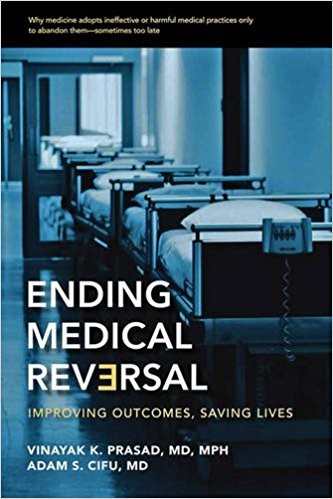
Vinay Prasad (University of Oregon) and Adam Cifu (University of Chicago), authors of Ending Medical Reversal: Improving Outcomes, Saving Lives (John Hopkins University Press, 2015), highlight 146 clinical practices that should be stopped because it has been shown that they do not achieve that which they set out to do. The list of these practices affects the whole range of health activities, but on reading more closely, there are four specialities that stand out: cardiology, gynaecology, orthopaedics and family medicine.
It is for this reason that the Clinical Management Section of the Catalan Society of Health Management has organised, by agreement with the Essencial Project of the AQuAS, a debate with one of the authors of the book, Vinay Prasad, and representatives of the 4 specialities mentioned previously. It is to be held at their Annual Meeting next 18 May with the participation of: Xavier Viñolas, president of the Catalan Society of Cardiology, Juan José Espinós, gynaecologist at the Hospital Sant Pau, Joan Miquel, orthopaedist at the Hospital of Igualada and Marta Expósito of the Catalan Society of Family and Community Medicine.
Vinay Prasad
The aim of the debate, which will be moderated by Sandra García Armesto, director of the Aragonese Institute of Health Sciences (IACS), is not only to get to know the work of Vinay Prasad firsthand but also to know what the related specialists think about these practices and what their impact is in our environment, in so many aspects different to that of the United States.
On the other hand, Prasad and Cifu propose in their book to modify the training programmes in medical faculties in a significant way, with the aim of training up new doctors who are more demanding of scientific rigour, more critical of low-value practices, more sensitive to the needs of patients and more oriented towards the assessment of results. The proposed formula is very simple: clinical sciences should be a priority, while basic sciences (as we understand them today) should be complementary.
It is not about studying models first to later verify them (present system), but rather doing it the other way round: based on clinical learning, theories should be reviewed (or accepted).
Given the importance of the proposal, we thought it appropriate to organise a second debate, within the framework of the meeting itself, moderated by Xavier Bayona, with the participation of three academic authorities in the training of doctors: Francesc Cardellach (University of Barcelona), Ramon Pujol (University of Vic) and Milagros García Barbero, president of the Spanish Society of Medical Education, and of course, logically, inviting Vinay Prasad to join in.
The programme for the Meeting is attached, with the clear aim of encouraging all the readers of this blog to register for it because the opportunity to listen to and make questions to Vinay Prasad, and all the invited speakers, should not be missed.
Post by Jordi Varela, president of the Clinical Management Section of the Catalan Society of Health Management.
Vinay Prasad (Universidad de Oregon) y Adam Cifu (Universidad de Chicago), autores de Ending Medical Reversal: Improving Outcomes, Saving Lives (Johns Hopkins University Press, 2015), señalan 146 prácticas clínicas que se deberían dejar de hacer porque se ha demostrado que no consiguen aquello que prometían. La lista de estas prácticas afecta todo el abanico de la actividad sanitaria pero haciendo una lectura detallada se observa que hay cuatro especialidades significadas: cardiología, ginecología, ortopedia y medicina familiar.
El debate, que contará con la moderación de Sandra García Armesto, directora del Instituto Aragonés de Ciencias de la Salud, tiene por objeto, no sólo conocer de primera mano el trabajo de Vinay Prasad, sinó también saber qué pensamos sobre estas prácticas los especialistas relacionados y cuál es el impacto en nuestro entorno, en tantos aspectos diferenciado de los Estados Unidos.
Por otro lado, Prasad y Cifu, en el libro, hacen una propuesta para modificar de forma significativa los programas formativos de las facultades de medicina, con la finalidad de formar nuevos médicos más exigentes con el rigor científico, más críticos con las prácticas de escaso valor, más sensibles a las necesidades de los pacientes y más orientados a la evaluación de los resultados. La fórmula propuesta es muy sencilla: las ciencias clínicas deberían de ser la prioridad, mientras que las básicas (como las entendemos hoy) deberían ser complementarias.
No se trata de estudiar modelos para después comprobarlos (sistema actual), sinó de hacerlo al revés: a partir de los aprendizajes de la clínica se deberían revisar (o aceptar) las teorías.
Dada la transcendencia de la propuesta, hemos creído oportuno organizar, en el mismo marco de la Jornada, un segundo debate moderado por Xavier Bayona, contando con tres autoridades académicas en la formación de médicos: Francesc Cardellach (Universidad de Barcelona), Ramon Pujol (Universidad de Vic) y Milagros García Barbero, presidenta de la Sociedad Española de Educación Médica, además de invitar, lógicamente, a Vinay Prasad a añadirse.
Se adjunta programa de la Jornada, con el claro propósito de animar a todos los lectores de este blog a inscribirse, ya que si tenemos la oportunidad de escuchar y preguntar a Vinay Prasad, y a todos los ponentes invitados, se trata de una oportunidad que no deberíamos dejar escapar.
Entrada elaborada por Jordi Varela (@gesclinvarela), presidente de la Sección de Gestión Clínica de la Sociedad Catalana de Gestión Sanitaria.
Vinay Prasad (Universitat d’Oregon) i Adam Cifu (Universitat de Chicago), autors d’Ending Medical Reversal: Improving Outcomes, Saving Lives (Johns Hopkins University Press, 2015), assenyalen 146 pràctiques clíniques que s’haurien de deixar de fer perquè s’ha demostrat que no aconsegueixen allò que prometien. La llista d’aquestes pràctiques afecta tot el ventall de l’activitat sanitària, però, fent-hi una lectura detallada, s’ha observat que hi ha quatre especialitats significades: cardiologia, ginecologia, ortopèdia i medicina familiar.
El debat, que comptarà amb la moderació de Sandra García Armesto, directora del Instituto Aragonés de Ciencias de la Salud, té per objecte, no només conèixer de primera mà el treball de Vinay Prasad, sinó saber també què en pensen d’aquestes pràctiques els especialistes relacionats i quin és l’impacte en el nostre entorn, en tants aspectes diferenciat del d’Estats Units.
Per altra banda, Prasad i Cifu, en el llibre, fan una proposta per modificar de manera significativa els programes formatius de les facultats de medicina, amb la finalitat de formar uns nous metges més exigents amb el rigor científic, més crítics amb les pràctiques d’escàs valor, més sensibles a les necessitats dels pacients i més orientats a l’avaluació dels resultats. La fórmula proposada és ben senzilla: les ciències clíniques haurien de ser la prioritat, mentre que les bàsiques (com les entenem avui) haurien de ser complementàries.
No es tracta d’estudiar models per després comprovar-los (sistema actual), sinó de fer-ho al revés: a partir dels aprenentatges de la clínica s’haurien de revisar (o acceptar) les teories.
Donada la transcendència de la proposta, hem cregut oportú organitzar, en el mateix marc de la Jornada, un segon debat moderat per Xavier Bayona, comptant amb tres autoritats acadèmiques en la formació de metges: Francesc Cardellach (Universitat de Barcelona), Ramon Pujol (Universitat de Vic) i Milagros García Barbero, presidenta de la Sociedad Española de Educación Médica, a més, lògicament, d’invitar a Vinay Prasad a afegir-s’hi.
S’adjunta programa de la Jornada, amb el clar propòsit d’animar a tots els lectors d’aquest blog a inscriure-s’hi, ja que si tenim l’oportunitat d’escoltar i preguntar a Vinay Prasad, i a tots els ponents convidats, no l’hauríem de deixar escapar.
Entrada elaborada per Jordi Varela (@gesclinvarela), president de la Secció de Gestió Clínica de la Societat Catalana de Gestió Sanitària.
Asking ourselves questions, reformulating questions, rethinking the way we want to be, what we need and how we want society to know and see us. This is, without doubt, a difficult exercise to carry out as individuals but it is even more difficult to do this as a profession.
Guided by the company Diàlegs, specialised in mediation in health, we initiated an unprecedented process of participation in the nursing profession during which we went out into the territory to find out what the concerns, needs, wishes, complaints and proposals of nurses in the province of Barcelona were.
The process lasted the whole of 2017, after which our corporation was given the commission to develop the strategic lines on which the college members of Barcelona want us to work along with thousands of ideas that they would like to process.
The difficulty of the project was considerable. Apart from the geographical distances that existed and the difficulties in getting nurses involved, there was the added difficulty of coming up with a dynamic that had to be participative so as to facilitate environments of conversation, discussion and consensus among the hundreds of female and male nurses who have different professional realities and therefore varying priorities.
The Diàlegs company took on the challenge of making it possible by means of a process lasting 12 months during which participative methodologies were used to define the profession as it is today and that of the desired future. The framework for the project was based on the principles, values and methodologies of mediation, which led to a broad and necessarily inclusive view of the differences and susceptibilities of the nursing community.
The RESET project was carried out in three different stages: in the first stage, open debates were set up in circles of group discussion. The circles enabled a comprehensive collection of very valuable data which formed the basis on which to develop the following stages that consisted of two days of consensus: one to agree on the diagnosis of the situation the profession finds itself in now and another to define the future, with the aims and lines of action to be developed.
As a result of these three stages of the RESET project, 52 group discussion circles with 925 participants were set up, that is, with people who participated one or more times. 3,762 ideas were collected as well as some proposals for the future, with nine thematic areas and 65 lines of action decided on by agreement. The level of satisfaction was very high and the participants showed a high level of interest in continuing in the project, repeating participations in the three stages.
It must be said that the key to the success of the process was the large number of people that committed themselves to the project right from the start. We are referring to what we called the Driving Group made up of 208 people (with representatives from all over the territory, all positions and susceptibilities) who worked from the start both in the co-design of specific aspects as well as in the diffusion, organisation of group discussion circles and participation in the events for consensus.
Beyond the results of the RESET project, which are, in the end, a commitment to change with implications for the upcoming years, we still have much to learn and this can no doubt be extrapolated to the professional disciplines in health in which we are organised through colleges. We need to continue asking ourselves questions both in and out of the college organisations to positively drive change and development in all the aspects which bring us together as professionals. Continuity in the culture of dialogue is one of the most important challenges that came out of this fascinating process. This was the message that the nurses who worked in the Reset Project gave us. Therefore, from the COIB, this is our commitment.
Post written by Núria Cuxart Ainaud, director of programmes at the COIB, and Glòria Novel Martí, founding director of Diàlegs.
Hacerse preguntas, rehacer las preguntas, replantearse cómo queremos ser, qué necesitamos y cómo queremos que la sociedad nos conozca y reconozca. Este es, sin duda, un ejercicio difícil de hacer como individuos pero todavía es más complicado hacerlo como profesión.
De la mano de la empresa Diàlegs, especializada en mediación en salud, pusimos en marcha un proceso de participación inédito en el si de la profesión enfermera y hemos ido al territorio a conocer las inquietudes, las necesidades, los deseos, las quejas y las propuestas de las enfermeras de Barcelona.
Un proceso que ha durado todo el año 2017 y que nos ha aportado a la corporación el encargo de las líneas estratégicas que las colegiadas y colegiados de Barcelona quieren que trabajemos y miles de ideas que proponen procesar.
La dificultad del proyecto era importante. A la dispersión territorial y a las dificultades para conseguir la implicación de las enfermeras se sumaba el hecho de plantear una dinámica que tenía que ser participativa y posibilitara entornos de conversación, discusión y consenso entre centenares de enfermeras y enfermeros con realidades profesionales diferentes y, por tanto, con prioridades diversas.
La empresa Diàlegs asumió el reto de hacerlo posible a través de un proceso de 12 meses en que se trabajó con metodologías participativas, para definir el estado actual de la profesión y el futuro deseado. El marco inspirador del proyecto se sustentó en los principios, valores y metodologías mediadoras, hecho que impulsó una visión amplia y necesariamente inclusiva de las diferencias y sensibilidades del colectivo enfermero.
El proyecto RESET se desarrolló en tres fases diferenciadas: en la primera etapa se empezó con debates abiertos mediante círculos de diálogo. Los círculos suponieron una recogida exhaustiva de información muy valiosa que sirvió de base para desarrollar las siguientes etapas que consistieron en dos jornadas de consenso: una para acordar el diagnóstico de situación de la profesión y otra para definir el futuro con los objetivos y líneas de acción a desarrollar.
Como resultados de estas tres etapas del proyecto RESET, se realizaron 52 círculos de diálogo con un total de 925 participaciones, es decir, personas que participaron una o más veces. Se recogieron 3.762 ideas y unas propuestas de futuro con 9 ejes temáticos y 65 línias de acción consensuadas. El nivel de satisfacción fue muy elevado y las participantes mostraron un alto grado de interés en continuar en el proyecto, repitiendo participaciones a lo largo de las tres etapas.
Hay que decir que una de las claves del éxito del proceso ha sido el gran número de personas que desde los principios se comprometieron con el proyecto. Nos referimos a lo que denominamos Grupo Impulsor formado por 208 personas (con representación de todo el territorio, posición y sensibilidades) que trabajaron desde los inicios tanto en el codiseño de aspectos específicos como en la difusión, organización de los círculos de diálogo y participación en las jornadas de consenso.
Más allá de los resultados del proyecto RESET, que al final son un compromiso de cambio con implicaciones en los próximos años, nos queda un aprendizaje importante, seguramente extrapolable a las disciplinas profesionales de la salud que nos organizamos de forma colegial. Tenemos que seguir haciéndonos preguntas desde dentro y desde fuera de las organizaciones colegiales para impulsar el cambio y el desarrollo en positivo de todos los aspectos que nos cohesionan como profesionales. La continuidad en la cultura del diálogo es uno de los retos con más peso de los recogidos en este emocionante proceso. Así nos lo han hecho saber las infermeras que han participado en el proyecto RESET. Y, por tanto, desde el COIB, este es el compromiso.
Entrada elaborada por Núria Cuxart Ainaud, directora de programas del COIB, y Glòria Novel Martí, directora fundadora de Diàlegs.